business

BUA Foods’ nine-month profit rises to N450 billion

BUA Foods’ nine-month profit rises to N450 billion

“Despite a 19% decline in revenue to ₦1.15 trillion, driven by softer pricing conditions and subdued consumer demand, we maintained a substantial improvement in profitability through effective cost optimisation, improved productivity, and rigorous execution across the business,” CEO Ayodele Abioye said.

Leading maker of sugar, pasta and edible oils, BUA Foods, recorded an 11.2 per cent year-on-year increase in net profit for the first nine months of the year, its unaudited financials published on Friday showed.

The company generated N1.1 trillion in turnover, down from N1.4 trillion a year ago, following weaker sales from its bakery flour and fortified sugar businesses.

That notwithstanding, the manufacturer sharply reduced its spending on raw materials by 37.2 per cent as a key strategy in bringing down cost of sales, which, in turn, helped lift gross profit by N32.2 billion to N552.9 billion.

Moreover, the strong performance was also driven by other cost-management measures.

Administrative expenses, for instance, dropped by more than one quarter to N22 billion, while selling and distribution expenses dropped by 15.4 per cent to N45 billion, easing cost pressures on operating profit.

BUA Foods is majority-owned by billionaire magnate Abdulsamad Rabiu, and carries a market value of N13.7 trillion.

In December 2021, the company announced the combination of its sugar, rice, oil, flour and pasta divisions into a single entity as it moved to leverage economies of scale in its food processing business.

In the period under review, EBITDA margin, a key performance indicator, jumped to 43.6 per cent from 31.3 per cent.

Profit before tax accelerated by 11.1 per cent to N480.5 billion, while profit after tax climbed to N450.5 billion from N405.3 billion.

“Despite a 19% decline in revenue to ₦1.15 trillion, driven by softer pricing conditions and subdued consumer demand, we maintained a substantial improvement in profitability through effective cost optimisation, improved productivity, and rigorous execution across the business,” CEO Ayodele Abioye said in an earnings release document.

“Looking ahead, we remain focused on driving profitable growth, enhancing market penetration, and maintaining operational efficiency,” he added.

  • bua
  • foods
  • profit
  • month
  • rise
  • decline
  • revenue
  • pricing

Summaries and tags are generated automatically. Stay informed with VidiaNews.

Related news

ECG to begin nationwide revenue mobilisation exercise, warns customers with arrears of disconnection
business

ECG to begin nationwide revenue mobilisation exercise, warns customers with arrears of disconnection

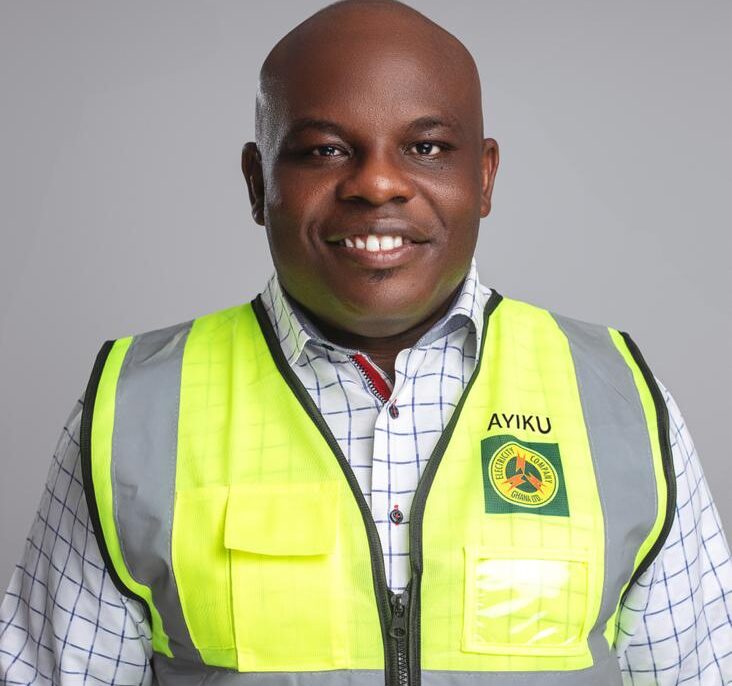
The Electricity Company of Ghana (ECG) will begin a nationwide Mass Revenue Mobilisation Exercise on Monday, November 9, to recover outstanding electricity bills from customers. Dr Charles Nii Ayiku Ayiku, General Manager for External Communications at ECG, who announced the exercise on behalf of the company, urged customers with unpaid bills to settle them to avoid disconnection and the extra cost of reconnection fees.

Read →
Was TrafficTech-GH designed to raise revenue for gov’t? – Fiifi Boafo questions 60% share of fines
business

Was TrafficTech-GH designed to raise revenue for gov’t? – Fiifi Boafo questions 60% share of fines

Former COCOBOD Director of Public Affairs, Fiifi Boafo, has questioned the government’s decision to take 60 per cent of fines generated under the TrafficTech-GH system, suggesting that the arrangement raises concerns about whether the initiative is intended to improve road safety or generate revenue for the state. Mr Boafo’s concerns centred on the revenue-sharing arrangement under which the private investors behind the project are expected to receive 40 per cent of the penalties collected, while the government takes the remaining 60 per cent.

Read →
IFS calls for reforms in 2027 budget to boost domestic revenue mobilisation
business

IFS calls for reforms in 2027 budget to boost domestic revenue mobilisation

The Institute for Fiscal Studies (IFS) is warning that Ghana’s weak domestic revenue mobilisation is undermining the country’s capacity to finance critical infrastructure, improve public sector wages and accelerate national development. Dr Boakye argues that Ghana is not maximising the financial benefits from its mineral resources, particularly when compared with countries such as Botswana, where government has significant involvement in the mining sector and benefits from royalties and dividends.

Read →
Ghana ranks 18th in Sub-Saharan Africa in terms of total revenue-to-GDP ratio
business

Ghana ranks 18th in Sub-Saharan Africa in terms of total revenue-to-GDP ratio

From 5th to 10th positions are Mozambique (28.5%), South Africa (26.0%), Zambia (26.0%), Mauritius (22.8%), Rwanda (22.8%) and Congo Brazzaville (22.7%). “In fact, if Ghana’s total revenue-to-GDP ratio in 2022 was 29.5% as Botswana’s, an African country with a heavy resource endowment like Ghana, Ghana would have collected as much as GHȻ181.23 billion or US$21.91 billion in total revenue and grants”.

Read →