business

24-hour economy foundations laid, jobs next – Ricketts-Hagan
24-hour economy foundations laid, jobs next – Ricketts-Hagan

The Member of Parliament for Cape Coast South and a member of Parliament’s Finance Committee, George Kweku Ricketts-Hagan, says the government’s next priority under the 24-hour economy policy is to translate the groundwork already laid into sustainable jobs, particularly for the country’s growing youth population. Speaking to the Ghana News Agency on the sidelines of the recently concluded International Monetary Fund (IMF) and World Bank Group annual meetings in Bangkok, Thailand, Mr Ricketts-Hagan, who is also Board Chairman of the Ghana Revenue Authority (GRA) and a former Deputy Finance…

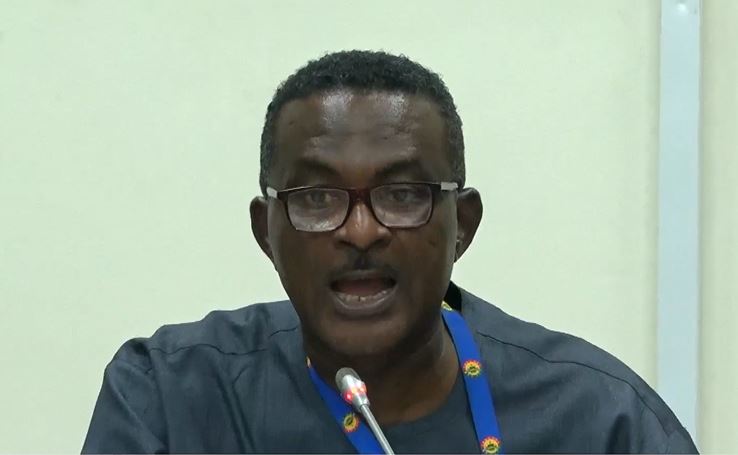
The Member of Parliament for Cape Coast South and a member of Parliament’s Finance Committee, George Kweku Ricketts-Hagan, says the government’s next priority under the 24-hour economy policy is to translate the groundwork already laid into sustainable jobs, particularly for the country’s growing youth population.

He said the policy’s initial foundations had been established, but its success would depend on the effective implementation of measures to stimulate economic activity and expand employment opportunities.

Speaking to the Ghana News Agency on the sidelines of the recently concluded International Monetary Fund (IMF) and World Bank Group annual meetings in Bangkok, Thailand, Mr Ricketts-Hagan, who is also Board Chairman of the Ghana Revenue Authority (GRA) and a former Deputy Finance Minister, said economic stabilisation must now be accompanied by job creation.

Launched in July 2025, the 24-hour economy policy is designed to boost productivity, promote industrialisation, strengthen export-led growth and create jobs by encouraging businesses to operate beyond conventional working hours.

Ricketts-Hagan described the initiative as a long-term undertaking that requires careful planning, noting that the 24-hour Economy Secretariat had established the necessary foundations for implementation.

“We probably did not comprehend the enormity of the initiative, but it’s not something that’s supposed to be short-term. It’s long-term, so it has to be planned properly. What the 24-hour Economy Secretariat has done is that they’ve put the building blocks in,” he said.

His comments come amid concerns from some economic watchers about the proposed three-shift system, a key component of the policy, with calls for a phased implementation approach backed by annual budgetary allocations.Breaking News Alerts

Ricketts-Hagan said the next stage must focus on building on the existing groundwork to deliver the policy’s employment and economic growth objectives.

He identified reliable electricity supply, incentives for businesses and access to ready markets for goods and services as critical conditions for the initiative to succeed.

According to him, tax reductions could encourage businesses to extend their operating hours, but such incentives would have limited impact without a dependable power supply to support continuous production.

On broader efforts to tackle unemployment, particularly among young people, Mr Ricketts-Hagan expressed optimism about the proposed US$10 billion New Economy policy, which is expected to be introduced in 2027.

He said the framework would build on existing economic reforms and direct government spending towards sectors with the potential to drive targeted growth and generate sustainable employment.

“I do not want to pre-empt the Finance Minister, but the New Economy will build on existing reforms and focus on growing the economy in a manner that creates sustainable employment,” he said.

  • economy
  • hour
  • ricketts
  • hagan
  • policy
  • job
  • employment
  • foundation

Summaries and tags are generated automatically. Stay informed with VidiaNews.

Related news

2027 Budget: Parliament asked to approve GH¢30bn “New Economy Fund” with no named spending institution – Africa Policy Lens
business

2027 Budget: Parliament asked to approve GH¢30bn “New Economy Fund” with no named spending institution – Africa Policy Lens

Parliament is being asked to approve a whopping GH¢30 billion for the New Economy Programme in 2027 without being told which institution will spend the money or what it will be spent on, according to an analysis by Africa Policy Lens. The centrepiece of the 2027 Budget, presented to Parliament on November 12, is the New Economy Programme, under which Finance Minister Dr Cassiel Ato Forson announced that the government would invest US$10 billion between 2027 and 2030 across eight pillars, ranging from commercial agriculture and energy to textiles, pharmaceuticals and technology.

Read →
A New Economy, Old Headaches and Afenyo’s Budget Fever!
business

A New Economy, Old Headaches and Afenyo’s Budget Fever!

By Jimmy Aglah Once upon a time in the Republic of Uncommon Sense, a Finance Minister announced that he was expecting a New Economy. But before Dr Cassiel Ato Forson could carry his precious economic pregnancy into Parliament, the Minority, led by Alexander Afenyo-Markin, had already assembled at the maternity ward, demanding proof of paternity.

Read →
IMF-World Bank jobs agenda underscores relevance of FirstBank’s SME financing
business

IMF-World Bank jobs agenda underscores relevance of FirstBank’s SME financing

By Babajide Komolafe, Economy Editor There is a growing global challenge of job creation, and the need to accelerate private-sector investment, particularly through micro, small and medium enterprises (MSMEs), featured prominently at the just-concluded 2026 Annual Meetings of the World Bank Group and the International Monetary Fund (IMF) in Bangkok, Thailand. Financing the SME sector FirstBank of Nigeria’s disbursement of more than N200 billion to small businesses in 2024 provides an example of the financing role commercial banks can play in supporting the sector.

Read →
‘Economic recovery did not start with NDC’ – Amin Adam
business

‘Economic recovery did not start with NDC’ – Amin Adam

Former Finance Minister Dr Mohammed Amin Adam has accused the government of taking undue credit for Ghana’s economic recovery, insisting that key improvements in the economy were already underway before the NDC administration assumed office. He said the 2027 Budget presented by Finance Minister Dr Cassiel Ato Forson failed to give adequate recognition to the economic measures implemented by the previous New Patriotic Party (NPP) government, particularly in stabilising the cedi, managing public debt and rebuilding the country’s foreign reserves.

Read →
2027 Budget: APL claims ‘contradictions’ over Western Corridor railway financing, other projects
business

2027 Budget: APL claims ‘contradictions’ over Western Corridor railway financing, other projects

Policy think tank Africa Policy Lens (APL) says the 2027 Budget and the New Economy policy document give conflicting accounts of how the Western Corridor Railway from Takoradi to Nyinahin will be financed. Africa Policy Lens asked Parliament to seek “one statement on the railway: its cost, whether it is financed from revenue or from loans, and a separate, visible budget line” and “clarity on borrowing: whether the loans cited in the policy document sit inside the US$10 billion or on top of it.”

Read →
PwC urges Fiscal and Monetary Policy balance to sustain Ghana’s economic stability
business

PwC urges Fiscal and Monetary Policy balance to sustain Ghana’s economic stability

PwC Country Senior Partner, George Arhin, has urged government to maintain a careful balance between fiscal and monetary policies to sustain Ghana’s improving economic stability while supporting growth. On the inflation outlook, Associate Director at Fitch Solutions, Mike Kruiniger, warned that climate-related pressures, particularly the developing El Niño weather event, could pose risks to Ghana’s inflation outlook in 2027.

Read →