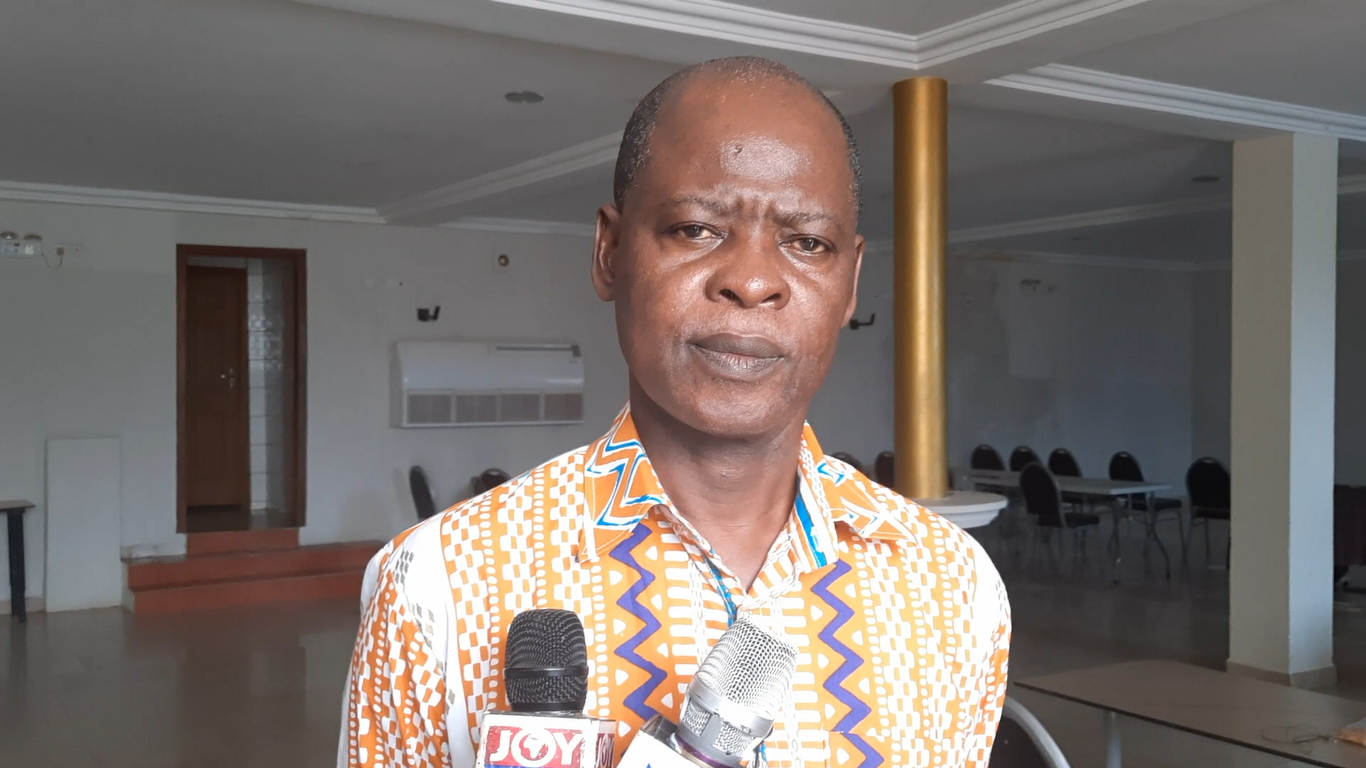
PSWU wants single spine pay policy scrapped over growing inequalities
The Public Services Workers’ Union (PSWU) of the Trades Union Congress (TUC) has renewed its call for the scrapping of the Single Spine Pay Policy, saying years of inconsistent administration have created deep inequalities and unfairness in public sector salaries. Speaking on Joy News’ PM Express on Monday, November 2, during a discussion on the eight per cent base pay increase agreed for public sector workers for 2027, Mr Adjei said the union had consistently advocated the abolition of the Single Spine Pay Policy over the past three to four years.
The Public Services Workers’ Union (PSWU) of the Trades Union Congress (TUC) has renewed its call for the scrapping of the Single Spine Pay Policy, saying years of inconsistent administration have created deep inequalities and unfairness in public sector salaries. The union’s General Secretary, Bernard Adjei, said the policy, which was introduced to promote fairness and consistency in public sector remuneration, had been undermined by developments over the past eight to nine years.
He said the persistent disparities in salaries, particularly at the lower levels of the public service, could not be resolved through routine annual salary increases. Speaking on Joy News’ PM Express on Monday, November 2, during a discussion on the eight per cent base pay increase agreed for public sector workers for 2027, Mr Adjei said the union had consistently advocated the abolition of the Single Spine Pay Policy over the past three to four years.
“We, Public Services Workers Union of TUC, for instance, for the past three, four years, we have consistently demanded that the Single Spine be thrown away and be scrapped because the problems we have with the low levels of salary in our sector cannot be addressed by salary increases,” he said. Call for structural reforms Mr Adjei said the Single Spine structure was introduced with the expectation that it would provide a fair and coherent framework for determining public sector salaries.
However, he said its administration by the Fair Wages and Salaries Commission over the years had resulted in inequities, unfairness and inconsistencies. He welcomed the earlier proposal for an independent Emoluments Committee to examine the underlying problems in public sector salary administration and recommend measures to address them. He expressed concern, however, that the process had been delayed, leaving workers to contend with longstanding disparities.
Mr Adjei said the discussions leading to the 2027 base pay agreement had therefore taken account of the need to avoid worsening the existing inequalities in the public service. “Unfortunately, it has delayed a bit, but with the agreements and understandings we have reached, we have done it such that we will not increase or expand the inequities, the unfairness and inconsistencies that have happened,” he said.
His comments highlight the union’s position that the debate over public sector remuneration should go beyond the annual percentage adjustment and address the structural weaknesses in the salary system. The eight per cent increase in base pay for 2027 is part of the latest agreement between organised labour and the government.
- pay
- spine
- policy
- single
- salary
- sector
- union
- pswu