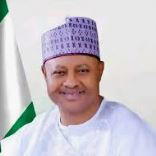
Hold your elected leaders accountable, INEC’s ex-commissioner urges Nigerians

Sam Egwu, a professor of political science, said citizens must become more actively involved in the democratic process by organising, participating in public affairs, asking elected officials questions and demanding answers on government policies and actions.
A former Resident Electoral Commissioner (REC) of the Independent National Electoral Commission (INEC), Sam Egwu, has called on Nigerians to reclaim the civic space and strengthen citizens’ participation in governance, warning that restrictions on civil liberties and weak accountability threaten democratic development.
Mr Egwu, a professor of political science, said citizens must become more actively involved in the democratic process by organising, participating in public affairs, asking elected officials questions and demanding answers on government policies and actions.
He made the call on Monday while delivering the anniversary lecture at the 20th anniversary celebration of the Resource Centre for Human Rights and Civic Education (CHRICED) in Abuja.
The lecture, titled Reclaiming Civic Space: The Rule of Law, Democratic Accountability, and the Future of Citizen Participation in Nigeria, examined the relationship between civic freedoms, the rule of law and democratic accountability.
Mr Egwu argued that an open civic space is fundamental to democracy because it allows citizens and civil society organisations to organise, express opinions and participate in public affairs without undue restrictions.
He said the government had a responsibility to protect citizens’ rights to freedom of association, peaceful assembly and expression, adding that the state must also submit itself to the rule of law.
“The civic space is very important to the construction of democracy, and it is the bedrock of any open and democratic society,” he said.
The former INEC official identified accountability, the rule of law and active citizenship as essential elements of a functional democracy, stressing that public institutions must be answerable for their actions.
Drawing on the political culture theory developed by political scientists Gabriel Almond and Sidney Verba, Mr Egwu said Nigeria needed to move towards a participatory political culture in which citizens understood their rights and responsibilities and actively engaged the state.
He explained that such a culture would encourage citizens to acquire political knowledge, embrace democratic values and participate in elections and other processes through which they could influence governance.
“The challenge that faces us as Nigerians today is to grasp and understand the full meaning of citizenship and activate the citizen agency in engaging politics and the democratic space,” he said.
He added that citizens must go beyond voting to demand explanations from elected representatives and ensure that government policies address the everyday challenges facing Nigerians.
Mr Egwu criticised the federal government’s approach to public policy, arguing that some of its decisions had failed to demonstrate accountability to Nigerians.
He cited the unification of the exchange rate, removal of the petrol subsidy, introduction of a new tax regime, and increases in electricity tariffs as policies that, in his view, were implemented without sufficient accountability to the people.
He also expressed concern about laws and government actions that he said restricted civil society organisations’ ability to operate freely.
The former REC specifically referenced provisions of the Companies and Allied Matters Act (CAMA), which he argued could undermine non-profit organisations’ freedom to organise and carry out their activities.
He also raised concerns about the activities of the Economic and Financial Crimes Commission (EFCC), particularly its anti-money laundering enforcement measures, which he said could affect non-profit organisations’ operations.
On press freedom, Mr Egwu described the media as an important institution for democratic accountability, saying journalists provide citizens with information needed to scrutinise government activities and demand explanations from public officials.
He expressed concern about what he described as increasing state repression of journalists and media organisations, as well as restrictions on digital rights and freedom of expression.
He also referenced the police response to the 2020 #EndSARS protests as an example of the use of state power against citizens exercising their rights.
According to him, insecurity, banditry and insurgency have also created conditions that could be used to justify restrictions on civil liberties.
Mr Egwu further argued that poverty and economic hardship had weakened citizens’ capacity to participate in public affairs and hold elected officials accountable.
He called for a review of laws and policies that restrict civic activities, as well as reforms to strengthen the judiciary and protect the independence of institutions that check executive power.
He said Nigeria must draw from its history of civil society activism, particularly the struggles against colonial and military rule, to rebuild an environment where citizens can organise and defend their interests.
He urged the government to recognise civil society organisations as legitimate representatives of citizens and allow them the freedom to operate without undue interference.
Mr Egwu said activating citizens’ agency remained necessary to prevent authoritarian tendencies and protect democratic freedoms.
Earlier, Zikirullahi Ibrahim, CHRICED executive director, said the organisation’s 20-year journey had focused on advancing democracy, amplifying citizens’ voices, defending human rights and promoting accountable governance.
Mr Ibrahim said CHRICED was established at a critical period in Nigeria’s democratic transition, when many citizens remained excluded from governance and public institutions were still developing.
He said the organisation had, over the years, worked with communities across the country to promote democratic participation, strengthen accountability and electoral integrity, expand educational opportunities, protect vulnerable groups and improve access to healthcare and public services.
He said the anniversary, themed 20 Years of Voice & Justice: Empowering Citizens, Shaping Tomorrow, was an opportunity to reflect on the organisation’s contributions and renew its commitment to citizen empowerment.
As part of the celebration, CHRICED launched two publications: The Action Civics Manual for Nigerian Students: A Practical Guide for Civic Engagement and Advocacy and Voices of Vigilance: CHRICED’s Public Interventions in a Defining Era, Volumes I and II.
Mr Ibrahim described the publications as “investments in civic education and democratic learning,” saying informed and active citizens remained essential to protecting democracy.
The Chairman of the occasion, Dayo Olaide, deputy country director of the MacArthur Foundation in Nigeria, also called for collective action to strengthen democracy and promote accountable governance.
Mr Olaide said declining funding for non-governmental organisations has created significant challenges for development work, making it necessary for Nigerians to support efforts to sustain democratic institutions.
He commended CHRICED for its contributions to civic education and democratic development over the past two decades. Still, he said the responsibility for sustaining such achievements should not rest solely on the organisation.
“The next 20 years cannot be led just strictly by CHRICED. It’s a collective responsibility that we all have to share,” he said.
He expressed optimism that Nigeria could overcome its governance challenges and rebuild effective public institutions through sustained collective action.
- inec
- nigerians
- leader
- commissioner
- sam
- egwu
- professor
- science