Jeanette Winterson’s point about AI brings to mind an Isaac Asimov story
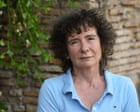
Ed Kelsey and Arthur Gould respond to an interview with the author in which she discussed AI and the future of humanity I thoroughly enjoyed the interview with Jeanette Winterson (‘There is no inevitable dystopia’: Jeanette Winterson on AI and the future of humanity, 28 October), particularly her quote from Jill Lepore that we are living out the sci-fi books that tech leaders read when they were 13.
Ed Kelsey and Arthur Gould respond to an interview with the author in which she discussed AI and the future of humanity
I thoroughly enjoyed the interview with Jeanette Winterson (‘There is no inevitable dystopia’: Jeanette Winterson on AI and the future of humanity, 28 October), particularly her quote from Jill Lepore that we are living out the sci-fi books that tech leaders read when they were 13. I was one of those 13-year-olds, and my favourite author was Isaac Asimov.
Many of his stories accurately predicted our modern world, from mobile technology to AI (through his fictional supercomputer Multivac). However, it was Winterson’s closing point – that “of course we will specialise. We need doctors and chemists, but we also need what used to be called well-rounded people” – that really made me smile.
It immediately brought to mind an Asimov story that has stuck with me for 50 years: Profession (published in Nine Tomorrows in 1959). It depicts the future specialist needs of highly specialised, automated worlds and the absolute need for some of those specialists to be “well-rounded”, which reflects Winterson’s view so exactly it is uncanny; I would encourage her to read it.
Admittedly, I didn’t read it under the covers with a flashlight, nor did I grow up to be a ruling “tech-bro” – but I did become a computer programmer. Ed Kelsey Maresfield, East Sussex
At last, someone who is not pessimistic about AI? Thank you, Jeanette Winterson, for making us think about the possible benefits of AI. As she says, “there is no inevitable dystopia”.
If the examples of AI we are experiencing at the moment show intelligence superior to Homo sapiens, might it not be a force for good in the future? If it becomes more out of our control yet better at making decisions, surely it will see what many of us cannot? It might see a way out of the climate catastrophe we are heading towards. It might see the senselessness of bombing whole cities and people into oblivion. Far from pressing the nuclear button it might prevent us from doing it.
Not only will important decisions be removed from humans, they will be made by a superior intelligence. They might not always be easily palatable, but they might be in the long-term interests of the planet. Arthur Gould Loughborough, Leicestershire
- winterson
- jeanette
- point
- isaac
- asimov
- story
- interview
- author