Can America ever return to pre-Trump politics?

The US midterms were a rejection of Trump's politics of division, but his legacy may be impossible to undo.
“I think it’s safe to say that we are tired of being pitted against each other. We are tired of being told to hate each other. It has been 10 years of this kind of politics. Politics as blood sport. Politics as trolling and owning. Politics as professional wrestling. It tears families apart. It ends friendships, and it leaves us all feeling terrible all the time.”
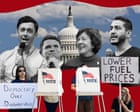
So said Senator-elect James Talarico in his victory speech on election night after he won the first United States Senate seat in Texas for the Democratic Party in almost 40 years.
I don’t like Talarico or his policies, but I agree with him on one thing: The American people are tired of being pitted against one another. We need more uniters and fewer dividers in the Republican Party and US politics in general.
This is the conclusion many American voters seem to have reached after 10 years of Donald Trump dominating the right.
A decade ago, he forcefully entered the political scene with a radically different approach and provocative rhetoric. He won his first US presidential election by attacking his opponents with clever and cutting nicknames. Crooked Hillary. Low-energy Jeb. Pocahontas. Little Marco. Crazy Bernie. Lying Ted.
All were aimed at diminishing his rivals in ways that only a rapturous crowd of adoring MAGA fans could really appreciate. His attacks played well on social media and reflected an American culture that was far less deferential to the political establishment, far coarser in its language and far more interested in being entertained than being informed.
Trump’s attacks, performed live at his raucous rallies, had all the earmarks of a professional wrestling bout. It was blood sport at its most basic level. And Trump’s supporters ate it up, loving how he stood up to an elite that obviously despised them.
His opponent in the 2016 presidential election, Hillary Clinton, called half of his supporters a “basket of deplorables”.
Seven years before Trump formally entered the race for the White House, Barack Obama in a speech in San Francisco had said that people like them “get bitter, they cling to guns or religion or antipathy to people who aren’t like them or anti-immigrant sentiment or anti-trade sentiment as a way to explain their frustrations”.
Trump gathered up these angry voters, many of whom had protested during the Tea Party movement, and created “Make America Great Again” (MAGA). They loved the visceral way Trump communicated. They loved that he promised to end illegal immigration and free-trade policies that destroyed manufacturing jobs.
Trump’s rhetoric, coarse as it was, seemed honest, authentic, unscripted, and totally real, not poll-tested, not AI-generated, not written by expensive speechwriters. Trump was talking to them, not at them. He had listened to their fears and promised to fight back with a vengeance.
When Trump claimed the political establishment had stolen his re-election, he didn’t sit idly by, accepting the results. He consulted his lawyers, came up with a dubious legal strategy and then unleashed his supporters on Capitol Hill, hoping upon hope that their pressure would bend the hallowed traditions of presidential succession to his will. It didn’t work, but it also didn’t disqualify him.
Over the four years of President Joe Biden’s administration, Trump survived legal attacks, threats of imprisonment and assassination attempts to become an invincible force who seized power again in 2024. His ascent seemed like destiny.
But as it often does, the fickle winds of the electorate changed direction. They used to love his unconventional approach to politics, but now they wanted him to deliver on his promises to lower inflation and gas prices. He had once promised to keep us out of foreign wars, but that promise was broken, too. Perhaps he had a good reason to attack Iran, but he failed to make a convincing case to the American public, and voters quickly grew disenchanted with another broken promise. The vice president himself said that the war is what cost the Republicans the election. But it was more than just the war. Voters were tired of the whole act.
When Trump told his voters to imagine that he was on the ballot, it wasn’t just his supporters who made this election a referendum on Trump. So too did angry Democrats, disgusted independents and more than a few former MAGA minions.
They said this election was about affordability, but it really was about an undisciplined president who refused to colour inside the lines, who blundered into a costly war, who didn’t stop his administration from detaining and deporting high school baseball coaches and Uber drivers and domestic employees, and harboured too many white supremacists within his ranks.
He alienated women, Hispanics, Asians, Arabs, African Americans and offended well-educated Midwesterners who couldn’t stomach his language or his antics any longer. The great MAGA coalition that he assembled for his historic 2024 victory dissipated in one election night, tired of the nonsense and wanting a change in direction.
Things are so bad for Republicans that they lost all kinds of members, from House leaders like Richard Hudson, to tremendously flawed MAGA warriors like Ken Paxton to seasoned and effective Appropriators like Susan Collins. Conservative Republicans lost. Traditional Republicans lost. Moderate Republicans lost. All kinds of Republicans lost. It is a total and complete rejection of the GOP, top to bottom. An unmitigated disaster.
There are two questions that remain. What will happen to the MAGA movement now? And can we ever return to the good old days before Trump made politics a blood sport more akin to Ultimate Fighting than to the World Wrestling Federation?
The answer is this: Unless Republicans fundamentally change how they communicate to voters and what they promise to do for them, they will not win another election. MAGA will be lost forever. Governing is about building coalitions, not about belittling potential allies with sophomoric attacks and needlessly partisan rhetoric.
Like Andrew Jackson, President Trump has forever changed American politics, and it is highly unlikely that we will ever completely return to the good old days of disagreeing without being disagreeable. But voters showed that they had grown tired of Mr. Trump’s brand of disagreeableness by delivering to the Democrats a huge political victory.
This election was not an endorsement of Democratic policies. It was a referendum on Trumpism and his caustic brand of politics. We will see if he got the message.
The views expressed in this article are the author’s own and do not necessarily reflect Al Jazeera’s editorial stance.
- america
- politic
- midterm
- rejection
- trump
- division
- legacy