FG seeks seven-year ban on establishing new federal universities, polytechnics
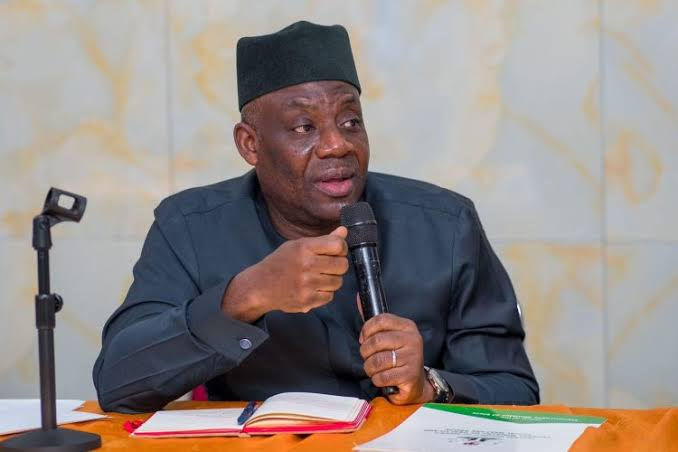
…Alausa tells Senate to stop approving establishment bills, cites NN1.3trn ASUU revitalisation debt, infrastructure deficits By Joseph Erunke, Abuja Consequently, the Minister of Education, Dr Tunji Alausa, has appealed to the Senate and other members of the National Assembly to stop considering and passing bills seeking to establish additional federal tertiary institutions during the seven-year moratorium.
…Alausa tells Senate to stop approving establishment bills, cites NN1.3trn ASUU revitalisation debt, infrastructure deficits By Joseph Erunke, Abuja The Federal Government has moved to halt the establishment of new federal universities, polytechnics and colleges of education for seven years, warning that Nigeria risks expanding its tertiary education system at the expense of academic quality and the survival of existing institutions.
The government said it could no longer afford to spread scarce resources across an increasing number of institutions while existing federal tertiary institutions grapple with severe funding shortages, decaying infrastructure, inadequate manpower and overcrowded classrooms. Consequently, the Minister of Education, Dr Tunji Alausa, has appealed to the Senate and other members of the National Assembly to stop considering and passing bills seeking to establish additional federal tertiary institutions during the seven-year moratorium.
The appeal was contained in a November 2, 2026, memo addressed to Senate President Godswill Akpabio and copied to Senate Majority Leader Senator Michael Opeyemi Bamidele. In the memo, marked FME/DUE/NASS/153/Vol.1/147 and sighted in Abuja on Friday, Alausa disclosed that the Federal Executive Council had approved the seven-year moratorium at its August 13, 2025, meeting as part of efforts to address the proliferation of public tertiary institutions, duplication of academic programmes and under-utilisation of existing facilities.
The minister’s intervention comes amid persistent concerns over the government’s ability to adequately finance existing universities, polytechnics and colleges of education, with billions of naira in outstanding revitalisation commitments yet to be met. Making a case for the policy, Alausa argued that Nigeria’s immediate challenge was no longer the multiplication of tertiary institutions but the strengthening of those already established to deliver quality education.
He warned that continuing to establish new institutions without guaranteed funding would deepen the crisis in the sector, potentially leaving more institutions struggling to provide basic academic facilities and services. “The Federal Government’s position is that the immediate challenge confronting the tertiary education sector is not merely the expansion of access but the urgent need to strengthen existing institutions,” he stated.
According to him, the moratorium would allow the government to consolidate previous investments, address existing deficiencies and improve the carrying capacity of operational institutions before considering further expansion. Alausa expressed concern that despite the government’s policy direction, bills seeking the establishment of additional federal tertiary institutions continued to receive legislative attention.
While acknowledging the constitutional powers of the National Assembly to initiate and enact laws establishing institutions, he urged lawmakers to consider the prevailing realities of the education sector, including demonstrable national needs and the long-term financial implications of such legislation. He identified inadequate lecture halls, overcrowded classrooms, poorly equipped laboratories, shortages of qualified academic personnel, accommodation deficits and deteriorating infrastructure as some of the major challenges confronting existing federal institutions.
The minister warned that creating more institutions under such circumstances would amount to spreading already inadequate resources thinner, with potentially damaging consequences for academic standards. Alausa also presented figures showing the extent of the Federal Government’s outstanding financial obligations to the university system, particularly its commitments to the revitalisation of public universities.
He disclosed that of the N1.3 trillion pledged under the 2013–2018 Federal Government-ASUU revitalisation agreement, only N250 billion was reportedly released between 2013 and 2021. Similarly, he said that out of the additional N150 billion approved in 2025 for Needs Assessment Intervention, only N50 billion was initially released. The minister argued that the outstanding commitments raised serious questions about the government’s capacity to assume additional financial responsibilities through the establishment of new institutions.
“These funding gaps demonstrate the difficulty of meeting existing obligations and raise legitimate concerns about the capacity to sustain additional institutions without corresponding and guaranteed budgetary provisions,” he stated. To further strengthen his argument, Alausa cited the experiences of Ekiti and Imo states, where the establishment of multiple tertiary institutions reportedly created financial and administrative challenges.
He recalled that three state-owned universities in Ekiti were consolidated into one institution, Ekiti State University, Ado-Ekiti, in 2011. He also noted that Imo State had undertaken insti
- institution
- federal
- government
- education
- alausa
- university
- senate
- polytechnic