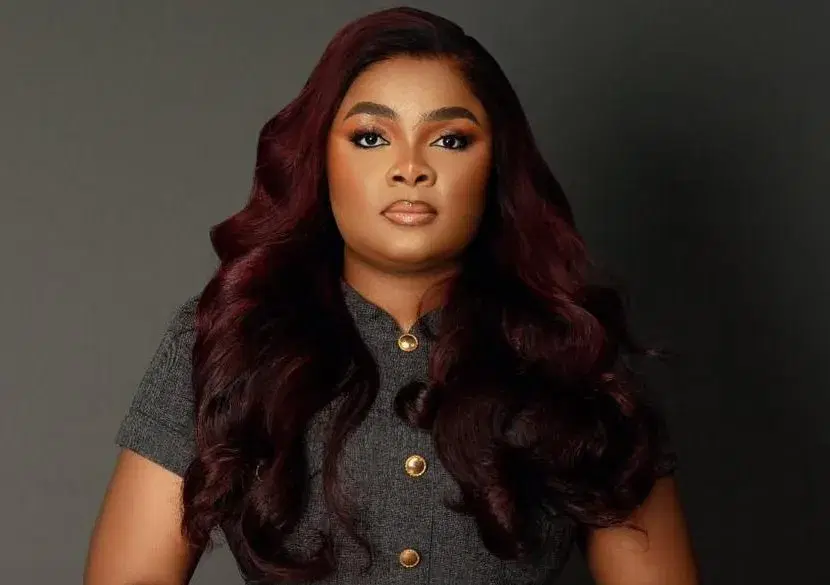
‘Life is like a heartbeat. It’s up and down, up and down’: Michelle Yeoh on casting cliches, marriage at 60 and playing a robot in Blade Runner 2099

It’s up and down, up and down’: Michelle Yeoh on casting cliches, marriage at 60 and playing a robot in Blade Runner 2099. but she’s been through some challenges on the way Before agreeing to appear in Blade Runner 2099, Michelle Yeoh received a letter – “an amazing letter, a love letter” – from Silka Luisa, the project’s creator, imploring her to be involved.
Ballet dancer, action hero, Bond girl ... The actor won an Oscar for Everything Everywhere All At Once but she’s been through some challenges on the way
Before agreeing to appear in Blade Runner 2099, Michelle Yeoh received a letter – “an amazing letter, a love letter” – from Silka Luisa, the project’s creator, imploring her to be involved. Yeoh, who is 64, has played grandes dames, action heroes and a low-income Chinese-American battling the tax authorities in an infinite multiverse, but Blade Runner was different. The sci-fi series, a follow-up of sorts to Ridley Scott’s 1982 movie classic and its 2017 sequel, features both humans and replicants, their bioengineered antagonists, and Yeoh was adamant: “I don’t want to be human.” After working on ideas of what a synthetic human might look like, the result is Olwen, a terrifying individual with “a very cold, steely look in her eyes. And the way she moves – it’s not robotic. She’s sort of fluid. Like a dragon. Like a serpent.”
Yeoh is an actor who likes to figure things out for herself and, in the prep stages for Blade Runner 2099, the key question she thought about while building her character was, “What is it to be human? Are you born with humanity or does it come from the things you go through?”
Appearing via video link from New York, Yeoh exudes high-energy enthusiasm in plain white T-shirt, scraped back hair and huge, dark-framed glasses, all of which give her a cheerful, just-out-of-rehearsal air. She talks a mile a minute – about her family, the show, her holiday last summer on Luc Besson’s island in the Bahamas – and if her exuberance comes as a mild surprise, it’s because in recent years, much of Yeoh’s acting has been characterised by stillness. Her roles as Eleanor Young, the icy matriarch in the 2018 hit movie Crazy Rich Asians, and the crushed figure of Evelyn Wang, owner of a failing laundromat in Everything Everywhere All at Once (for which she won an Oscar in 2023, the first Asian woman to win for best actress), turn on tiny facial adjustments and furious or haughty looks, suggesting a performer who favours the minimalist approach.
As fans of Yeoh will know, however, the actor started out as a dancer, moved to martial arts movies in the 80s and is as robustly physical as any in Hollywood. An action star at heart, Yeoh is quick on her feet and unprecious in her outlook – so much so that, on occasion, she has found Hollywood a bit cautious compared with the wild west of the Hong Kong film industry she came up in as a young woman. “I’m tiny, I’m petite, five foot four,” she says, yet her ability to change her affect through movement is so intense, so persuasive, that, placed alongside Hunter Schafer, her much taller co-star in Blade Runner, “somehow you feel I loom over her”.
Schafer plays Cora, Yeoh’s sidekick Blade Runner – that is, a replicant cop with the LAPD – tasked with bringing a missing colleague back to base. The story’s complicating factors are that Cora is a human pretending to be a replicant, and Yeoh’s character, Olwen, is staring down her own imminent, preprogrammed death. The show is set 50 years after the last instalment of the Blade Runner franchise, in a world in which the replicants are running things and humans occupy a permanent serf-class. It’s chillingly timely, given recent instances of AI slipping its reins, and the challenge for Yeoh, she says, went beyond existential questions about what it means to be human into the practicalities of how to present a character created in a lab. “They had no childhood,” she says, “so you feel you’re dealing with someone who has no concept of private space. They’re in your face and if they want something, they take it. With Olwen, I wanted it so you don’t know where she is or what she’s going to do next, and everyone is terrified.”
Yeoh’s own childhood, in a middle-class Malaysian Chinese family, was one in which her ambitions, intellectual and professional, were broadly encouraged. Her father, Datuk Yeoh Kian-teik, was a prominent lawyer and businessman who had trained in England and her mother, Janet, a former beauty queen who would have an enormous influence on Yeoh’s career. In some ways, it was a highly conventional background, and when Yeoh expressed a desire to pursue dance as a career, her parents thought it entirely suitable that “I’d learn my ballet, graduate as a teacher, then come home and start my own ballet school. They were happy.”
In other ways, however, her background was more interesting and diverse than the average. The city she grew up in, Ipoh, is the capital of a Malaysian state 200km north of Kuala Lumpur and was a thriving, cosmopolitan place. This somehow made the world appear more accessible and when, at 15, she won a place to study ballet at the Hammond school in Chester, it made her decision to leave home so young seem less outlandish.She says she travelled, unaccompanied, to England, where she had plenty of cousins, but it remains surprising that her family permitted her not only to cross the world alone, but to live in student accommodation 7,000 miles away.
Yeoh says these kinds of ambitions were built into her upbringing. “I was always a bit of an adventurer, which my parents instilled in us. My dad has a philosophy that education is precious, but you can decide what you want to do. He never said I had to do the big five: lawyer, doctor, accountant, that kind of thing.”
At that point, Yeoh had no desire to be an actor; her sights were set on performing in ballet. It has been an interesting facet of her life and career that she has been able to absorb sudden changes of fortune; to pivot to new experiences with relative ease. Her energy, it seems to me, is primarily playful, whether she is flying through the air in Crouching Tiger, Hidden Dragon or swishing her ankle-length trenchcoat as a replicant in Blade Runner. (“They are almost naughty,” she says, of the non-humans, “like something playing with its food.”)
As a result, when Yeoh’s performance becomes still, it has a particular power. There is a scene in the Blade Runner 2099 pilot in which Yeoh’s character is informed she must go after and eliminate an old replicant with whom she was close and who has apparently gone rogue. Olwen stares silently at her superior, before saying, “I have never killed one of my own.” And in that moment of stillness, a muscle in her cheek twitches. It’s a remarkable piece of acting, discreet as a poker tell. How on earth, I ask, did she do it? Yeoh smiles, glittering. “Years of practice, my dear. Years and years.”
The experiences in England set up a great fork in the road for Yeoh, who had to tear up her plans and start again. While at the school, she injured her back and was told dancing professionally was out of the question. She compares that moment to looking in a “mirror that shatters … as a silly 17-year-old, it was the end of my dream.” Looking back, she feels lucky to have been in the care of the principal, Mrs Hammond, “an older, wiser lady who said, ‘Calm down, crazy little girl. It’s not the end of the world! You can still be involved in dance.’” Accordingly, after doing A-levels, Yeoh went to what is now Manchester Metropolitan University to study for a degree in creative arts, with an emphasis on dance’s history and choreography. “At the end of the day, if that’s my next best choice, I’ll take it!”
Yeoh makes the bounce-back sound easy. Surely she had a big crash somewhere in there? She insists that, after the initial shock, she quickly rationalised her way into her former state of cheerfulness, telling herself that, after all, the new degree course “still involved the world I loved … And now when I look back, those experiences actually helped me doing martial arts.”
As a child, she had been a real jock, a champion squash player and an athlete. “I ran, I did high jump, I love the outdoors, the physical challenge. All of which helped with action movies.” That pivot was a few years off, however, and after her degree Yeoh moved home to Malaysia and wondered what to do next. She thought of opening a dance school with a friend, but her mother had other ideas. Behind Yeoh’s back – “The number of things she has done behind my back is countless” – Janet sent headshots of her daughter to the judging panel for Miss Malaysia, a competition Yeoh ended up winning in 1983 at 21. She went along with it “to get her off my back”, but when invited to compete at a further beauty contest in Australia, Yeoh put her foot down. “I said, no, I’m not doing it, I’m going back to England.”
Why not seize the opportunity to travel? Because, while “I love dancing on stage, I don’t love speaking on stage. I panic, I’m sweating, my knees are shaking. Going to Comic Con is scary as hell. I always think I’m going to make a fool of myself.” Still, Janet’s will was greater and off she went to Australia, which was just as well: the exposure brought Yeoh to the attention of a TV station in Hong Kong looking for fresh, Chinese-language acting talent. She jumped at the opportunity and landed in a strange and “terrifying” situation.
Yeoh is fond of pointing out she’s adventurous, but this was something else: finding herself cast in a movie in a language in which she wasn’t entirely fluent and couldn’t read at all. “I still can’t. Fortunately at that time in Hong Kong they didn’t have much of a script,” she says, laughing, and in the early days of filming titles such as Yes, Madam!, a cop thriller, and the action comedy The Owl vs Bumbo, she would be fed lines by the assistant director and simply repeat what she’d heard. The turnaround time on these films was phenomenal: “I remember one where we finished shooting on Monday morning after filming all night, and by Friday night it was in the cinemas. They’re editing as they go along.”
It was a speed that suited Yeoh: “It toughens you up and makes you think on your feet. It’s like being in a standup show.” As her martial arts skills improved, she swiftly became a star, churning out title after title until she met the billionaire businessman Dickson Poon. He hired her to star in a commercial for one of his ventures and within a few years they were married.
Yeoh has spoken about this marriage as an amicable failure that lasted four years, her divorce in 1992 freeing her up to return to acting; while married to Poon, she stopped working, a hangover from the more conservative elements of her background, and not something she repeated with her second husband. For the past 22 years, she has been in a relationship with Jean Todt, former head of Ferrari, whom she met in 2004 and was engaged to for 19 years before marrying in 2023. Todt has told her it was love at first sight, when he saw her “walking down some steps in Shanghai in 2004”. The pair went on to meet in Paris, for a while maintaining a long-distance relationship. (Todt, now 80, needed his friends’ help “teaching him how to text” to sustain this.) “I really liked the guy,” Yeoh says. “Very straightforward, honest, all that.” Two months after meeting, Todt proposed and, as “we got on very well”, she accepted.
Why marry at all, after such a long engagement? It was Covid, she says, that finally shunted them over the line: during lockdown, they realised Yeoh, a Malaysian passport holder, had no automatic right to travel to see Todt at their home base in Switzerland unless they were married. They tied the knot there before she took off again to film Blade Runner in Prague, Avatar 4 in the US and forthcoming movie The Surgeon in Ireland.
The hiatus taken by Yeoh during her first marriage didn’t harm her career; quite the opposite. Returning to the Hong Kong cinema scene, her celebrity rose over the next five years as the industry exploded, until, in 1997, she caught the eye of Hollywood casting directors hiring for a new Bond movie. As her first American film, this was the turning point for Yeoh, although in the first instance her experiences on the set of Tomorrow Never Dies – in which she played Wai Lin, the Chinese intelligence agent and martial artist who teams up with Pierce Brosnan to bring down Jonathan Pryce’s media mogul – were bafflingly slow compared with the world she was used to. Worse, she was prohibited from doing even the simplest of stunts. “I was an established action hero, and the first thing the director said was, you are not here because you know how to do action. You are here because you are an actress. We don’t want you to get hurt.” On the first day of filming, Yeoh was scripted to jump less than a foot down a step and to her amazement was told she wasn’t allowed to. “I’d say, are you guys pulling my leg?” But they weren’t. When the producers hired her stunt team to fly in from Hong Kong, they were amazed to be sent models of the set with which to plan their scenes. One day, as Yeoh walked past the green room, she was horrified to see them lying down. She went off: “What the hell?! They bring you all the way here and you’re lying around! Go and work!” They told her they’d already presented six options to the producers and had time for a nap because the Hollywood machine was so slow.
In the wake of Bond, a less confident actor might have felt caught between two cinematic cultures. Not Yeoh. “I never compared the two by thinking this side or that is better.” She did, however, have strong feelings about the amount of garbage she was offered after, when American cinema had no idea what to do with an Asian star. For two years she didn’t work, “not for the lack of offers” but because all the scripts that came in were “very stereotypical Asian roles”. The question a casting director or producer would ask before offering her a role, she says, was “‘Why is an Asian face in this room? Are we in Chinatown?’ There weren’t that many roles that had anything to say. I was fortunate, because I already had a very strong career in Hong Kong that had saved me enough money to have the power to say no. I didn’t want to endorse the stereotypes of our culture.”
What broke the drought and changed Yeoh’s fortunes again was being cast, in 1999, in Ang Lee’s Crouching Tiger, Hidden Dragon, as Yu Shu Lien, a master warrior and skilled martial artist. The film was a huge success, grossing more than $200m worldwide and proving, she laughs, that “Americans do know how to read subtitles”.
Since then, Yeoh says, the issue of racial stereotyping in casting has fluctuated wildly. For a while, “looking east was fun. It was exciting. And we had Quentin Tarantino, who liked the movies that came out of Asia, which made a big difference. Then Jackie Chan came, Jet Li, Chow Yun-fat, and the directors – John Woo, Tsui Hark, Johnny Chu. They pushed open the doors. But still they were regarded as ‘Chinese’ directors. Not quite there, yet. And it’s taken a long time.”
What moved the needle, she believes, was John M Chu’s Crazy Rich Asians, based on the bestselling novel by Kevin Kwan, which tells the story of an American Chinese girl who falls in love with the son of a billionaire. The action unfolds in Singapore and features an entirely Asian cast – a first for a mainstream US romantic comedy – in which Yeoh reigned supreme as the hero’s icy and terrifyingly elegant mother-in-law, Eleanor Young. The fact it was a huge hit, Yeoh says, “really changed things”.
Since its release, Yeoh has been cast in movies across every genre, from Star Trek to Minions to her turn in the Agatha Christie adaptation A Haunting in Venice, and as Madame Morrible in Wicked. Her greatest performance in the last five years was as Evelyn Wang, the put-upon matriarch of a failing laundromat – and other iterations in a series of alternative universes – in the indie film Everything Everywhere All at Once. Acting is so nebulous, I wonder if winning the Oscar confirmed something in her mind? “I know what you mean – life is like a heartbeat; it’s up and down, up and down. So you reassure yourself it’s OK, you did your best, but there’s never any guarantee. Any award, especially the Oscar, is a confirmation from your peers. When we started out with Everything Everywhere, we just wanted to tell a story people could understand, in the language of the younger generation, and that’s why it was so fearless. Because an older person would look at it and say, what is that? What are you smoking? Or whatever.”
It’s characteristic that, when presented with the script by directors Daniel Kwan and Daniel Scheinert, known as the Daniels, Yeoh did not have this killjoy recoil. Quite the opposite; her first thought was, “It’s so relatable, because it’s about a family in America dealing with things we all understand so well. Tax. The generation gap. Miscommunication. Love and family.”
It’s about something else, too, a more esoteric theme Yeoh perhaps understands better than most. It happened to her as a teenager, a reluctant beauty queen, and when she left Hong Kong for America, so when she encountered the notion in the Daniels’ script, with its description of a multiverse in which all versions of our lives take place simultaneously, she knew what they were saying, “that every time you make a decision, things change”. And if all the alternative futures evaporate in that moment, that is perfectly fine with Michelle Yeoh.
- yeoh
- blade
- runner
- michelle
- letter
- life
- heartbeat
- marriage