Who is Ilse Aigner, leading candidate for Germany's next president?
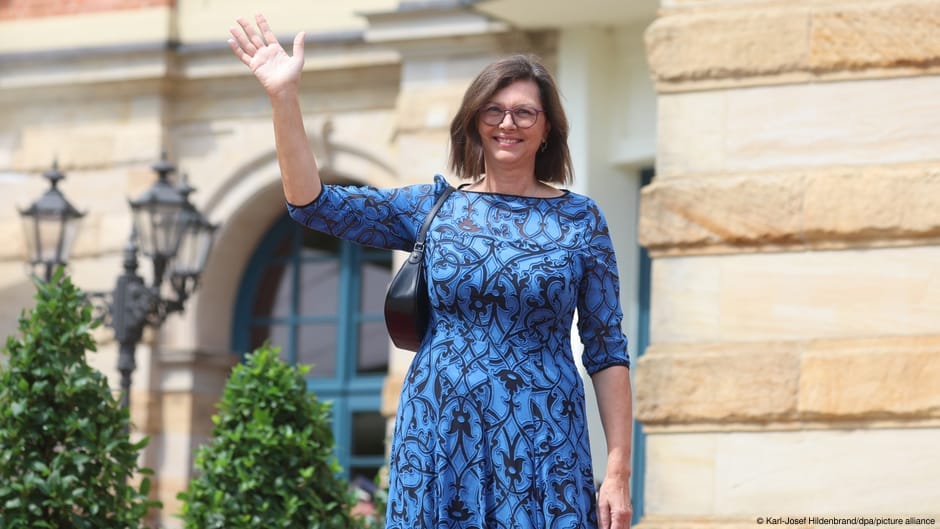
She would be the first female president and the first Christian Social Union politician to hold Germany's highest office. Ilse Aigner is the favored candidate for the Federal Convention vote on January 30.
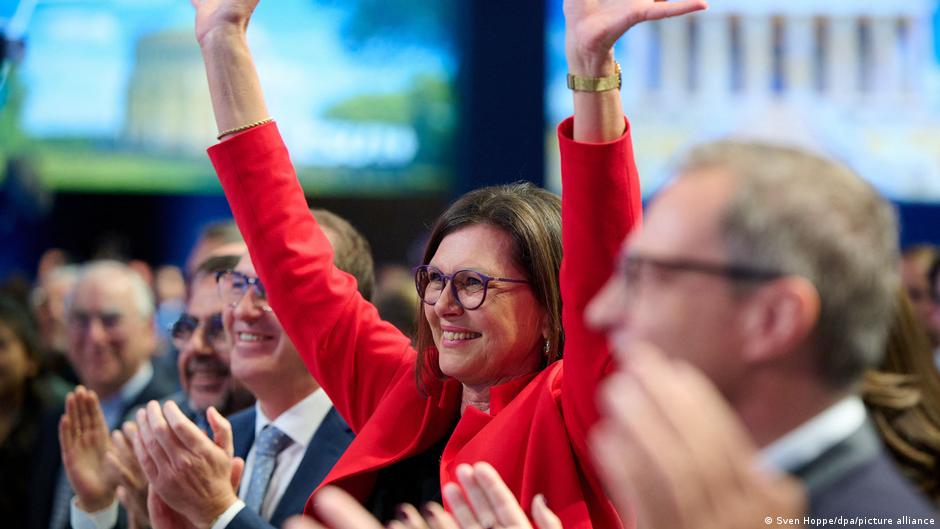
Bavarian politician Ilse Aigner has emerged as the leading candidate to succeed Frank-Walter Steinmeier as president of Germany, a largely ceremonial figure who is nevertheless the official head of state, and regarded as a moral authority for the nation.
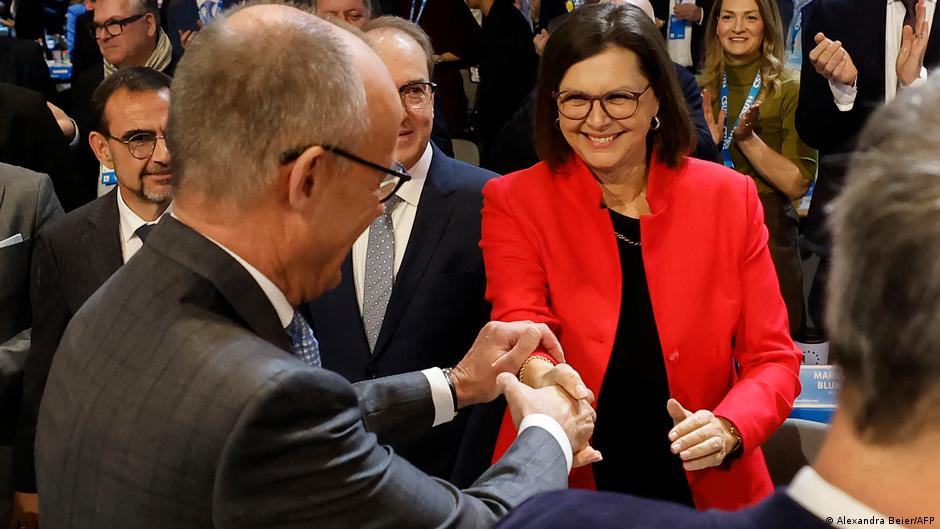
German chancellor and Christian Democratic Union (CDU) leader Friedrich Merz announced over the weekend that he favored Aigner, a veteran of the CDU's sister-party, the Christian Social Union (CSU), and currently president of the Bavarian parliament.
A specially convened assembly, the Federal Convention, will gather on January 30, 2027, to elect the next German president, and since the CDU, CSU, and their coalition partner the Social Democratic Party (SPD) have a majority in the convention, Aigner's election is considered highly likely.
Ilse Aigner is in many respects an unusual politician, especially in Germany: She has no university degree, though, as the youngest of four sisters, she did train as a telecommunications technician to join her parent's electricians' company.
She spent several years working for the military helicopter company Eurocopter, since bought by the aviation and defense giant Airbus, where she developed electrical components.
She entered the Bavarian parliament for the CSU in 1994. From 1998 to 2013 she served in Germany's federal parliament, the Bundestag, for the last six years of which she was agriculture and consumer protection minister under CDU Chancellor Angela Merkel. Both these portfolios involved holding off considerable pressure from the public and powerful lobbying organizations, as well as conflicts in the EU. Aigner came through this period without major crises and was highly esteemed in government.
The personnel policies of political parties can often seem like a game of chess. In 2013, Aigner left national politics and moved back to her home state to serve as Bavaria's economy minister under then State Premier Horst Seehofer, who tried to establish her as his successor.
But then came Markus Söder, then Bavarian finance minister and for a long time Seehofer's biggest rival inside the CSU. It was Söder, a colorful character who also harbored pretensions to be German chancellor, who won out in the power struggle that followed Seehofer's retirement and became Bavarian state premier in 2018.
Aigner and Söder both entered Bavaria's state parliament in 1994, when they were the state's two youngest lawmakers, and their political paths have been intertwined since. Though Söder's rise to power prevented Aigner from becoming state premier, she has served as president of Bavaria's state parliament for the past eight years, and is a highly respected authority figure in the state.
For months now, Aigner has been named as a potential candidate for Germany's head of state after Steinmeier's constitutionally-enforced exit next year.
Söder himself openly mentioned her as a suitable candidate back in April, and there have been indications of support from several CDU and CSU representatives, but also from the ranks of the center-left SPD and the environmentalist Greens. But Merz seemed wary for a long time. Other names came – and went.
When the chancellor greeted Aigner by name in his opening remarks to a CSU meeting in Munich in October, he had to pause for thunderous applause from the delegates, who rose to their feet to celebrate the veteran politician.
In January, the Bavarian Merkur newspaper reported on Aigner's visit to a school in the town of Tegernsee, where she answered questions from fourth graders for their student newspaper. The CSU politician told them that she had not planned her career, but she was never able to "keep her mouth shut" and this was also part of why she had been elected to her various offices.
However, it was also noticeable that she was entirely capable of "keeping her mouth shut" when it was judicious to do so: She has largely refrained from commenting publicly during the internal maneuvering for the candidacy within the Union parties.
Aigner would not only be Germany's first female president, but also the first to be single and never married. Though men have dominated the office, there have been female nominees in almost every election since 1999. In that year, the Union put forward Thuringian physicist Dagmar Schipanski, while the Party of Democratic Socialism (PDS), precursor to the socialist Left Party, put forward theologian Uta Ranke-Heinemann in the race against Social Democrat Johannes Rau.
But considering the majority needed in the Federal Convention, both were effectively just token candidates from minority parties, as were all the other female candidates since. That is one reason why there has been pressure to finally choose a woman as the majority candidate. Aigner has long enjoyed respect from the conservative camp.
Germany has never had a president, or indeed a chancellor, from the CSU, a regional party that nevertheless wields national power thanks to its alliance with the CDU. One CSU man, Richard Stücklen, spent four years as president of the Bundestag — formally the country's second-highest office — from 1979.
If the door to the presidency does open for Aigner, many believe it would shut out Söder's ambitions to become chancellor. The CDU — a much bigger conservative party — usually overrules the CSU when it comes to choosing a chancellor candidate when the general election comes around, and it seems unlikely that the CDU would tolerate two CSU figures leading the country.
But Aigner's election would also remove one of Söder's key rivals back home: Aigner, still only 61, enjoys excellent popularity ratings and is considered a natural rival to the 59-year-old state premier.
Ultimately, by nominating Aigner, Merz is also paving the way for someone from the CDU to become the next chancellor — provided the CDU/CSU wins the next federal election, of course.
But first, the Federal Convention must make its decision on January 30. The new German president will officially assume office in mid-March.
- ilse
- aigner
- candidate
- president
- germany
- christian
- social
- union