Access Holdings mulls exit from foreign subsidiary to meet CBN rule – Report

The lender’s investments in subsidiaries amounted to N446.6 billion as of 30 September, about 19.29 per cent of its shareholders’ funds.
Access Holdings is considering exiting at least one market outside its base in Nigeria to comply with a Central Bank of Nigeria (CBN) rule requiring lenders to limit investment in foreign subsidiaries to no more than one-tenth of shareholders’ funds.
The banking group mentioned one business in which it plans to offload its stake to meet the requirement, Bloomberg reported on Monday, citing Chairman Aigboje Aig-Imoukhuede.
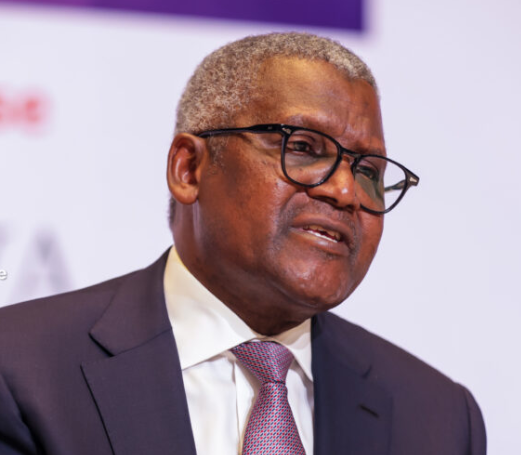
“If a subsidiary cannot meet its cost of capital and the strategic objectives for which it is set up, you should be ready to take a decision to exit,” Mr Aig-Imoukhuede was quoted as saying at an African Financial Industry Summit in Luanda, Angola, last week.
“Do we have one or two troublesome subsidiaries? I can think of one.”
Investment in subsidiaries for Nigeria’s biggest bank by assets stood at N446.6 billion at the end of September, equivalent to 19.3 per cent of its equity, according to Access Holdings’ 9M 2026 Investor Presentation.
That was roughly double the 10 per cent ceiling permitted by the Banks and Other Financial Institutions Act (BOFIA) 2020.
Only in cases of regulatory approval for a higher threshold from the CBN are lenders allowed to exceed that limit, the Act says.
The banking industry watchdog has given Access Holdings 12 months to address the issue.
The potential exit is part of the financial institution’s move to review its international operations to comply with the directive.
In June, Access Bank’s chief executive, Roosevelt Ogbonna, said the lender would reduce its shareholding in some of its foreign subsidiaries to achieve compliance.
According to Innocent Ike, CEO of Access Holdings, the lender will explore three strategies towards that end.
The options include recalling surplus capital from overseas subsidiaries, offloading minority stakes and restructuring some businesses, he said.
He added that the group has already completed one capital repatriation exercise involving its six targeted subsidiaries, and is engaging regulators in five countries to facilitate the return of excess capital to Nigeria.
Access Holdings plans to meet the regulatory requirement ahead of the March 2027 deadline, Mr Ike stated.
“We gave ourselves up till January next year, and I think we’re completing this ahead of schedule,” said Mr Aig-Imoukhuede.
The Access Holdings’ chairman said the group’s international portfolio remains fundamentally strong despite plans to sell interests in some international subsidiaries.
He noted that the group would continue to review the performance of its subsidiaries to ensure they generate sustainable returns and remain aligned with the strategic objectives for which they were established.
“You have to do dynamic portfolio management. Every year, you’re looking for ways to improve,” he said.
Access Bank sold its 97 per cent stake in its loss-making Ivorian subsidiary to Cameroon’s Afriland First Group SA for $1 million in January 2014, after the CBN restricted parent-bank capital for foreign subsidiaries.
- subsidiary
- access
- holdings
- exit
- cbn
- rule
- report
- lender