Iran war oil shock drives dip in global emissions, study shows
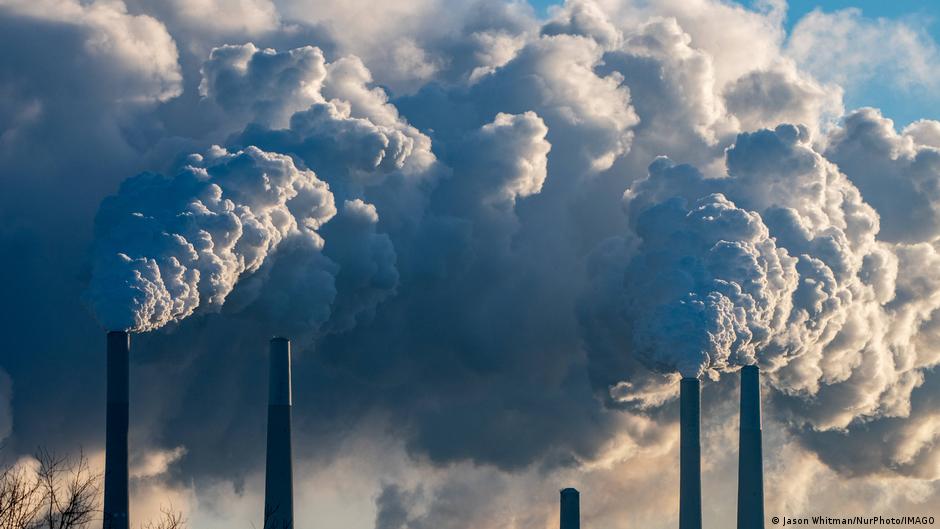
Global carbon emissions are expected to fall slightly in 2026, but not because of major progress on climate action. Instead, it's high energy prices following the US attack on Iran that's driving the trend.
Global carbon emissions are set to slightly drop this year, a new study suggests, largely as a result of high energy prices in the wake of the US war on Iran and the disruption of supply through the Strait of Hormuz.
Emissions from oil, gas and coal are the main drivers of climate change. While over the past decade, these emissions have risen by 0.9% per year, they are expected to drop by 0.4% in 2026.
"It's downwards, which sounds good, but this is largely driven by the war in Iran, what's happened in the Strait of Hormuz," said the study's co-author Glen Peters, a scientist at the CICERO Center for International Climate Research in Norway.
"So in a way, a little bit of good news, but for the wrong reasons."
The study was released while global leaders are meeting in Turkey for the United Nations' COP31 climate conference.
The study published by international research group the Global Carbon Project found that oil emissions dropped by 1.9% in 2026, while natural gas fell by 0.3%. Coal emissions however continued to rise, by around 0.6%.
"A drop in emissions in one year is not a peak unless it is driven by structural change," Peters cautioned.
A structural change would mean that emissions would slowly rise to a peak and then slowly decline afterwards, indicating a long term trend. That's not what happened though, Peters said. "What we see this year is oil emissions are going up and then suddenly, bang, down 2%."
It is the third time in recent years that global carbon pollution has dropped. The previous declines were during the global economic crisis in 2009 and during the COVID pandemic in 2020. In each of those cases, emissions went back up once global economies recovered.
While the geopolitical shocks of the past year have been the driving factors behind, the temporary emissions reversal, there's also been a rise in renewable energy contributing to the data. So while solar panels, wind farms and electric vehicles did make a difference, they were just not enough to cut emissions by themselves.
"The long-term answer remains the rapid deployment of clean energy technologies," according to co-author of the study, Pierre Friedlingstein, of the Global Carbon Budget Office at the University.
And even though emissions from fossil fuels dropped slightly, overall global carbon dioxide emissions still went up by about 1%, the study warns. The overall rise is because of land use changes like deforestation and peat fires, which increased too fast to be offset by the slight decrease in fossil fuel burning.
- iran
- war
- oil
- shock
- dip
- emission
- study
- show