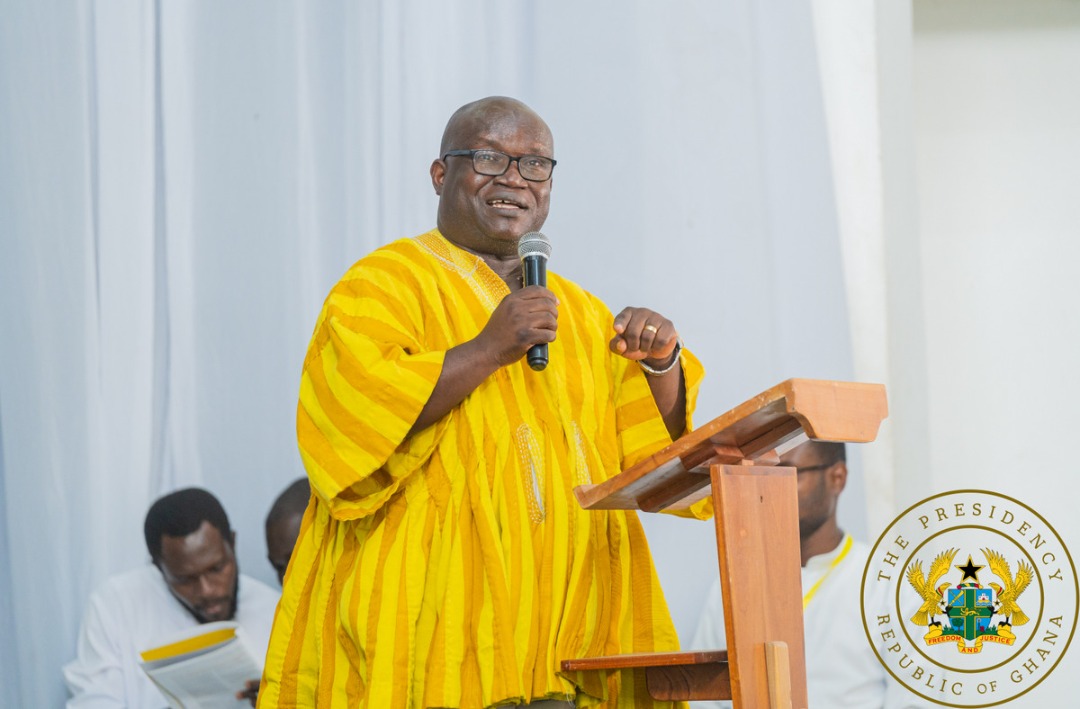
GH¢10m media fund: Ashigbey urges action to protect independent journalism
Media Manager, Dr Kenneth Ashigbey, has called for a sustainable funding framework to support independent journalism in Ghana, warning that financial pressures on media organisations are making it increasingly difficult to hold power to account. Drawing a comparison with the other arms of government, Dr Ashigbey said the Executive, Parliament and the Judiciary received public funding, while the media, which is often described as the Fourth Estate, had no comparable guaranteed source of financial support.
Media Manager, Dr Kenneth Ashigbey, has called for a sustainable funding framework to support independent journalism in Ghana, warning that financial pressures on media organisations are making it increasingly difficult to hold power to account.
He said President John Dramani Mahama’s announcement of a GH¢10 million allocation to the Media Development Fund offered an opportunity to address a long-standing challenge facing the industry, but cautioned that the commitment must translate into practical support for quality journalism.
Speaking on the PM Express on Joy News on Monday, November 9, Dr Ashigbey said the growing dominance of major digital platforms in the advertising market had weakened the financial position of traditional media organisations, even as the public’s need for responsible and independent journalism continued to grow.
He said the shift in advertising revenue had left media managers struggling to raise the resources required to sustain rigorous reporting, investigative work and critical analysis.
“The tendency for a lot of what I call PR journalism tends to drive what it is that we do rather than the very rigorous, critical, analytical, independent journalism that you can get,” he said.
Dr Ashigbey argued that the financial difficulties facing media houses had implications beyond the survival of individual businesses, since a weakly resourced media could struggle to perform its constitutional responsibility of holding public officials accountable.
He said Ghana’s political environment, in which political parties wield considerable influence over governance, made a strong and independent media particularly important.
The media, he noted, must be able to speak truth to power and exercise its constitutional mandate without being constrained by financial dependence on the very interests it is expected to scrutinise.
Drawing a comparison with the other arms of government, Dr Ashigbey said the Executive, Parliament and the Judiciary received public funding, while the media, which is often described as the Fourth Estate, had no comparable guaranteed source of financial support.
He said the absence of a sustainable funding arrangement had placed considerable pressure on media managers and raised questions about how independent journalism could be maintained.
Dr Ashigbey also pointed to changing business models in other parts of the world, where some independent media organisations relied on subscriptions from readers to finance their work.
He said Ghana needed to explore funding arrangements that would allow credible media organisations to produce critical and independent journalism without relying excessively on commercial or political interests.
However, he cautioned against assuming that the proposed fund would automatically secure the future of independent journalism, arguing that the political will to support a genuinely independent media could not be taken for granted.
He said neither the governing National Democratic Congress (NDC) nor the opposition New Patriotic Party (NPP) might readily welcome a media landscape in which journalists and media organisations could freely challenge those in power.
“That would not come on a silver platter,” he said, urging citizens to use their constitutional authority to demand a funding arrangement that would protect the media’s independence.
Dr Ashigbey said the people, as the ultimate holders of sovereignty, had a responsibility to push for a system that would enable the media to serve the public interest.
He said the GH¢10 million allocation should therefore be seen as an opening for a wider conversation about how journalism in Ghana could be properly financed and protected.
The announcement has brought renewed attention to the financial pressures confronting media organisations, including the challenge of retaining skilled personnel and providing the resources needed for credible, public-interest reporting.
- journalism
- medium
- ashigbey
- media
- fund
- organisation
- funding
- ghana