Will Australia push for fossil fuel exit at UN talks?
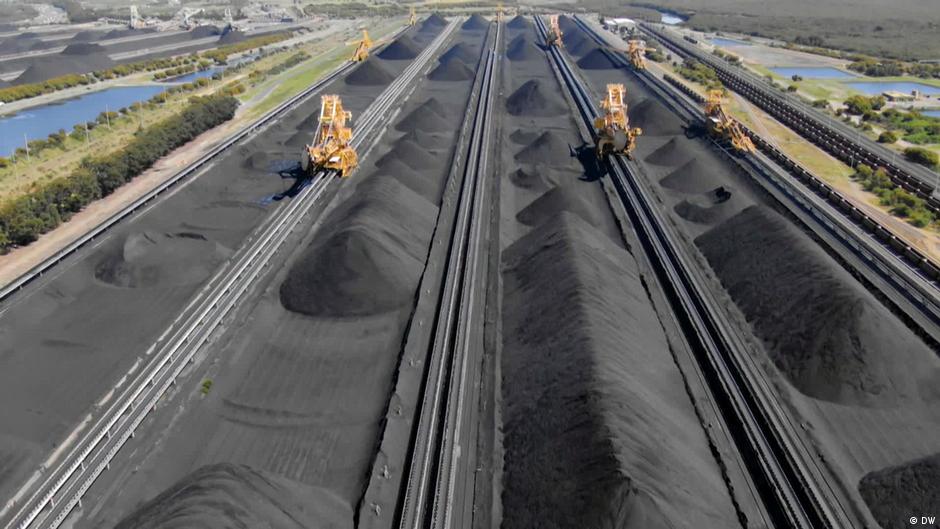
The heat is on Australia as chief negotiator at the COP31 UN climate conference to forge a path away from coal and gas, and to protect Pacific neighbors facing rising sea levels.
In its role as president of negotiations at the upcoming UN climate talks in Turkey, Australia is being pressured to guide nations towards unified action on slashing the greenhouse gas (GHG) emissions that are generated in large part by burning fossil fuels.
The nation has pledged to lead by example at the summit through a strong commitment to renewable energy, electrification and reduced reliance on planet-heating coal, oil and gas.
"Renewable energy, grids, storage and electrification are creating opportunities to strengthen resilience, improve energy security, and reduce emissions at the same time," said Australian climate minister Chris Bowen in October during a meeting in Fiji ahead of the COP climate conference. "These are proven, commercial and scalable today. Now is the moment for faster implementation."
Yet Australia is also the world's third-largest exporter of fossil fuels. And unlike France and Germany, or island nations from Fiji to the Bahamas that are highly vulnerable to a changing climate, the COP31 co-president has not yet commited to phasing them out.
As calls grow for the country to set a clear route to a clean energy future, critics say its vague promise to transition away from polluting sources of power does not go far enough.
Australia is home to 56% of global coal mine projects currently in the pipeline, notes environmental non-profit, 350.org.
Andreas Sieber, head of political strategy at the organization, is calling on the country, the world's second-largest coal exporter, to reverse course and announce an "overdue coal phaseout date" during the COP31 conference.
"Australia needs to walk the walk and follow Germany's example and commit to a phaseout," said Melanie Pill, founder of the Climate Project, an Australia-based climate policy advisory.
The argument to end fossil fuel production is not only about cutting emissions but reducing dependence on energy systems that rely on volatile oil and gas markets, she explained.
"A fossil phaseout in the face of the enduring and escalating conflict in the Middle East is in the interest of everyone," Pill told DW.
This is especially true for Australia's diesel-reliant Pacific neighbours, who spend up to 25% of GDP on fossil fuel imports — as opposed 6% on health — according to a report by the Institute for Climate Risk and Response at the University of New South Wales.
As lead negotiator at the UN climate talks, Australia can "flip the narrative" on a fossil fuel phaseout, using the challenge of energy security as a justification, said Pill
This opportunity could be lost, however, if Australia fails to address fossil fuel exports that accounted for 80% of its total carbon footprint in 2022 — and near 5% of global emissions.
While the nation is a world leader in rooftop solar, and generates around half of its electricity from renewables, this progress is "being undone by its continued approval of more fossil fuels for export," said Simon Bradshaw, COP31 lead and climate expert at Greenpeace Australia Pacific.
He notes that the Labor government of Prime Minister Anthony Albanese has approved the construction, expansion or extension of 38 coal, oil and gas projects since coming to power four years ago on a pro-climate platform.
"You cannot aspire to lead on climate abroad if you're not getting your own house in order," said Thomas Houlie, climate and energy policy analyst at Climate Analytics, a global climate policy institute.
Last year, when Australia approved the extension of a major gas export project in the country's west until 2070, Albanese justified the move in the name of a balance between "security of energy supply" and "support [for] the transition which reduces our emissions."
The country has publicly backed a global transition away from the fossil fuels driving the global temperature rise linked to extreme heat and drought. Both through the Global Stocktake agreed at the 2023 UN climate summit, and via the inaugural "transitioning away" summit in Colombia this April, at which Australia and 56 countries pledged to develop a fossil fuel exit roadmap.
But these commitments are not reflected in Australian resources policy, or its domestic rollout of clean power infrastructure.
"While the government has set a renewables target for electricity, it leaves plenty of blind spots in other sectors," said Houlie, adding that emission reductions in industry and transport have been limited and that the push to achieve an 82% renewables target for the electricity grid by 2030 is behind schedule.
In its role as lead negotiator at COP31, Australia has promised to ensure that any final conference text serves to "elevate the views and the experiences" of small Pacific nations in its region from Vanuatu to Tuvalu.
These island countries that generate low emissions yet suffer extreme climate impacts from worsening cyclones or rising seas are "sick of Australia's double talk on climate," said Shiva Gounden, Head of Pacific at Greenpeace Australia Pacific.
Australia must commit to "substantial new funding contributions" to help Pacific neighbors adapt to the climate emergency and achieve energy independence, said Simon Bradshaw. He reiterated the need to concurrently create a "national road map" away from coal and gas production and export.
A Climate Analytics report co-authored by Houlie outlines a fossil fuel phaseout pathway for Australia that can begin immediately. This includes an end to coal power generation by 2034 and a rapid reduction in oil and gas consumption with renewables generating almost all the country's electricity by 2040. Fossil fuel export projects would be eliminated, and existing ones shuttered before becoming obsolete.
"This co-presidency is a golden opportunity for Australia to step up and commit to a phaseout," said Houlie.
- australia
- fossil
- fuel
- exit
- talk
- heat
- negotiator
- climate