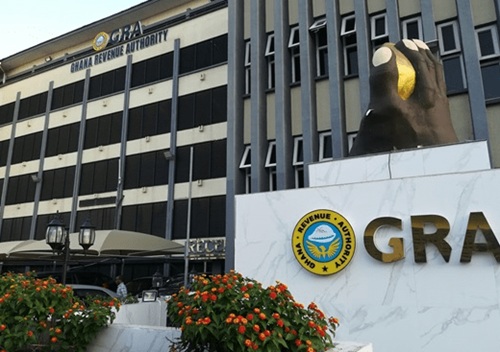
GRA targets GH¢310bn revenue by 2028, rules out overburdening compliant taxpayers

The Ghana Revenue Authority (GRA) is targeting revenue mobilisation of GH¢310 billion by December 2028, with plans to broaden the tax base and improve compliance without placing additional pressure on existing taxpayers. Commissioner-General of the GRA, Anthony Kwasi Sarpong, says the authority is focused on building a revenue system that grows with the economy and supports private-sector investment.
The Ghana Revenue Authority (GRA) is targeting revenue mobilisation of GH¢310 billion by December 2028, with plans to broaden the tax base and improve compliance without placing additional pressure on existing taxpayers.
Commissioner-General of the GRA, Anthony Kwasi Sarpong, says the authority is focused on building a revenue system that grows with the economy and supports private-sector investment.
“Our objective cannot be to collect more and more from the same taxpayers, year after year. That approach has limits, and it places an ever-heavier burden on those who are already compliant,” he said.
Speaking at a Ghana Economic Forum organised by the B&FT, Mr Sarpong disclosed that the GRA collected GH¢153 billion in 2024 and GH¢182 billion in 2025.
For 2026, the authority has set a target of GH¢237 billion. As of October, it had collected GH¢185.5 billion against a target of GH¢184.4 billion for the period.
He attributed the improved performance to tax reforms, digitalisation and the use of artificial intelligence in customs classification.
He also highlighted the rollout of the Integrated Tax Administration System (ITAS) and plans to fully implement fiscal electronic devices in 2027 to strengthen VAT compliance.
Mr Sarpong said the authority is committed to making tax administration more efficient and supportive of businesses, particularly manufacturers importing raw materials and other production inputs.
He argued that stronger domestic revenue mobilisation would reduce the government's reliance on borrowing and free up more financing for private-sector businesses.
“Every cedi that the state raises from a fair and broad-based tax system is a cedi it does not need to borrow from the finance market. That is fiscal space, and fiscal space is investment space,” he said.
He urged businesses to meet their tax obligations while engaging the GRA on challenges that increase the cost of doing business.
He said the ultimate goal is to make domestic revenue mobilisation a foundation for investment, industrial expansion and job creation.
- revenue
- gra
- tax
- authority
- business
- taxpayer
- mobilisation
- sarpong