Plateau judiciary expands small claims courts’ jurisdiction to ₦5 million

Plateau State’s Chief Judge says the reform is aimed at accelerating debt recovery, reducing delays in commercial disputes and improving access to justice.
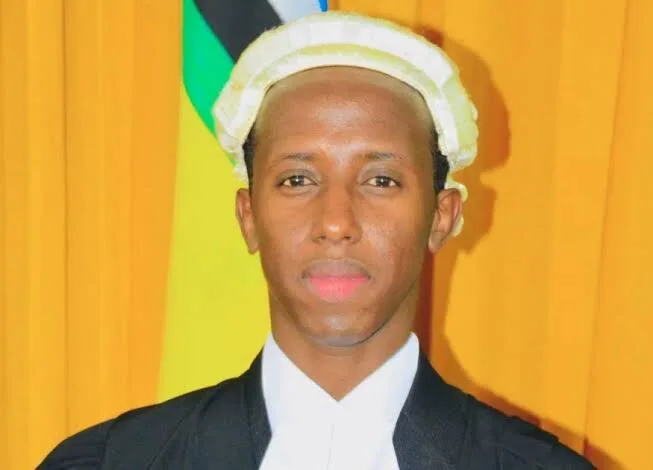
Chief Judge of Plateau State, David Mann
The Plateau State Judiciary has expanded the monetary jurisdiction of its district courts to ₦5 million to speed up the resolution of commercial disputes and strengthen the state’s business environment.
The Chief Judge of Plateau State, David Mann, announced this during the opening of a two-day capacity-building workshop for judicial officers and staff in Jos on Tuesday.
Mr Mann urged district court judges to fully implement the expanded jurisdiction to improve access to justice, particularly for small businesses.
The workshop was organised under the State Action on Business Enabling Reforms (SABER), a $750 million World Bank-funded, results-based programme designed to promote business environment reforms across Nigeria’s 36 states and the Federal Capital Territory.
The programme is implemented through a partnership involving the Presidential Enabling Business Environment Council (PEBEC) Secretariat, the Federal Ministry of Finance and the Nigeria Governors’ Forum.
The chief judge said the justice system’s efficiency was closely linked to economic growth, noting that businesses could thrive only when investors and other economic actors were confident contractual obligations would be respected and disputes resolved promptly.
“The strength of a state’s economy is closely tied to the efficiency of its courts. Commercial activities thrive only when economic actors are confident that contracts will be honoured, disputes resolved with dispatch, and judgements enforced without undue delay,” he said.
He described the enforcement of court judgements as an essential component of justice, warning that decisions that were not enforced could undermine public confidence in the judicial system.
“A judgement left unenforced is a mere paper book, and justice granted yet unenforced is no less a denial,” he added.
The chief judge said the expanded monetary jurisdiction was approved pursuant to Section 17 of the District Courts Law, urging judicial officers to apply the relevant provisions effectively.
He said the small claims courts provided an accessible, affordable and speedy mechanism for resolving debt recovery disputes, particularly those involving small businesses and commercial transactions.
According to him, the two-day workshop would enable participants to assess court performance and gain practical skills to accelerate proceedings and improve the enforcement of judgments.
He also urged deputy chief registrars to strengthen administrative efficiency, transparency and accountability, while embracing technology to improve court operations.
The chief judge said the reforms’ sustainability was particularly important, as the institutional development project was expected to close in mid-2027.
He urged participants selected as step-down trainers to transfer the knowledge acquired to their respective judicial stations and mentor other colleagues.
“Efficiency must never compromise integrity. Speed without fairness is not justice,” he said before declaring the workshop open.
Speaking with journalists after the opening ceremony, Deborah Nya, Deputy Chief Registrar in charge of magistrates and the judiciary’s focal person for the SABER project, described the partnership between the programme and the judiciary as productive.
She said the initiative had strengthened the small claims court system and sped up dispute resolution involving small businesses.
According to her, conventional court proceedings could take up to six months, whereas small claims cases were expected to be concluded within 60 days.
“In the regular court proceedings, adjudication will take up to maybe six months. But with the small claims, it is time-bound. It is 60 days,” she said.
Ms Bokong said the judiciary had made efforts to ensure that cases handled under the small claims procedure were concluded within the stipulated period, from hearing to judgement.
She said the arrangement had improved confidence among business owners who needed an accessible judicial mechanism to resolve disputes with customers and business partners.
She, however, identified inadequate public awareness as a major challenge facing the initiative.
Ms Bokong said some members of the public were still unaware that the small claims court exists, despite efforts by judicial officers to sensitise litigants and lawyers.
She said magistrates had continued to educate court users about the procedure and the ₦5 million monetary jurisdiction, encouraging those with eligible disputes to utilise the courts.
The SABER programme, which Plateau State has been implementing since 2023, is designed to improve the business environment through regulatory reforms, streamlined licensing and permit procedures, infrastructure development and targeted support for entrepreneurs and investors.
The state government said the reforms were intended to reduce bureaucratic bottlenecks, attract investment, promote private sector development and create employment opportunities.
The specialised workshop also focused on small claims debt recovery procedures, case management, documentation, mediation, arbitration and recent legal reforms affecting businesses.
It brought together judicial officers and court personnel, including magistrates, registrars and bailiffs, to strengthen their capacity to deliver timely, fair and cost-effective dispute resolution services.
- plateau
- judiciary
- jurisdiction
- claim
- court
- state
- chief
- judge