2027: Stakeholders demand action against electoral violence

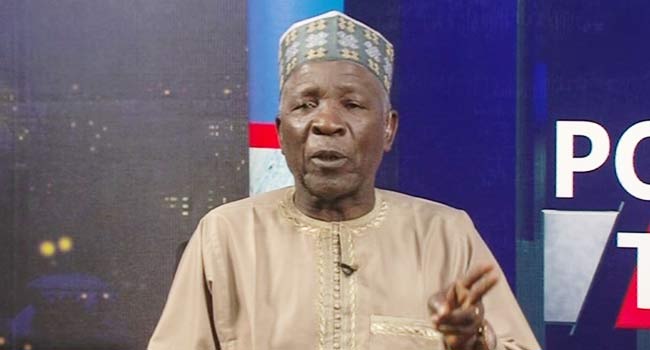
… Falana urges INEC prosecution unit, police warn politicians against sponsoring thugs By Favour Ulebor, Abuja Stakeholders have called for stricter enforcement of electoral laws, prosecution of offenders and accountability for political actors to curb violence ahead of the 2027 general elections. Delivering the keynote address, human rights lawyer and Senior Advocate of Nigeria, Femi Falana, urged the Independent National Electoral Commission (INEC) to establish a dedicated prosecution unit to handle electoral offences.
… Falana urges INEC prosecution unit, police warn politicians against sponsoring thugs By Favour Ulebor, Abuja Stakeholders have called for stricter enforcement of electoral laws, prosecution of offenders and accountability for political actors to curb violence ahead of the 2027 general elections. They made the call at the sixth edition of the Frontier Discourse Annual Public Lecture Series and Awards, organised by Pacesetter Frontier Magazine in Abuja on Tuesday, where speakers expressed concern over political thuggery, restrictions on opposition campaigns, unemployment, insecurity and the failure to enforce laws protecting citizens.
The event was themed, “Barrel to Ballot: The Naturalisation of Violence, Nigeria’s Polity, and its Democratic Circus.” Delivering the keynote address, human rights lawyer and Senior Advocate of Nigeria, Femi Falana, urged the Independent National Electoral Commission (INEC) to establish a dedicated prosecution unit to handle electoral offences. He said the commission should obtain reports from the police and other security agencies, investigate electoral violations and prosecute those found culpable.
Falana argued that the Electoral Act placed responsibility for prosecuting electoral offenders on INEC, insisting that the commission should not leave the task entirely to the police and other security agencies. He also faulted the National Assembly for failing to implement the recommendation for the establishment of an Electoral Offences Commission, alleging that politicians were deliberately allowing a system that encouraged political thuggery to persist.
The senior advocate warned against portraying political violence as the exclusive preserve of any political party, saying supporters of both the ruling party and opposition parties had been involved in attacks. “I am suggesting that INEC should have a prosecution unit with a view to getting reports from the police and other security agencies about electoral offences and then take them to court,” he said.
“The politicians in Abuja, members of the National Assembly have refused, deliberately so, to implement the recommendation that there shall be in the country an electoral offences commission. “Politicians do not want to distort the status quo. So they want us to continue to live with thuggery because the thugs are agents of politicians from all the political spectrum.” Falana also alleged that opposition parties had been prevented from erecting campaign billboards in some states, while supporters of different political parties had engaged in acts of vandalism and attacks against their opponents.
He insisted that no political party should be allowed to claim innocence or justify violence against its opponents, stressing that all political actors must be held accountable. He further criticised state governments for allegedly imposing excessive charges on campaign billboards, saying some had introduced guidelines capable of restricting opposition parties’ access to campaign platforms.
“In some states or many states in the country, state governments have brought out obnoxious electoral guidelines. If you want to erect your billboard, you must pay a fee of about N150m to N200m depending on which position you are contesting for. “I have submitted here that no state government has the power under the law to monetise campaign,” he said.
Falana maintained that INEC was constitutionally empowered to issue guidelines for national elections and monitor political campaigns, arguing that state governments and other authorities should not introduce measures that restrict political participation. He urged the commission to intervene and ensure that political parties and state governments withdrew from actions capable of interfering with the electoral process.
Citing the case of Balarabe Musa v. INEC, he argued that electoral guidelines must conform with the Constitution and should not be used to restrict the civic space. On the responsibilities of political parties, Falana said the Constitution required them to adopt and implement the fundamental objectives and directive principles of state policy, including provisions on education, healthcare and citizens’ welfare.
He acknowledged that Chapter Two of the Constitution was generally regarded as non-justiciable but noted that legislation had made some of its provisions enforceable. Citing the Child Rights Act, he said state governments had enacted laws providing for free and compulsory education from primary to secondary school, but poor implementation had left millions of children without access to education.
He also cited the National Health Insurance Act and the Pension Reform Act as examples of legislation giving practical effect to citizens’ social and economic rights. Falana urged young Nigerians to question political office seekers about their records on employment, security, social protection and education rather than allow themselves to be recruited for electoral violence.
He said polit
- violence
- party
- state
- campaign
- electoral
- commission
- falana
- politician