business

Nigeria’s private sector foreign debt rise 179.6% to $54.5bn — World Bank
Nigeria’s private sector foreign debt rise 179.6% to $54.5bn — World Bank

By Babajide Komolafe The World Bank said that the foreign debt of Nigerian companies rose by 179.6 per cent in seven years to $54.48 billion in 2025 from $19.49 billion in 2018. The World Bank disclosed this in its International Debt Report 2026 which stated that Nigeria’s private sector nonguaranteed external debt stood at $54.476 billion as of December 2025.

By Babajide Komolafe The World Bank said that the foreign debt of Nigerian companies rose by 179.6 per cent in seven years to $54.48 billion in 2025 from $19.49 billion in 2018. This implies that Nigerian businesses now owe foreign lenders almost three times what they owed in 2018. The World Bank disclosed this in its International Debt Report 2026 which stated that Nigeria’s private sector nonguaranteed external debt stood at $54.476 billion as of December 2025.

The World Bank explained that the total external debt of a country is the sum of public and publicly guaranteed debt, private nonguaranteed debt, and short-term debt. According to the World Bank, private sector nonguaranteed external debt refers to money borrowed by private companies from foreign banks, investors and other lenders without the government or any public institution guaranteeing repayment.

“Private nonguaranteed debt comprises long-term external obligations of private debtors that are not guaranteed by a public entity. “Public and publicly guaranteed external debt comprises long-term external obligations (maturities of over one year) of all public debtors, including debt held by the central government and by state-owned enterprises. Short-term debt is defined as debt with an original maturity of one year or less ,” the report said.

The 179.6 per cent growth in Nigeria’s private sector in the seven years was faster than the increase in government-backed external debt, which rose by 155.5 per cent from $24.422 billion in 2018 to $62.4 billion in 2025. The World Bank report showed that private companies’ foreign debt is becoming an increasingly important part of Nigeria’s external debt burden.

In 2018, private sector nonguaranteed debt was equivalent to about 79.8 per cent of public and publicly guaranteed external debt. By 2025, it had increased to 87.3 per cent. Meanwhile, Nigeria’s total external debt, covering government borrowing, private companies’ foreign loans and short-term obligations, increased from $46.238 billion in 2018 to $145.015 billion in 2025.

The report also highlighted the high cost of borrowing from private foreign lenders. According to the World Bank, new loans obtained by Nigeria from private foreign creditors in 2025 attracted an average interest rate of 9.6 per cent, compared with 1.9 per cent for loans from official creditors such as governments and multilateral institutions. Private lenders also offered an average repayment period of 12 years, compared with 25 years for official creditors.

  • debt
  • bank
  • world
  • nigeria
  • sector
  • cent
  • term
  • government

Summaries and tags are generated automatically. Stay informed with VidiaNews.

Related news

Developing countries’ external debt surges to a record $9.4trn – World Bank
business

Developing countries’ external debt surges to a record $9.4trn – World Bank

External debt of developing countries jumped 5.5% to a record $9.4 trillion in 2025, the fastest pace since 2021 and about four times the 2022–24 average, according to the World Bank Group’s International Debt Report 2026. External debt grew fastest among the most vulnerable countries, increasing 8.1% to $1.3 trillion in countries eligible for concessional financing from the World Bank Group’s International Development Association (IDA)..

Read →
We Won’t Solve Power Crisis Until Private Sector Takes Over, Says Obasanjo
business

We Won’t Solve Power Crisis Until Private Sector Takes Over, Says Obasanjo

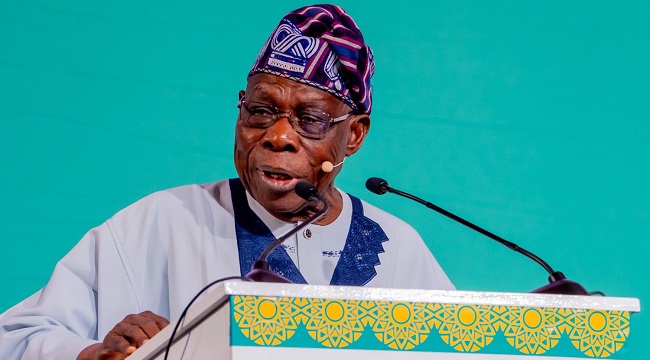
Former President Olusegun Obasanjo has called for greater private sector participation in Nigeria’s energy sector, saying government alone cannot resolve the country’s persistent electricity crisis. Obasanjo spoke at the Youth Governance Dialogue, themed “African Youth and Renaissance”, held at the Youth Development Centre of the Olusegun Obasanjo Presidential Library in Abeokuta, the Ogun State capital.

Read →
Join BRICS, Nigeria has no business with poverty — Falana tells FG
business

Join BRICS, Nigeria has no business with poverty — Falana tells FG

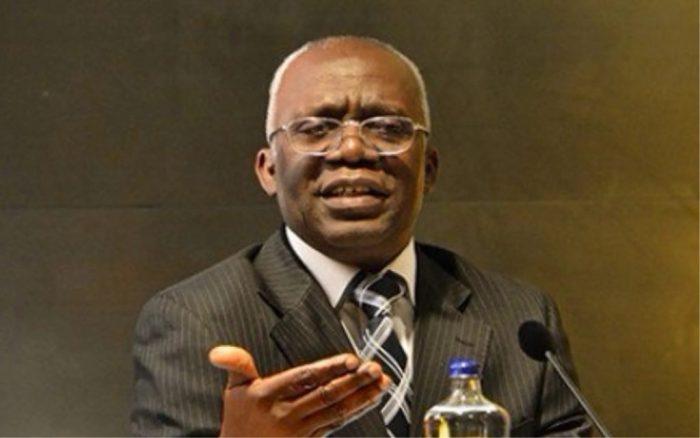
Join BRICS, Nigeria has no business with poverty — Falana tells FG. …Urges government to prioritise local refining, alternative economic policies By Favour Ulebor, Abuja A Senior Advocate of Nigeria, Femi Falana, has urged the Federal Government to join the BRICS economic bloc and adopt alternative economic policies, declaring that Nigeria has no business with poverty. He urged the Federal Government to reconsider economic policies promoted by the IMF and the World Bank and explore alternative programmes that prioritise domestic production, economic self-reliance and the welfare of Nigerians.

Read →
$500m loan: Don’t saddle your successor with debt, Atiku tells Tinubu
politics

$500m loan: Don’t saddle your successor with debt, Atiku tells Tinubu

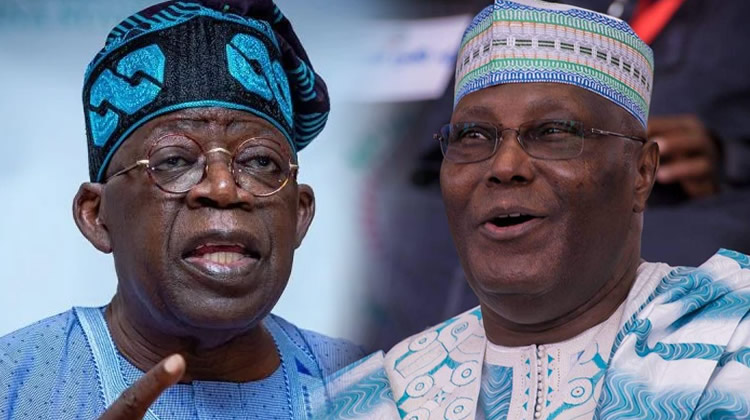
By Luminous Jannamike Former Vice-President and African Democratic Congress (ADC) presidential candidate, Atiku Abubakar, has warned President Bola Tinubu against committing Nigeria to a proposed $500 million World Bank loan shortly before the end of his current four-year tenure, arguing that no administration should saddle the country with fresh debt without adequate justification and public scrutiny. In a statement by Phrank Shaibu, Director of Strategic Communication, ADC Presidential Campaign Council, Atiku described the proposed loan as an attempt to mortgage Nigeria’s future and urged…

Read →
Ghana’s banking sector urged to embrace AI, technology to remain competitive
business

Ghana’s banking sector urged to embrace AI, technology to remain competitive

The call was made by the Minister of Education, Haruna Iddrisu, at the 2026 Ghana Banking Conference organised by the Chartered Institute of Bankers, Ghana, under the theme “Banking on the Future: Trust, Technology and Transformation.” President of the Chartered Institute of Bankers, Ghana, Dr Ellen Ohene-Afoakwa, said the rapid changes in the banking industry make it necessary for professionals to continuously upgrade their skills to remain relevant.

Read →