Spurring Ebonyi’s shy momentum, by Ochereome Nnanna
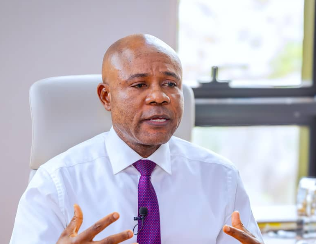
Ebonyi State is on my mind today for a reason. Francis Ogbonna Nwifuru, who served as the two-term Speaker of the Ebonyi State House of Assembly.
Ebonyi State is on my mind today for a reason. On 1st October 2026, it celebrated its 30th anniversary under the helmsmanship of Governor Francis Ogbonna Nwifuru. The late Head of State, General Sani Abacha, created six new states from each of the newly designated geopolitical zones: Ebonyi, Ekiti, Bayelsa, Nasarawa, Gombe and Zamfara. Interestingly, Nwifuru, who now sits pretty at the helm of its affairs, was only 18!
Obviously, when this state was created, Nwifuru and young Ebonyians like him were tailor-made to inherit its future. The state, which was carved out of Abia and Enugu States, is the smallest by population and landmass, as well as well behind the developmental level of its four senior sisters: Abia, Imo, Enugu and Anambra. However, Ebonyi has been unusually blessed with a string of good-performing governors since 1999.
On this score, only Enugu State compares. In 1999, Dr Sam Egwu, a crop scientist and celebrated academic, emerged as the first elected governor. Egwu plunged headlong into education and agriculture, establishing the Ebonyi State University. After his eight years, he handed over to a veteran administrator, Chief Martin Elechi. Elechi’s main legacies were the construction of roads and 39 “Bridges of Unity” across the state.
Elechi also handed over to his former Deputy Governor, Dave Umahi, a megalomaniac who also went on to display his craft as a construction engineer, building massive institutions, including city roads, flyovers, markets, an airport (though poorly done), and the Federal University Teaching Hospital, which he painted in riotous colours and named after himself.
Umahi’s airport was later abandoned, and Nwifuru had to reconstruct the runway. The revolving chair eventually settled on Rt. Hon. Francis Ogbonna Nwifuru, who served as the two-term Speaker of the Ebonyi State House of Assembly. No other Ebonyi Speaker was able to serve beyond one term. Nwifuru’s story is a classic “grass to grace” tale. He was once a mason (bricklayer).
But he attended the Ebonyi State University and specialised in the building sciences. He is determined to prove his trade through concrete examples (forgive the pun). While his predecessors concentrated on the big roads and bridges, Nwifuru has chosen to fix his efforts on the interconnecting rural roads which take the people home right to their communities.
He launched his 115 “two-kilometres-each” roads, complete with bridges and culverts. Many of them have been completed, while the rest are assignments for his envisaged second term in office. The logic behind this strategy is impeccable. Ebonyi State, small as it is by landmass, is one of the frontline agrarian states in the country, with its native population renowned for their deep agricultural traditions.
These two-kilometre roads, when completed, will link between 230 and 300 rural communities and enable them to evacuate their agricultural products to commercial centres. This will create employment and wealth and bring millions of Ebonyi youths hawking trash in urban streets throughout Nigeria back to the land where the real wealth hides in plain sight.
The government is investing heavily in tractors, the training of youth and women, the construction of markets, fertiliser production, distribution and policing against racketeering and fakery. Abandoned water projects are being revived, with new ones being constructed, particularly in Abakaliki, Ezillo, Afikpo and others. The Nwifuru administration has also paid great attention to the sector that makes the child of nobody become somebody without the special graces of somebody – education.
He, like most of us, is a good example of the wonder that education can perform in a person’s life. From bricklayer to Parliamentary Speaker and Governor – can you beat that! From the recruitment of 2,000 basic education teachers to the construction of 12 classrooms each in 39 basic education schools; from the sponsorship of 1,400 Ebonyi indigenes for Master’s and PhD scholarships in UK institutions to massive investments in ICT and smart schools, Nwifuru is paving the way to lift more youths from nobody to somebody.
Every sector is receiving attention. There are some areas that Governor Nwifuru and other Ebonyi ruling elite need to pay more attention to in order to hasten the human development indices. Right now, Ebonyi ranks with Sharia Muslim states in the North, such as Sokoto, Zamfara, Kebbi, Jigawa, Katsina and others, in human development indices. These are the states where governments spend huge proportions of federal allocations on the political elite, emirs and clerics.
The Nwifuru government’s construction of duplexes for all traditional rulers in the state is what typical far-North states do because governance over there is “rulers first”. In Igboland, communities, not governments, build “befitting” palaces for their traditional rulers. Also, the state bears huge pension burdens of past governors. Former Governor Umahi failed to pay pensi
- ebonyi
- state
- nwifuru
- road
- governor
- education
- construction
- enugu