Atonomics at KNUST: The Minister asked us to test his plan. Here is where to start

Yet that was the most striking line of Dr Cassiel Ato Forson’s pre-budget engagement at KNUST on Monday. Ghana’s boom-and-bust cycles have been driven largely by fiscal indiscipline, and his call for discipline to become “a culture of our entire nation” is the right one.
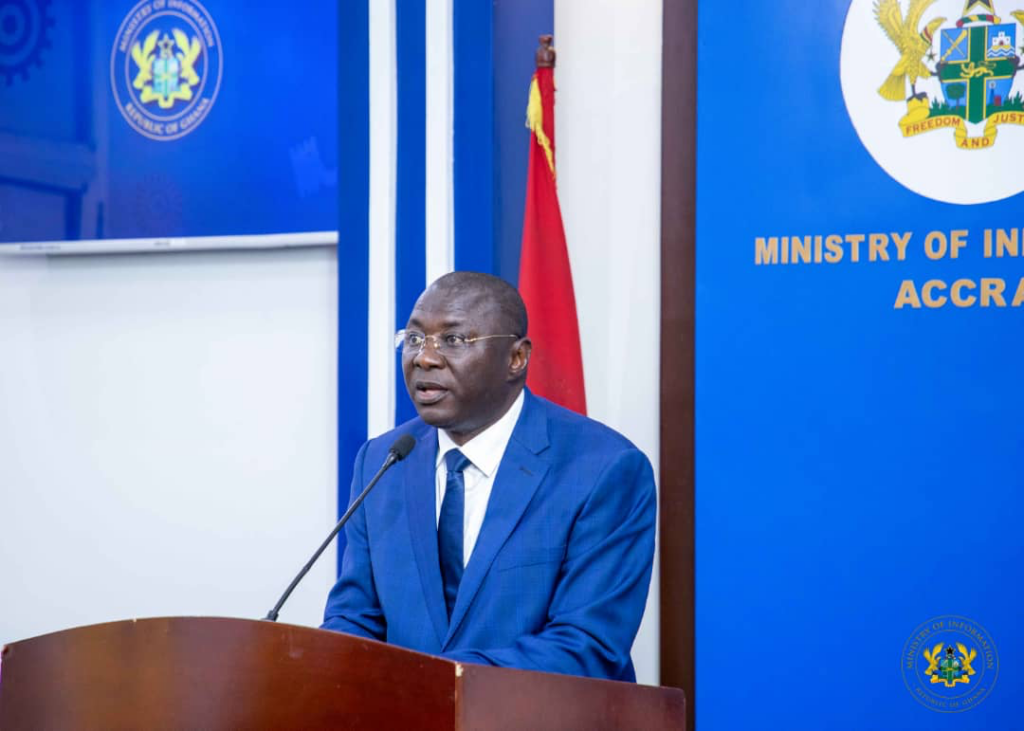
It is not every day that a Finance Minister stands before a university audience and asks to be checked. Yet that was the most striking line of Dr Cassiel Ato Forson’s pre-budget engagement at KNUST on Monday. “Test the assumptions behind the policies we will be announcing,” he told staff and students, “and show us where correction is needed.” The Minister deserves credit, first, for showing up.
He told the audience he had returned to KNUST “with responsibility,” and he stayed to answer five rounds of questions from staff and students. Our students heard the country’s chief fiscal officer explain his choices in person, and many put their own questions to him directly. Pre-budget engagements like this should become the norm. Three days before he presents the 2027 Budget on 12 November, the Minister laid out what some have begun to call “Atonomics”: spend only what you have, finish what you start, bring down the cost of credit, buy Ghanaian, and write the rules into law.
As an economist at his alma mater, I want to take him at his word. What he gets right The Minister’s diagnosis is hard to dispute. Ghana’s boom-and-bust cycles have been driven largely by fiscal indiscipline, and his call for discipline to become “a culture of our entire nation” is the right one. Rules that depend on one minister’s temperament do not survive elections.
His case on credit is equally strong. When he took office in January 2025, the 91-day Treasury bill paid about 29% and businesses borrowed at 35–36%. He reports the bill rate is now about 4.5%, with some firms borrowing at 9–12%. He was candid that government itself crowded out private borrowers: bank credit to the private sector was only about 11% of GDP, against 25–26% in Côte d’Ivoire.
His goal of lifting it above 20% is the right target. And his insistence on phasing is overdue. Starting 111 hospitals when the money could finish 10 is how Ghana fills its landscape with abandoned projects. Spreading the US$10 billion New Economy programme over four years, about US$2.5 billion a year, is sensible macroeconomics, not timidity. Where the numbers need testing The Minister invited scrutiny, so here are three places where his own 2027 Fiscal Strategy Document tells a more complicated story.
First, the debt path after 2028. The Minister spoke of reducing debt by 0.5% of GDP a year. The FSD projects debt falling to about 42% of GDP in 2028 and then rising back to about 44.8% by 2034, just under the 45% legal ceiling. The New Economy uses up most of the headroom. A shock to growth, the cedi or interest rates would push Ghana to the line.
Second, crowding out has not gone away. The FSD plans no Eurobonds and negative net foreign financing, so government will still borrow around 5% of GDP a year at home, mostly from banks. That sits uneasily with the goal of doubling private credit. Third, buy-Ghanaian has costs. Requiring Free SHS feeding to use local rice, and tying rice import permits to local purchases as Nigeria once did, will help farmers.
But it may raise food prices, encourage smuggling, and test Ghana’s commitments under the African Continental Free Trade Area. The Minister did not say how he will square these. What the room told him The most valuable evidence on Monday came not from the podium but from the floor. A young graduate who answered the call to farm described registering his two-hectare farm and being asked for an upfront tax of GH¢5,000.
That bill has since more than doubled to GH¢12,000. When his plantain reached the market, he was offered GH¢20 a bunch. A colleague who works with market women explained why: market queens control access and set prices, leaving farmers little bargaining power. A lecturer asked how his students could get an affordable loan of GH¢50,000 to GH¢150,000 for a truck to aggregate maize.
A student asked what institution will give young people a real voice in economic policy, not just a place in government programmes. These are not complaints about the vision. They are the points where the vision meets the market. The New Economy will succeed or fail at the farm gate, the tax office and the loan desk, not in the Budget Statement. What to watch on Thursday The Minister promised policies on agriculture, textiles, local procurement, AI and affordable credit.
Citizens should judge the Budget against five simple tests: Does the primary surplus target of 0.5% of GDP hold, on a commitment basis? Are the New Economy’s projects named, costed and phased, starting with about GH¢30 billion in 2027? Do new taxes and levies fall on loopholes rather than on the young people starting businesses? Is there a concrete plan for farm-gate prices: storage, aggregation and fair access to markets?
Will jobs be measured by independent labour surveys, not by enrolments in government schemes? The Minister closed by telling students they are “the very reason” for this effort. KNUST, and every university in Ghana, should now do what he asked: measure the results honestl
- minister
- knust
- student
- credit
- ghana
- gdp
- bill
- debt