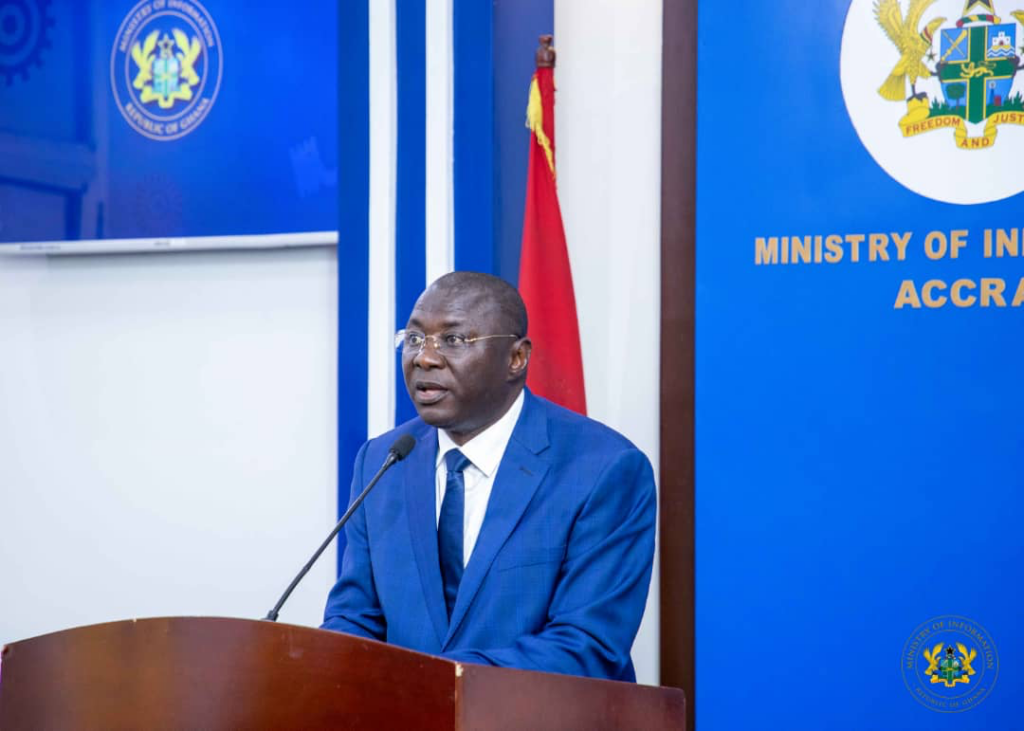
Account for failed 24-hour Economy before selling us ‘new 24-hour economy’ slogan – Dr. Amin Adam to Finance Minister
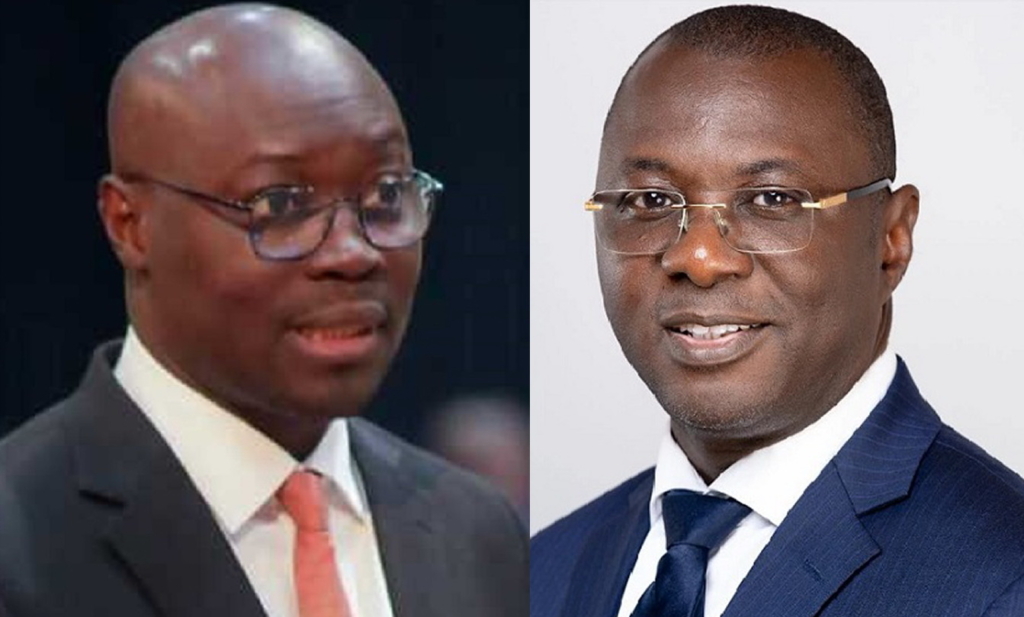
Former Finance Minister, Dr. Mohammed Amin Adam, has fired a major salvo at the government ahead of tomorrow’s presentation of the 2027 Budget, demanding that the Finance Minister first account for the failed promises of the 24-Hour Economy before asking Ghanaians to embrace the new “New Economy” slogan. In a blistering open letter released today, Dr. Amin Adam accused the government of celebrating a “paper economy” while the “pocket economy” of ordinary Ghanaians continues to hurt, citing a KPMG pre-budget survey in which 71% of respondents named jobs and youth employment as their top…
Former Finance Minister, Dr. Mohammed Amin Adam, has fired a major salvo at the government ahead of tomorrow's presentation of the 2027 Budget, demanding that the Finance Minister first account for the failed promises of the 24-Hour Economy before asking Ghanaians to embrace the new "New Economy" slogan.
In a blistering open letter released today, Dr. Amin Adam accused the government of celebrating a "paper economy" while the "pocket economy" of ordinary Ghanaians continues to hurt, citing a KPMG pre-budget survey in which 71% of respondents named jobs and youth employment as their top priority.
He questioned the credibility of the government's proposed US$10 billion New Economy programme, the decision to cut the primary surplus target from 1.5% to 0.5% of GDP to fund it, and the recent reversals in inflation and the cedi, warning that the country cannot afford another repackaged promise without financing, milestones and measurable jobs.
Of Failed Promises and Repackaged Slogans: Ghana Needs Jobs, Not Another Economic Catchphrase - An Open Letter to the Minister for Finance
Ghana does not suffer from a shortage of economic slogans. What we lack are sufficient productive jobs, thriving businesses, rising real incomes and the economic freedom that allows ordinary citizens to improve their lives through enterprise and hard work.
Tomorrow, you will present what your government has christened the "New Economy Budget." But before asking Ghanaians to embrace another grand economic slogan, perhaps you should first account for the promises of the old one.
Not long ago, the NDC government promised a transformative 24-Hour Economy, backed by ambitious investment and employment targets. Ghanaians were promised jobs, expanded production and new opportunities. Yet the government has not provided a sufficiently convincing and independently verifiable account of jobs created, investments mobilised or businesses transformed under that programme. Now comes the "New Economy." What exactly is new, beyond the branding?
The economic reality confronting ordinary Ghanaians is considerably less glamorous than the government's slogans suggest.
The KPMG pre-budget survey released today provides a sobering reality check. Some 71 percent of respondents identified jobs and youth employment as a national priority, while 54 percent cited the cost of living. These are not abstract economic indicators. They reflect the everyday anxieties of households struggling to make ends meet and young people searching for opportunities.
Inflation may have fallen substantially, but lower inflation does not mean prices have returned to affordable levels. October's headline inflation of 5.5 percent still masks sharper pressures in essential services. For households facing accumulated price increases and constrained purchasing power, macroeconomic stability must mean more than favourable statistics.
The findings from KPMG's survey highlight continuing pressure on household budgets despite the fall in headline inflation from its earlier peaks.
Indeed, the pocket economy is hurting whilst the paper economy is being celebrated.
Those concerns should be central to the 2027 Budget, rather than overshadowed by celebrations of macroeconomic gains.
Honourable Minister, we acknowledge the importance of policy continuity. Your government has maintained important elements of the economic stabilisation and reform efforts initiated under the previous NPP administration, including the Gold Purchase Programme and the debt restructuring process. Indeed, inflation had already declined from its peak of 54.1 percent in December 2022 to 23.8 percent by December 2024, before your administration took office. The fall in inflation was 31 percentage points. Under your government, it fell further to 3.2 per cent in March 2026, a decline of 19.8 percentage points. Therefore the subsequent disinflation represents further progress, but it did not begin in January 2025.
Yet recent developments also demand caution as we have observed a worrying trend of reversals in economic gains.
Inflation, having fallen to around 3.2 percent earlier in 2026, increased to 5.5 percent by October. The cedi, following its substantial appreciation in 2025, had depreciated by approximately 9.5 percent against the US dollar by September 2026. These developments do not erase the stabilisation gains entirely, but they demonstrate how fragile those gains can be.
Growth figures also warrant closer scrutiny. According to the Bank of Ghana, real GDP growth moderated from 6.6 percent in the second quarter of 2025 to 6.0 percent in the corresponding quarter of 2026. More importantly, non-oil GDP growth slowed from 8.5 percent to 5.4 percent, while agricultural growth declined from 7.1 percent to 3.9 percent.
Interestingly, ICT continues to contribute significantly to economic growth. The same digital economy that the NDC, the President, you and your foot soldiers once sought to dismiss as a distraction from economic management is today an important source of growth under its own administration. This should provide some perspective on the digitalisation agenda championed by Dr Mahamudu Bawumia. Economic progress is cumulative, and governments should acknowledge the foundations upon which they build.
Now comes your proposed US$10 billion New Economy investment programme, equivalent to approximately US$2.5 billion annually over four years. Where will the money come from, and how much of it is genuinely new?
The reported financing framework proposes reducing the primary surplus target from 1.5 percent to 0.5 percent of GDP, alongside additional revenue mobilisation. But relaxing a fiscal target does not create new wealth. It permits additional spending, potentially at the expense of faster debt reduction. Why should the country weaken an important fiscal anchor so soon after a painful debt restructuring?
If the government intends to amend the fiscal framework, it must demonstrate that the resulting fiscal space will finance genuinely productive investments, rather than recurrent expenditure, politically attractive projects or spending pressures ahead of the next elections.
And if the government has yet to convincingly demonstrate the financing and implementation of its earlier US$4 billion 24-Hour Economy ambition, why should Ghanaians embrace another US$10 billion promise without demanding a credible financing plan, clear implementation milestones and measurable employment outcomes?
The central issue is not the size of the announcement but the credibility of the financing, the quality of the investment and the economic returns it will generate.
Ghana certainly needs economic transformation. But transformation is not achieved by renaming programmes, multiplying policy acronyms or announcing increasingly ambitious investment figures. It requires fiscal discipline, competitive businesses, affordable credit, reliable infrastructure, productive investment and institutions capable of delivering results.
Economic growth is not a slogan. Jobs are not created by press conferences. Prosperity cannot be legislated into existence, and economic freedom cannot be delivered through political branding.
As you present the 2027 Budget, the real test will not be how compellingly you describe the New Economy, but whether you can demonstrate how it will be financed, how it differs from previous promises and how it will improve the lives of ordinary Ghanaians.
Before unveiling a New Economy, account for the 24-Hour Economy.
Ghana needs a functioning economy, not another freshly packaged promise.
- economy
- minister
- slogan
- government
- hour
- finance
- inflation
- amin