Bundeswehr study exposes widespread sexual harassment in German military
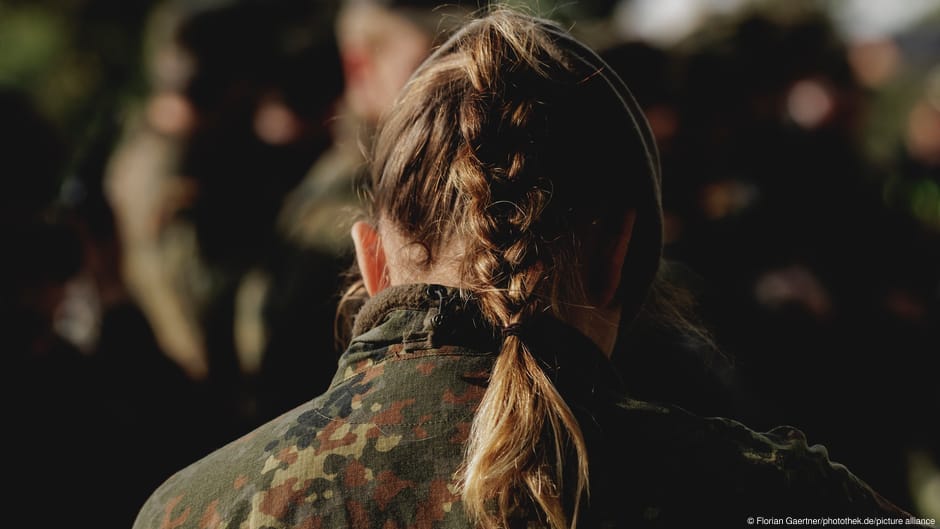
Sexual misconduct in the Bundeswehr is far more widespread than previously known, with younger women disproportionately affected. Defence Minister Boris Pistorius has called for a policy of "zero tolerance."
"It was clear to us from the outset that the analysis would uncover uncomfortable truths," Defence Minister Boris Pistorius of the center-left Social Democratic Party (SPD) told theBundestag on Wednesday. Earlier that day, he had presented the findings of the Bundeswehr's first study into unreported cases of sexual misconduct to the Defence Committee.
According to the findings, sexual misconduct in the Bundeswehr is far more widespread than previously known. "The study has shown that only between one third and one sixth of cases are reported," Pistorius said, announcing an action plan to address the issue. "There is zero tolerance for sexual misconduct in the Bundeswehr. This is nothing less than a matter of upholding the human dignity enshrined in our Basic Law. And that principle applies all the more within the Bundeswehr."
The study examined incidents that had gone unreported, the so-called "dark figure" of cases that never reach official statistics. To this end, the Bundeswehr Centre of Military History and Social Sciences (ZMSBw) surveyed 45,000 service members, around 18% of whom responded. More than 8,100 questionnaires were evaluated and supplemented with individual and group interviews. According to the institute, the data are scientifically representative.
According to the study, younger women in the lower ranks are particularly affected by sexual misconduct. Among men, non-heterosexual soldiers are disproportionately affected. The perpetrators are predominantly male. Statistically, combat units do not differ from the rest of the armed forces.
Female service members in units with a higher proportion of women (more than 15%) are less likely to be affected.
Verbal harassment is by far the most common form of misconduct, according to the study. Some 72% of female soldiers and 31% of male soldiers said they had experienced verbal harassment at least once during their military service. In the 12 months preceding the survey, 38% of female soldiers and 16% of male soldiers reported experiencing verbal sexual harassment. 9% of female soldiers and 3% of male soldiers reported incidents of physical sexual misconduct. 2% of both women and men said they had experienced sexual violence.
The study also examined why service members chose not to report incidents. The most commonly cited reason was a desire not to draw attention to themselves. "There appears to be a lack of awareness of the reporting channels. And, for me, the decisive issue is trust in those channels," Pistorius concluded.
In response, the Bundeswehr plans to improve awareness of how and where cases of sexual harassment can be reported. That is precisely where the environmentalist Greens, who are in opposition in the Bundestag, direct their criticism. Defence policy spokesperson Sara Nanni is calling for "an external reporting office, alongside the regular disciplinary process, with investigative powers and the authority to take disciplinary action where appropriate." Such an independent point of contact, she argues, is needed in cases where superiors within the Bundeswehr fail to fulfil their responsibilities.
Another consequence of the study is the expansion of support services for those affected. A counseling center established in early November will soon be available around the clock. Supervisors are also to receive enhanced awareness training and improved instruction. "Sexual misconduct will become part of training at every level, from the very beginning," said Bundeswehr Inspector General Carsten Breuer.
In addition, the way supervisors handle reported cases will become a standing criterion in their performance evaluations. "Anyone who fails to lead by example, tolerates misconduct, or does not address it consistently will no longer hold a leadership position," Defence Minister Pistorius stressed.
The study was prompted by a growing number of reports of sexual misconduct received by former Parliamentary Commissioner for the Armed Forces Eva Högl. Most of those who approached her were female soldiers. Högl called for the study into unreported cases in 2024. The process gained further momentum following incidents at the Parachute Regiment in Zweibrücken that came to light at the beginning of this year and also involved allegations of sexual misconduct.
The current Parliamentary Commissioner for the Armed Forces, Henning Otte, described the figures revealed by the study as "dramatically high." The findings had also made it clear, he said, "that there is a lack of trust in the Bundeswehr's structures. The Ministry of Defence must now take this study seriously and translate its findings into a leadership culture that is truly lived in practice."
The Bundeswehr is in urgent need of additional personnel and has been actively recruiting women. However, the study's findings are unlikely to make attracting more female recruits any easier. Women remain significantly underrepresented across nearly all branches of the armed forces.
- bundeswehr
- study
- harassment
- military
- misconduct
- woman
- defence
- minister