Nigeria still needs a national carrier, by Adekunle Adekoya

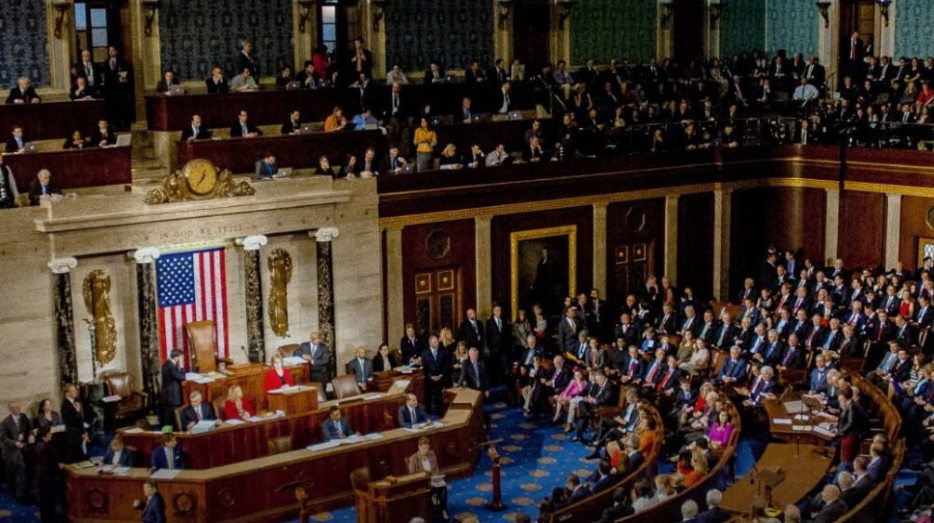
RECENTLY, the Senate was debating issues relating to the need to revive Nigeria Airways, our defunct national carrier, or the one that became a sakamanje run under the Buhari administration, called Nigeria Air. The Senate rejected calls for the revival of Nigeria Airways and Air Nigeria, and instead urged the Federal Government to renegotiate and enforce Nigeria’s Bilateral Air Services agreements, BASA, with China to allow Nigerian airlines to operate direct flights to the Asian country.
RECENTLY, the Senate was debating issues relating to the need to revive Nigeria Airways, our defunct national carrier, or the one that became a sakamanje run under the Buhari administration, called Nigeria Air. The Senate rejected calls for the revival of Nigeria Airways and Air Nigeria, and instead urged the Federal Government to renegotiate and enforce Nigeria’s Bilateral Air Services agreements, BASA, with China to allow Nigerian airlines to operate direct flights to the Asian country.
According to the Senate, there is the urgent need for a review of existing aviation arrangements to address the imbalance in flight operations between both countries and ensure that Nigerian carriers enjoy reciprocal access to China directly. The Senate also urged the Federal Government to explore ways of establishing a viable national carrier that would fly the nation’s flag to ease challenges confronting Nigerian air travellers rather than what it described as wasting time in discussing dead issues.
The Senate also asked the Federal Ministry of Foreign Affairs to initiate diplomatic talks with China regarding business visa facilitation for Nigerian traders and reciprocal slot allocations to Chinese airports. Resolutions of the Senate penultimate Tuesday were a sequel to a motion titled “Enforcing the Bilateral Air Service Agreement (BASA)”. The motion was moved by the Senate Whip, Senator Mohammed Tahir Monguno (APC, Borno North).
The Senate then mandated the committees on Aviation and Foreign Affairs to ensure compliance and report back in four weeks. To all intents and purposes, the Senators seem uninterested in any effort by the executive to revive a national carrier for our country. There are many ways to look at it. One is the capital outlay that will be required to get a national carrier off the ramp and its aircraft into the skies.
Another thing is whether the coming of a national carrier will in reality upset the aviation apple cart as it is now, or help bolster it’s fortunes. There are even more, but I would like the Senators to reflect and use the experience of Switzerland. Switzerland once had a national carrier called SWISSAIR; it flew here and had offices in many of our cities.
It also provided employment opportunities for many Nigerians. Many of our textile traders, particularly those of Lagos Island that dealt in exotic lace fabrics and brocade, had a sweet run while SWISSAIR was here. They simply booked Lagos-Zurich tickets, and from Zurich, took trains to St. Margrethen, in Gallen, where the textile mills are and bought their goods.
In the late 90s till early 2000s, a man called Philippe Bruggiser was Managing Director of SWISSAIR. Under him, the fortunes of the airline dipped, and it subsequently went under. But the Swiss love their airline. As the story went, every Swiss adult contributed money to refloat the airline. The new airline was called SWISS, and it was relaunched in March 2002.
More than 300 journalists worldwide were invited to cover the relaunch. I was one of them, alongside five other Nigerian journalists. Andre Dose, then managing director of Cross Air, a regional airline in Switzerland was appointed to manage the new SWISS airline. That was, in short, how the Swiss revived their airline. The exit of the Swiss airline meant loss of revenue to the country, at least from Nigeria and other countries with trade interests.
Now, it’s Air France that is reaping the benefits. Traders now fly from Lagos to Lyon in France, and connect St. Margrethen by train from Lyon. Similar benefits await Nigerians if they have a national carrier. Apart from the convenience of direct travels that will be easier with a national carrier, our earnings are just being scooped by the carriers of other countries , particularly Ethiopia, United Arab Emirates, the UK and many more others.
Nigerians love to travel, and spend a lot on their trips. For example, note that despite Air Peace flying Lagos-London, both British Airways and Virgin Atlantic Airways are still doing robust business here, and will never be in a hurry to leave. Same things goes for Emirates of the UAE, Qatar Airways, Ethiopian Airlines and others. Simply put, Nigeria can claim a chunk of all the money being made by these airlines from Nigerians, and one sure way is by having a national carrier.
I think since the winding up of Nigerian Airways, successive governments have not given serious thought to aviation sector development. That is why the Nigerian Eagle Airline project failed; that was a venture that would have regrown Nigeria Airways with the help of South African Airways. The Air Nigeria project similarly failed, and some of the architects of that failure are now occupying high offices.
Perhaps one of the most painful was the City Centre project, part of a major plan to develop Lagos Airport as the aviation hub for West and Central Africa. That project was proposed by Lufthansa, German Airlines in 1993. Beyond parliamentary debates, I am of the
- carrier
- nigeria
- airline
- senate
- air
- country
- federal
- china