business

GH¢61bn interest payments threaten funding for development – Minority
GH¢61bn interest payments threaten funding for development – Minority

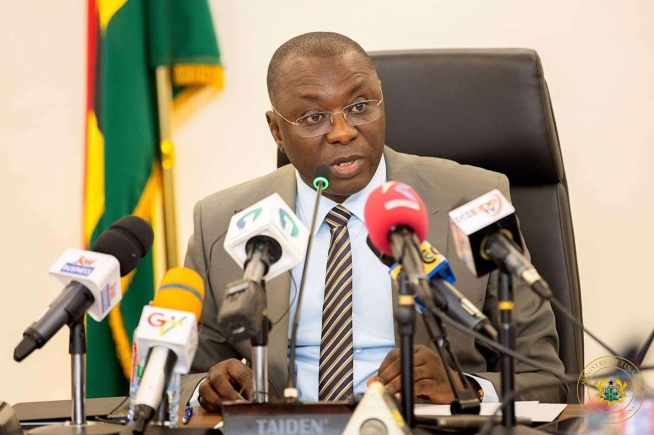
The Minority has raised concerns about Ghana’s projected GH¢61 billion interest payments in 2027, warning that the cost of servicing public debt is limiting the resources available for infrastructure, agriculture and other productive sectors. In its assessment of the 2027 Budget, Ranking Member of Parliament’s Finance Committee, Dr Mohammed Amin Adam, said the amount allocated to interest payments was higher than the combined funding for several key sectors expected to drive economic growth.

The Minority has raised concerns about Ghana’s projected GH¢61 billion interest payments in 2027, warning that the cost of servicing public debt is limiting the resources available for infrastructure, agriculture and other productive sectors.

In its assessment of the 2027 Budget, Ranking Member of Parliament’s Finance Committee, Dr Mohammed Amin Adam, said the amount allocated to interest payments was higher than the combined funding for several key sectors expected to drive economic growth.

He noted that allocations to agriculture, energy, the Big Push infrastructure programme, youth development, industry and tourism amounted to approximately GH¢37.87 billion, significantly below the projected interest bill.

The Minority also argued that interest payments would exceed the allocations to both education and health, raising questions about the government's spending priorities.

“Where exactly is the growth going to come from?” Dr Amin Adam asked.

He said Ghana risked returning to a cycle in which a growing proportion of public revenue was devoted to debt servicing rather than investments capable of expanding the economy and creating employment.

“Without greater fiscal discipline, prudent borrowing, effective cash and liquidity management, and a deliberate reorientation of public expenditure towards productive investment, we risk perpetuating a cycle in which an increasing share of public resources goes into servicing debt rather than financing economic growth,” he said.

The Minority is therefore calling for stronger expenditure controls and a shift towards productive investments to ensure that the country's economic recovery is sustainable.

  • interest
  • minority
  • payment
  • funding
  • development
  • debt
  • growth
  • investment

Summaries and tags are generated automatically. Stay informed with VidiaNews.

Related news

Debt servicing taking more money than key growth sectors – Minority
politics

Debt servicing taking more money than key growth sectors – Minority

The Minority in Parliament says Ghana’s rising interest payment obligations are undermining the government’s ambition to accelerate economic growth and create jobs. The Ranking Member of Parliament’s Finance Committee, Dr Mohammed Amin Adam, said the GH¢61 billion allocated for interest payments in the 2027 Budget was significantly higher than the combined funding for several sectors expected to stimulate economic activity.

Read →
Non-oil sector growth slows sharply, raising concerns over Ghana’s economic outlook – Minority
business

Non-oil sector growth slows sharply, raising concerns over Ghana’s economic outlook – Minority

The Minority has questioned the strength of Ghana’s economic recovery, pointing to a significant slowdown in non-oil sector growth as evidence that underlying economic activity is losing momentum. Ranking Member of Parliament’s Finance Committee, Dr Mohammed Amin Adam, said non-oil GDP growth declined from 8.2% in the first half of 2025 to 5.9% over the corresponding period in 2026.

Read →
Minority accuses gov’t of misleading Ghanaians with ‘no new taxes’ claim in 2027 budget
business

Minority accuses gov’t of misleading Ghanaians with ‘no new taxes’ claim in 2027 budget

The Minority has accused the government of presenting a misleading picture of its tax policy by repeatedly insisting that the 2027 budget introduces no new taxes while projecting a sharp increase in revenue from fees and charges. Finance Minister Dr Cassiel Ato Forson has maintained that the 2027 budget will introduce no new taxes, saying the government will instead improve compliance, close revenue leakages and modernise tax administration.

Read →
Ghana’s economic recovery failing to translate into improved living conditions – Amin Adam
business

Ghana’s economic recovery failing to translate into improved living conditions – Amin Adam

The Minority has accused the government of failing to translate improvements in key economic indicators into meaningful relief for households, arguing that the 2027 Budget does not adequately address the rising cost of living and unemployment. Speaking at a press conference in Parliament on Friday, November 13, Ranking Member of Parliament’s Finance Committee, Dr Mohammed Amin Adam, said the government’s emphasis on lower inflation, improved fiscal balances and stronger credit ratings overlooked the economic difficulties confronting ordinary Ghanaians.

Read →
Minority condemns 35% reduction in funding for social interventions
politics

Minority condemns 35% reduction in funding for social interventions

The Ranking Member of Parliament’s Finance Committee, Dr Mohammed Amin Adam, said allocations covering LEAP, school feeding, capitation grants and other social transfers had been reduced from GH¢3.46 billion in the projected 2026 outturn to GH¢2.26 billion in 2027. Speaking at Parliament on Friday, November 13, after Finance Minister Dr Cassiel Ato Forson presented the 2027 Budget, Dr Amin Adam said the reduction in social spending contradicted the government’s claims of economic recovery.

Read →
2027 budget overlooks immediate concerns of Ghanaians – Amin Adam
business

2027 budget overlooks immediate concerns of Ghanaians – Amin Adam

The Minority in Parliament says the 2027 Budget has failed to address the immediate concerns of Ghanaians, particularly unemployment and the rising cost of living. The Ranking Member of Parliament’s Finance Committee, Dr Mohammed Amin Adam, said the government’s emphasis on improving macroeconomic indicators had not translated into corresponding improvements in the living conditions of ordinary citizens.

Read →