Fight the climate crisis or go for growth? There is a way Burnham can do both
Fight the climate crisis or go for growth? Andy Burnham is a prime example.
The environmental and economic dilemmas he faces are formidable but, with a bold plan, he could set an example for leaders around the world
For politicians of the centre-left especially, it’s the great dilemma of the age. How do you do what everyone can see is essential to save the planet from boiling – even as your voters demand action to get the economy growing and to make life more affordable? Plenty of activists will tell you there’s no contradiction, that tackling the climate crisis makes economic as well as ecological sense and, in the long term, you know they’re right. But you don’t live in the long term. You’re running the government right now and facing several unavoidable, binary choices.
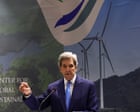
Andy Burnham is a prime example. This week, he addressed the Cop summit in Antalya, promising “a new era of British leadership” in the struggle against global heating. It’s important to him to talk that way: his political strategy relies on shrinking the appeal of the Green party, whose electoral success earlier this year helped remove his predecessor. But talk only takes you so far. Eventually the words have to be matched by action.
That’s where things get tricky. Last month Burnham’s government approved the Jackdaw gasfield in the North Sea, dismaying climate activists. Soon there will have to be a decision on Rosebank, the much bigger proposed new oilfield northwest of Shetland. There are also signs that ministers are preparing to weaken the targets set for the car industry to shift to electric vehicles. And this week, the chancellor, John Healey, declared himself fully “behind building a third runway at Heathrow”. Small wonder that campaigners are talking of hypocrisy and the government’s “crumbling” credibility.
What is Burnham to do? He has Healey in one ear, telling him that a thriving airport is an engine for economic growth, doubtless alongside the oil, gas and car industries. And in the other he has the climate scientists, reminding him that global carbon emissions are at record levels and the planet is getting hotter every year. What option does he have, except to keep putting off the moment of choice, buying himself time by saying, for example, that Rosebank is a “quasi-legal decision” that cannot be hurried?
Naturally, there are advocates for each of the binary options, whether it’s green activists demanding he put the planet first, regardless of the impact on jobs or prices, or business leaders insisting it be the other way around. But he is in a different position from each of those warring sides – because he has to come up with something both can live with. The answer might just be an arresting blend of pragmatism and radicalism – both, and at the same time.
Such an approach would begin with saying a couple of things campaigners might not want to hear. First, that the most reliable route to reducing the use of fossil fuels lies not with curtailing supply – blocking production – but with slashing demand. Or as Michael Jacobs, who served as the climate and energy adviser to Gordon Brown in Downing Street, told me this week: “We need to destroy the demand for oil and gas.” On that goal, there has been remarkable progress, whether measured in the shift to renewable sources of power, such as wind and solar, for the generation of electricity or the move to electric vehicles: last month just under one in two new cars registered in the UK were either fully electric or plug-in hybrids.
The second message Burnham might deliver to a wary, green audience would be: symbols matter, but they should not obscure the thing they are meant to symbolise. In that context, and given that destroying demand is more important than curbing supply, he could argue that the green light he gave to Jackdaw should not be overplayed. That project is relatively small and has an expected lifespan of only about 10 years. Yes, it became a signifier, but the bigger picture is what matters.
It would be much harder to make that argument for Rosebank, which is bigger than Jackdaw and set to last for 25 years, and harder still for Heathrow, not least because emissions from aviation are stubbornly difficult to reduce: you can’t shrink demand for aviation fuel, because, as of now, there are few readily available alternatives. So a third runway means a serious increase in the UK’s emissions of CO2.
But what if Burnham felt he could not rebuff the growth lobby on Heathrow and Rosebank, especially if he also stands firm on his electric vehicle targets despite the howls of protest from UK carmakers? Is there a bone he could throw them, while not enraging the climate-concerned voters he needs to keep on side?
One option would be to grant reluctant consent to Rosebank – but follow it with a blanket policy that says any fossil fuel production in the North Sea must engage in carbon capture and storage, or CCS, essentially sending the equivalent amount of carbon that will be released by burning the extracted oil or gas back into the ground from which it came. It’s an expensive process, with vehement critics, and such a move would have to be phased, but it is possible. Norway has been running a CCS operation at the Sleipner field in its part of the North Sea for 30 years.
The UK government has set aside about £21bn to subsidise CCS, but here’s where the radicalism comes in. Healey should tell the fossil fuel companies, whatever the decision on Rosebank, that if they want to drill in the North Sea, they will have to pay to capture and store the carbon themselves. It’s the most elementary principle: the polluter pays. What’s more, it will free up that £21bn to be spent on schools, hospitals, defence – anything more worthy than subsidising the fossil fuel industry.
I’m told such a move is under “live” consideration by ministers and so it should be, not least because government estimates suggest CCS would create about 50,000 UK jobs in the 2030s, many more than lie in further extraction. It would represent a one-two punch of pragmatic radicalism: granting consent for some fossil fuel extraction, such as Jackdaw, while limiting the wider industry’s impact on the planet. Sure, it lacks the purity and simplicity of a wholesale ban that would keep fossil fuels in the ground – but it would be the next best thing, keeping an increasing amount of carbon deep in the earth. If it worked, Jacobs believes the likes of the EU or Norway might follow suit, imposing a similar CCS demand on their own oil and gas producers – thereby making good on Burnham’s promise of a “new era of British leadership”.
It’s just one example of a possible approach for a government that needs to find a way through the dilemma that confronts it – and governments like it across the globe. If it can’t say no to every move that entails emissions, then it must not say yes to all of them either. It will have to explain its logic on each specific case – even as it makes the broader argument about the necessity of preventing a climate breakdown and the most effective ways to do it.
It won’t be easy, not least because there are always more novel, more eye-catching issues to discuss. Climate breakdown at least used to have the market in existential, apocalyptic threats to itself – now it has to compete for that attention against the menace of AI. Charting a path ahead and having the public follow will require a nimble, trusted communicator, unafraid of nuance and complexity. It could be one of Andy Burnham’s biggest tests.
Jonathan Freedland is a Guardian columnist
- climate
- crisis
- way
- burnham
- growth
- dilemma
- example
- action