‘I relive that mission every single day of my life’: how Black soldiers handled the Vietnam war
In ambitious documentary Soul Patrol, the complicated experiences of the Vietnam war’s first Black special ops team are explored both on and off the battleground Ask the average American to name an elite US fighting force, and they might kick off with the Rangers or the Seals. But during the Vietnam war, a specialized patrol of army volunteers became critical to the US military effort.
In ambitious documentary Soul Patrol, the complicated experiences of the Vietnam war’s first Black special ops team are explored both on and off the battleground
Ask the average American to name an elite US fighting force, and they might kick off with the Rangers or the Seals. But during the Vietnam war, a specialized patrol of army volunteers became critical to the US military effort.
Known as long-range reconnaissance patrols, or LRRPs, these small teams of six to eight soldiers were dropped behind enemy lines to track supply routes and hostile positions, sometimes for days at a time. Stealth was essential. Their job was to identify targets and call in the cavalry, usually in the form of airstrikes, while avoiding direct engagement with enemy forces to preserve their cover.
The odds of Black American soldiers being selected for such assignments were distressingly small in a military still riven by racial discrimination that persisted despite decades of formal integration. But one elite team of all-Black LRRPs – or lurps – would cross that barrier. Their time in Vietnam would exact a terrible toll, leaving scars that endured for decades after the fighting was through. “Their experience was a perennial one that kind of echoes back to the Iliad, dealing with rage,” says film-maker JM Harper. “Rage at the betrayal of the country, at being told to stay silent about your fighting experience. But really the profound realization is that rage is really unresolved grief.”
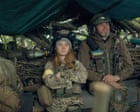
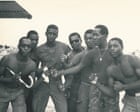
A melancholy new documentary reckons with the weight of it all. Directed by Harper, Soul Patrol uncovers this hidden chapter of US military history: the story of army team 2/6 of company F, 51st infantry, the Vietnam war’s first Black special operations team – a ragtag bunch of daredevils and dreamers who snuck into the jungle, stared down death and lived to tell a tale that has taken half a century to share in living color. Based on a 2003 war memoir of the same name, the film follows author Ed Emanuel as he assembles the team for a gathering that edges from high school reunion to PTSD group therapy session.
The central trauma stems from a reconnaissance mission in the summer of 1968 that sent the special operatives into Cu Chi, a Viet Cong stronghold north-west of Saigon, to map out the dark heart of a sprawling tunnel network that had figured prominently in the Tet offensive. Emanuel recounts how the team remained undercover as mortar rounds fell and full North Vietnamese platoons marched back and forth, trying to flush them out. “They knew we were there,” says Emanuel. “Their commander showed mercy.” But he and his team couldn’t return the favor. Their mission required them to report precisely what they had encountered and get out as quietly and quickly as they had come in. Once they were safely away, US forces unleashed airstrikes and artillery on the position. Then came the spraying of Agent Orange, stripping the area of its dense foliage and turning the jungle into a wasteland.
The survivor’s guilt has haunted the team ever since. “I relive that mission every single day of my life,” Emanuel says. “We survived the war, but there was no peace.”
Over the course of its 100 minutes, Soul Patrol takes the full measure of the trauma the soldiers carry, blurring the lines between the present and the past as they wrestle with the spirit-rending repercussions of their combat experience. It knits raw super 8mm footage, newsreels and photographs together with contemporary footage and interviews, bringing the soldiers’ war memories into sharp, visceral focus. The film’s most jarring set piece opens with present-day Emanuel in a Piggly Wiggly supermarket as the past comes flooding back in the form of flesh-and-blood visions of him and his teammates stalking the old soldier past the meat counter and down the cereal aisle.
It makes for an aching portrait of what it’s like to live with PTSD, and it’s executed so convincingly that viewers might mistake it for straight fiction. “I had to find a way to collapse the past and the present because that’s how they experience it,” says Harper, a lifelong war buff who made his name editing documentaries on Ye and Brooklyn basketball royalty Stephon Marbury. “Sometimes I would be speaking to Ed, who’s 78, but in reality it felt like I was talking to the 19-year-old who was still in Vietnam.”
For Soul Patrol’s faithful reconstruction of Vietnam battles, Harper shot scenes around the South Carolina Lowcountry, parts of which doubled for Forrest Gump’s Vietnam. But Harper knew better than to press the veterans to participate in those concussive shoots. In the film, one member of 2/6 recalls attending his first Fourth of July fireworks display after returning from Vietnam and ducking for cover when the explosions began. At the end of their tours, many soldiers were flown back to the US within 48 hours.
There was no time to process grief or loss, much less shake the combat conditioning they carried home with them. “Imagine being in the jungle on a Monday and then sitting at a party with friends in South Carolina on a Thursday,” says Harper, who made a point of including perspectives from the soldiers’ female family members. “They would tell us: ‘No loud noises. I don’t want anything that might trigger an experience.’ Their training was to respond to threats in a very specific way and when they came back there was no deprogramming.”
Black soldiers couldn’t expect a hero’s welcome either. They were caught between two Americas: the distant outpost where racial discrimination remained entrenched, where “soul patrol” was used as a euphemism to denigrate the 2/6; and the homeland raging with anti-war protesters who cursed and otherwise degraded veterans at first sign of a uniform patch.
Jesse Lewis is a prominent Black journalist who covered the war from Vietnam for the Washington Post. His reporting introduced the world to the experiences of Black GIs and exposed the racial faultlines on the battlefield. “In some of the units I went to, there was a very high proportion of Black GI casualties – maybe twice the rate among the overall soldier population,” he says. “A lot of these soldiers were volunteers. A Black kid who grows up in Chicago or Tennessee and wants to be the tough guy, the hero, to demonstrate their courage. It wasn’t that they were being used. They wanted to demonstrate not only their loyalty, but also that they were soldiers.”
Soul Patrol helps viewers understand how signing up to fight in a war that the American public didn’t fully understand until years later could have seemed like a valiant cause, even an adventure. It shows Black GIs reveling in their first tastes of freedom – true freedom: throwing back beers, interacting with women and grooving to James Brown and other soul music in a country where they were treated with dignity. (Not that white officers didn’t attempt to bring them back to reality.) A lot of that joy comes rushing back when the soldiers reunite, and flashes of their younger selves come into view. In those fleeting moments, it’s hard not to weep for the old men.
You come away wishing they had been bonded on, say, a theater stage rather than in an awful war that robbed them and so many others of a much richer life. “I didn’t understand what a team was until many years into my relationship with Ed,” Harper says. He describes love in terms often misattributed to Dostoevsky: giving someone else the power to destroy you and then trusting that they won’t. “That’s something these guys did on a daily basis out in the field, trusting one another to watch their backs, laying their lives in one another’s hands,” Harper adds. “That closeness would be very difficult to find outside a theater of war.”
Soul Patrol is out in US and UK cinemas now
- vietnam
- war
- patrol
- mission
- life
- soldier
- team
- force