King Æthelstan founded England in the year 927. Why don’t we celebrate that anniversary?
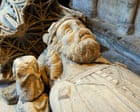
King Æthelstan founded England in the year 927. Nearly 1,100 years ago, the nation’s first king drove out the ‘heathen’ Vikings, declared war on starvation and made ‘Englalonde’ what it is today On 4 July, the United States celebrated its 250th birthday with all the razzmatazz and dazzle characteristic of an American public occasion.
Nearly 1,100 years ago, the nation’s first king drove out the ‘heathen’ Vikings, declared war on starvation and made ‘Englalonde’ what it is today
On 4 July, the United States celebrated its 250th birthday with all the razzmatazz and dazzle characteristic of an American public occasion. Next summer, on 12 July, England will be celebrating the 1,100th anniversary of the event that, more than any other, marked the founding of the country – but of razzmatazz and dazzle there will be, I suspect, very little.
The great turning point took place on 12 July 927, beside the river Eamont in what today is Cumbria. Here, amid an untamed wilderness of mountains and lakes, the most powerful king in Britain had summoned other kings and lords from across the island to meet him for a summit.
Æthelstan was the grandson of Alfred the Great, the heir to a dynasty that by the 920s had come to rule all the lands south of the Humber. This formidable agglomeration of territories was the fruit of repeated victories over the Vikings: a pagan people, ferociously martial and given to sinister practices such as taking weekly baths.
Back in 925, when Æthelstan had been crowned beside the Thames in Kingston, a Viking still ruled in York, and much of Northumbria – once the most brilliant of the Anglo-Saxon kingdoms – remained subject to his rule. But when, in the spring of 927, this Norse king of York died unexpectedly, Æthelstan seized his chance. He appeared before the walls of the ancient city and there was no one to resist him. The lords of Northumbria had duly submitted to Æthelstan as their overlord. For the first time, all the various lands where English was spoken – the lands of the Angles and the Saxons – had been brought to acknowledge a single king. A fateful moment, for it had marked the birth of a new polity: the united kingdom of what would soon come to be known as “Englalonde”.
The summit meeting at Eamont was held to solemnise this new dispensation. So intimidating was Æthelstan’s authority that “all the kings of the island were brought under his rule”. Submission was made; payments of tribute pledged; oaths sworn that no dealings would ever again be had with “the heathen Vikings”. These oaths, in the event, were not to be kept for long. The princes of Wales and Scotland resented the claim of Æthelstan to rule as the rex totius Britanniae – the king of the whole of Britain. His death in 939 enabled them to slip the rule of his heirs.
But the united kingdom of England, secured by Æthelstan in 927, did endure. There was nothing preordained about its emergence. Had Æthelstan neglected to seize his chance in 927, then the political contours of Britain might easily have ended up very different. It is not far-fetched to imagine an Anglo-Viking kingdom ruled from York putting down permanent roots. The heirs of Alfred would then have been confined to Southumbria, and the kings of the Scots to the Highlands. The events of 927 were, in that sense, the making of Scotland as well as of England.
The 1,100th anniversary of that fateful year richly merits commemoration. Æthelstan – mighty warrior though he was – was great not merely as a conqueror. Piety, learning, a passion for justice: these as well were the qualities that drew his contemporaries’ praise. He enshrined in the heart of English governance legal and social assumptions that endure to this day. Æthelstan’s determination that no one living on his own lands be permitted to starve led him to issue repeated ordinances. Officials responsible for his estates were warned by their master that fines would be levied on those who failed in their duty to the needy, and the proceeds donated to charity: “My wish it is that you should always provide the destitute with food.”
Is the mood in England today really so buoyant that it would not be improved by marking – and perhaps even celebrating – the country’s birthday? The story of how Æthelstan’s royal dynasty went from near-oblivion at the hands of the Vikings to fashioning a kingdom that still endures today is among the most remarkable in British history.
It was quite as stirring an achievement as the American Revolution, and quite as epochal in its consequences – and it featured, unlike the signing of the Declaration of Independence, a founding mother. This was Æthelflæd, Æthelstan’s remarkable aunt, who in her role as ruler of the Midlands won back swathes of territory from the Vikings. Remarkable characters, dramatic success against the odds, and the most remarkable feat of state-building in early medieval Europe: there is so much to celebrate.
And those who had witnessed the emergence of England as a unitary state knew it. They appreciated that the joining of different peoples in a shared sense of identity was not something that had been easily achieved. Two and a half decades after the death of Æthelstan, a bishop called Æthelwold, who had served as one of the king’s closest advisers, paid tribute to a man who was “mature in age and very prudent, and farseeing in wisdom, and hard to overcome in any strife”.
Bishop Æthelwold spoke for all those who, enjoying the order brought to lands that only decades before had been scenes of carnage and devastation, felt due gratitude to those who had achieved it. He, close enough in time to Æthelstan’s reign to have been the great king’s protege, understood the full scale of his debt. We, at the remove of 1,100 years, could perhaps remember it better.
- king
- england
- anniversary
- july
- razzmatazz
- dazzle
- æthelstan
- nation