Africa stands united at COP31: Ministers demand delivery on climate finance, back AGN Chair

Speaking at the African Ministerial Conference on the Environment (AMCEN) high-level consultative meeting, Ghana’s Minister of Environment, Science and Technology, Dr Zanetor Agyeman-Rawlings, framed Africa’s climate plight not as a tragic misfortune, but as an urgent issue of global justice. “Ghana will stand with the AGN Chair and every African delegation until the final gavel and, as expected Chair of the African Union in 2027, will carry these demands from Antalya to Addis Ababa.”
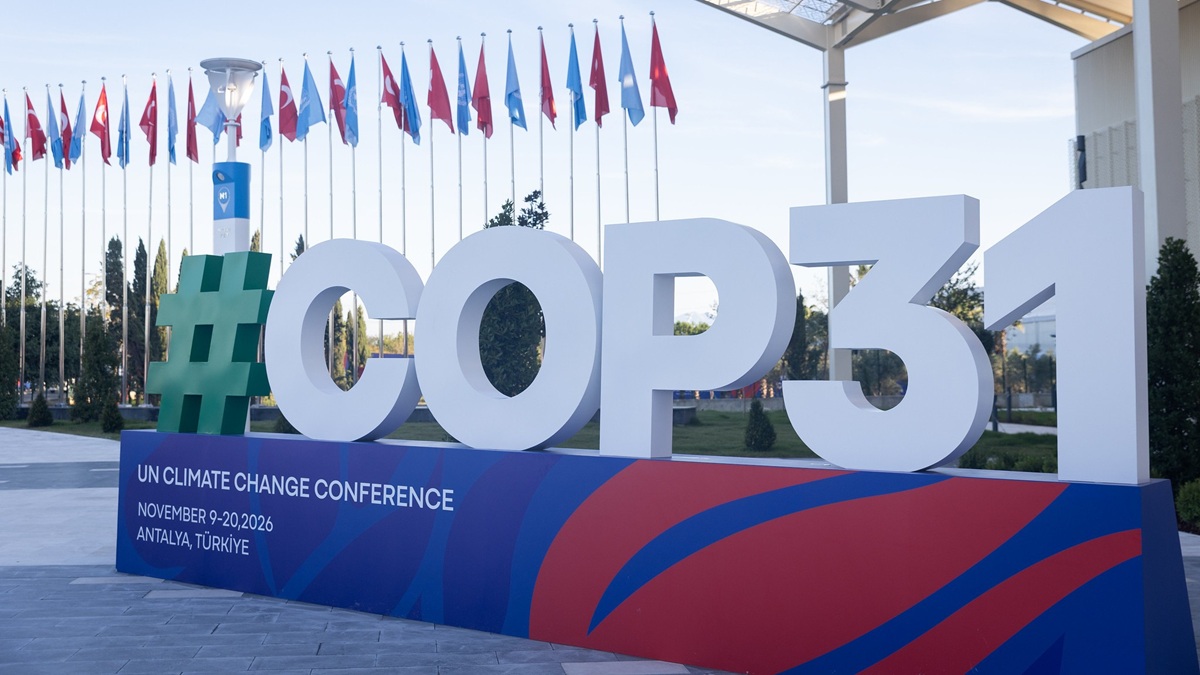
As high-stakes negotiations unfold at the 31st UN climate change conference (COP31) in Antalya, African nations have united behind the continent's negotiation strategy, demanding that developed countries honour past climate finance commitments.
Speaking at the African Ministerial Conference on the Environment (AMCEN) high-level consultative meeting, Ghana’s Minister of Environment, Science and Technology, Dr Zanetor Agyeman-Rawlings, framed Africa's climate plight not as a tragic misfortune, but as an urgent issue of global justice.
Highlighting that Africa generates about 4 per cent of global greenhouse gas emissions yet suffers annual economic losses of 2 to 5 per cent of its gross domestic product from climate extremes, Dr Agyeman-Rawlings made it clear that Africa's presence in Antalya is focused on strict delivery.
"This is not misfortune; it is injustice, and it must frame every word Africa speaks in Antalya," she declared. "Africa is not here to renegotiate promises. We are here to collect on them. Every commitment already made must now be funded, tracked and delivered on fair terms."
Ghana urged ministers to carry five unified demands into the high-level segment and rallied support around three non-negotiable red lines that no African delegate should cross during negotiations.
“There No backsliding on the Belém agreement to at least triple adaptation finance for developing nations; No new obligations imposed on African countries without the necessary means of implementation; and no climate finance counted twice or delivered primarily through debt-accumulating loans,” she stated.
Dr Agyeman-Rawlings, standing in firm solidarity with the African Group of Negotiators, led by Nana Dr Antwi-Boasiako Amoah, emphasised that African political leadership must provide unyielding backing to technical negotiators facing pressure from developed partners.
"Our strength in Antalya is our unity," Dr. Agyeman-Rawlings asserted. "Ghana will stand with the AGN Chair and every African delegation until the final gavel and, as expected Chair of the African Union in 2027, will carry these demands from Antalya to Addis Ababa."
Commitments to climate finance and just transition
A central focus of the African common position is addressing the staggering shortfall between international climate funding and Africa’s actual operational needs.
While Parties agreed in Belém to triple adaptation finance for developing countries by 2035 – translating to roughly $120 billion annually for Africa –international public adaptation finance in 2024 amounted to just $28 to $32 billion. In contrast, Africa’s total adaptation requirement is estimated at $305 billion per year by 2035, with Ghana’s National Adaptation Plan alone requiring more than $20 billion between 2025 and 2030.
Dr. Agyeman-Rawlings stressed that Antalya must deliver a binding decision setting a baseline, mapping the trajectory to 2035, identifying funding sources, and relying on grant-based mechanisms.
"A pledge without a tracking mechanism is not a commitment," she warned.
On overall climate finance, the Minister noted that the $300 billion annual figure agreed in Baku must be viewed as a floor, not a ceiling. African nations expect clear milestones toward the $1.3 trillion target laid out in the Baku-to-Belém Roadmap. To implement their Nationally Determined Contributions (NDCs) through 2030, African countries need about $277 billion per year, while current financial flows cover barely 11 per cent of that amount.
Ghana also called for a formal needs assessment for the Green Climate Fund’s (GCF) third replenishment and urged immediate scaling up of funding for the Loss and Damage Fund. The Loss and Damage fund made available only $250 million in its initial round against $2 to 3 billion in requests—1.4 billion of which came from African nations.
"Loss and damage is not charity; it is liability," Dr Agyeman-Rawlings stated, emphasising that finance must be predictable, grant-based or highly concessional, and directly accessible to local African institutions.
Addressing the transition to clean energy, Dr Agyeman-Rawlings stressed that a just transition must occur on Africa's terms. Holding nearly 30 per cent of the world’s critical mineral reserves, Africa is pushing to end the historical pattern of exporting raw minerals without in-continent processing.
"There is no global energy transition without Africa’s minerals, and the value must be added here," she emphasised. She advocated leveraging the African Continental Free Trade Area (AfCFTA)—a single market representing over 1.3 billion people—to build regional value chains for batteries, clean energy equipment, and green industrial capacity.
Ministers also backed aligning negotiation outcomes with "Mission 300," which targets bringing electricity access to 300 million Africans by 2030. On trade, Africa asked that the UNFCCC Convention formally address unilateral trade-related climate measures—which risk shutting out African exports and hindering industrial development—under Article 3.5.
The ministerial declarations directly reinforce the AGN negotiations team's technical efforts.
AGN Chair, Nana Dr Antwi-Boasiako Amoah, reported that Africa’s initiative to triple adaptation funds is gaining strong momentum across negotiation tracks.
“We are proud as AGN to have led this conversation before the plenary session,” he said. “We also played a major role as a negotiating group to support the adoption of the climate finance work programme item on the agenda that is under the CMA being negotiated now.”
Dr Amoah also announced the piloting of the African Negotiation Situation Room at COP31, a real-time platform designed to monitor sessions, share information, and instantly flag emerging negotiation issues.
He called on African ministers to provide ongoing political backing to technical negotiators as negotiations enter their crucial final phase.
Looking beyond COP31, the ministers' meeting in Antalya established a clear bridge to upcoming continental milestones as Ethiopia prepares for COP32, scheduled for November 2027 in Addis Ababa.
Reaffirming Ghana’s steadfast commitment as it prepares to assume the African Union Chairmanship in 2027, Dr Agyeman-Rawlings closed with a call for decisive outcomes.
"We will not leave Antalya with words alone," Dr Agyeman-Rawlings concluded. "Let us leave with finance on the table and a clear road to Addis Ababa."
- africa
- climate
- finance
- chair
- antalya
- ghana
- agyeman
- rawlings