business

Ghana’s difficult reforms are bearing fruit – IMF
Ghana’s difficult reforms are bearing fruit – IMF

The International Monetary Fund (IMF) says Ghana is reaping the benefits of difficult policy reforms, with stronger-than-expected growth, single-digit inflation and an improved fiscal position. Outlook for Ghana Looking ahead, Kozack said Ghana’s experience offered encouragement after years of economic difficulty.

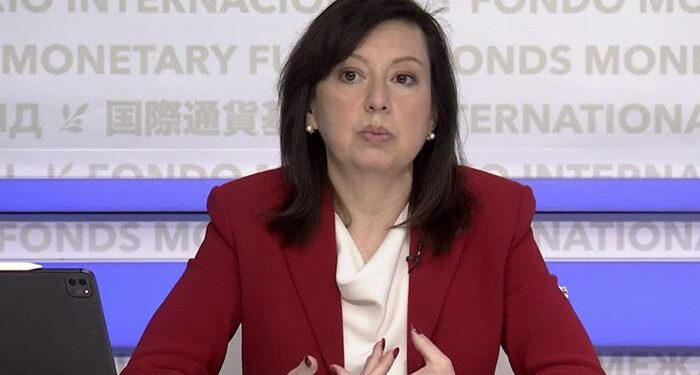
The International Monetary Fund (IMF) says Ghana is reaping the benefits of difficult policy reforms, with stronger-than-expected growth, single-digit inflation and an improved fiscal position. Speaking at a news conference in Washington, DC, IMF Director of Communications Julie Kozack said decisions taken under challenging circumstances were now supporting economic stability.

“We’ve also seen a willingness by the authorities to undertake some very difficult policy decisions,” she said. Kozack noted that Ghana implemented its previous IMF-supported programme during a difficult period. However, the authorities’ decisions were now delivering results. “Those are now bearing fruit, as I said, in terms of stability and the strength of the economy.” She also highlighted public engagement as an important part of the reform process.

“One thing we also saw in Ghana was an extensive social dialogue in the country, a lot of engagement with key stakeholders beyond the government to explain reforms, to get feedback, to understand broader priorities for the country,” she said. On economic performance, Kozack said growth had exceeded expectations. The economy expanded by 6% last year, while the Fund projects 5.7% growth this year.

She said Ghana’s external position had strengthened, its debt-to-GDP ratio was around 50%, and inflation had fallen to single digits. According to her, Ghana achieved these gains despite global economic shocks, including pressure from energy prices. “The fiscal position in Ghana is now strong, and the primary surplus is on track to meet the year-end targets,” she said.

Engagement with Ghana Kozack said the Fund’s engagement with Ghana was moving beyond crisis management as macroeconomic stability became more firmly established. Her comments also addressed Ghana’s decision to pursue a Policy Coordination Instrument. She said the focus was shifting “from crisis response, which was really the focus of the previous program, to supporting a consolidation of reforms and the building of longer-term resilience in the country”.

Outlook for Ghana Looking ahead, Kozack said Ghana’s experience offered encouragement after years of economic difficulty. “Even a few years ago, I think the mood in Ghana was more difficult. It was a hard time for the country; it was a hard time for the people.” She said the next priority was to reinforce the economy’s ability to withstand future shocks.

“The focus is really on strengthening and bolstering that resilience that comes next for the country.”

  • ghana
  • imf
  • reform
  • kozack
  • country
  • fruit
  • decision
  • fund

Summaries and tags are generated automatically. Stay informed with VidiaNews.

Related news

IC Insights expects more market-determined forex market; predicts GH¢11.6 –11.8 to one dollar in interbank market by December 31
business

IC Insights expects more market-determined forex market; predicts GH¢11.6 –11.8 to one dollar in interbank market by December 31

The International Monetary Fund (IMF), in its first review of Ghana’s Policy Coordination Instrument (PCI), emphasised that vulnerabilities persist in the foreign exchange market, particularly from the external sector, citing reserve declines that required corrective actions, which include the already transferred forex intermediation from the Bank of Ghana to the GoldBod and raising gold sale requirements for large-scale miners. In August 2026, the Ghanaian authorities and large-scale miners signed a memorandum of understanding under the GANRAP, which requires large-scale miners to sell 30.0%…

Read →
‘Yentua’ was negotiation, not recklessness – Sam Jonah on Acheampong’s debt decision
business

‘Yentua’ was negotiation, not recklessness – Sam Jonah on Acheampong’s debt decision

Business leader Sir Sam Jonah has praised former Head of State General Ignatius Kutu Acheampong’s 1972 decision to repudiate some of Ghana’s external debt, describing it as an act of courage and a demonstration of negotiation skill. Delivering the Second General I.K. Acheampong Memorial Lecture in Accra on Friday, November 13, 2026, Mr Jonah said Acheampong’s government announced on February 5, 1972, that Ghana would not honour about US$90 million in suppliers’ credits it considered tainted by corruption, fraud or inflated contracts.

Read →
Ghana targets more visa waiver deals by end of 2027 – Ablakwa
politics

Ghana targets more visa waiver deals by end of 2027 – Ablakwa

Ghana is pursuing additional visa waiver agreements with countries across the world, with the government expecting to conclude more deals before the end of 2027, Foreign Affairs Minister Samuel Okudzeto Ablakwa has said. In a Facebook post on Sunday, November 15, following a bilateral meeting with Tunisia’s Foreign Affairs Minister, Migration and Tunisians Abroad, Ali Nafti, Mr Ablakwa said several countries had also indicated interest in similar agreements with Ghana.

Read →
Ghana calls for urgent climate finance delivery to support Africa’s climate ambitions
science

Ghana calls for urgent climate finance delivery to support Africa’s climate ambitions

Ghana has called for the urgent delivery of climate finance commitments to support African countries in addressing the growing effects of climate change. Speaking at the Ministerial Meeting of the African Ministerial Conference on the Environment (AMCEN) in Antalya, Türkiye, the Minister of Environment, Science, Technology, and Innovation, Dr Zanetor Agyeman-Rawlings, stressed the need for increased adaptation funding and a fair approach to climate action.

Read →