PINL’s host community strategy and the future of oil pipeline security
This relationship between community participation and pipeline security was the focus of a recent study by Dr. Oyeinfie Emmanuel Jonjon, a sociologist at Ignatius Ajuru University of Education, Port Harcourt, who examined Pipeline Infrastructure Nigeria Limited (PINL)’s approach to pipeline surveillance along the Trans Niger Pipeline (TNP). Jonjon, a lecturer and researcher in the Department of Sociology, Faculty of Social Sciences, at Ignatius Ajuru University of Education in Rumuolumeni, Port Harcourt, Rivers State, has developed what he calls the ‘Weaver Colony Theory of Communal Living,’…
By Tayo Olu Protecting oil pipelines in the Niger Delta requires more than the surveillance of facilities and the deployment of security personnel. The pipelines run through communities whose relationships with operators, access to economic opportunities and grievances over local development can influence the security of the infrastructure. This relationship between community participation and pipeline security was the focus of a recent study by Dr.
Oyeinfie Emmanuel Jonjon, a sociologist at Ignatius Ajuru University of Education, Port Harcourt, who examined Pipeline Infrastructure Nigeria Limited (PINL)’s approach to pipeline surveillance along the Trans Niger Pipeline (TNP). Jonjon, a lecturer and researcher in the Department of Sociology, Faculty of Social Sciences, at Ignatius Ajuru University of Education in Rumuolumeni, Port Harcourt, Rivers State, has developed what he calls the ‘Weaver Colony Theory of Communal Living,’ using PINL’s community-based surveillance model to examine how host communities, private security contractors and statutory agencies can work within a common framework.
His paper, published in August 2026 in the American Journal of Social and Humanitarian Research (Volume 7, Issue 8, pages 126 to 145), is titled “Community-Based Surveillance of Oil and Gas Pipeline Infrastructure in the Niger Delta: A Theoretical Analysis of Pipeline Infrastructure Nigeria Limited Through Structural Functionalism and Weaver Colony Theory.” The study examines how host communities, surveillance firms and security agencies can share responsibilities in protecting oil pipelines while maintaining clearly defined roles.
Jonjon believes that the cooperation of host communities is as important as the security measures put in place to protect oil infrastructure, and oil companies must build lasting relationships with host communities if they want to protect their facilities. Pipeline theft, illegal bunkering, vandalism and production disruptions have remained persistent problems in the Niger Delta.
Jonjon argued that addressing them mainly through security operations overlooks the influence of host communities and their relationships with oil operators. He argued that operators often turn to media campaigns or spending on host communities after security incidents, while their corporate social responsibility programmes have done little to resolve longstanding grievances.
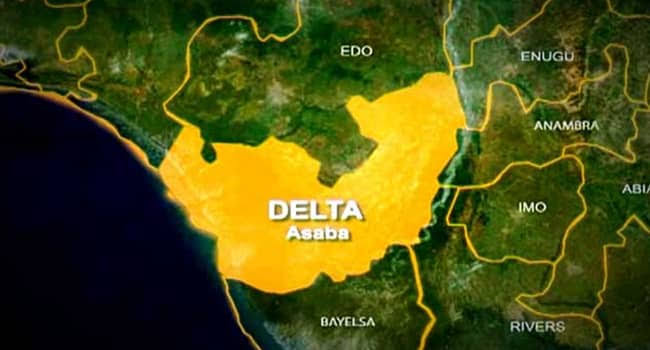
The TNP, which passes through communities in Rivers, Imo and Abia states, provides the setting for his examination of PINL’s operations. PINL, which was incorporated in 2019 to provide engineering, construction and security services to the country’s oil and gas sector, uses community-based surveillance along the pipeline corridor. Jonjon’s argument is based on Structural Functionalism, a sociological theory developed by thinkers such as Émile Durkheim, Talcott Parsons and Robert K.
Merton. The theory explains how different parts of society have roles that contribute to the stability of the whole. However, he argued that the theory does not fully account for power imbalances, historical grievances or disagreements over who has the right to speak for a community. It also offers little guidance on how private operators should involve residents in their day-to-day activities.
He used the Weaver Colony Theory to explain how different groups can work together while maintaining their individual roles. He described the idea as “Many Nests, One Tree,” which was borrowed from weaver-bird colonies. The tree represents the shared physical, economic, social and institutional environment, while the nests represent the different groups operating within it.
Each group has its own responsibilities but must work together for the system to function. In the framework, host communities contribute local knowledge, continuous presence and vigilance. A surveillance firm like PINL provides professional monitoring, operational coordination and structured engagement. Statutory security agencies and regulators retain their legal authority, enforcement responsibilities and oversight functions under the Petroleum Industry Act.
The model encourages community participation in pipeline protection without giving residents or surveillance contractors such as PINL powers reserved for statutory security agencies. Residents help identify and report threats, while authorised agencies remain responsible for enforcement. The theory also links pipeline security to the economic relationship between operators and host communities.
It identifies employment, scholarships and community investment as benefits that should go hand in hand with residents’ responsibilities to share information, remain vigilant and facilitate access to pipeline facilities. The framework is built around interdependence, differentiated roles, visible contribution, resilience and the enforcement of norms.
It also stresses that communication, fair representation, reciprocity and accountability are necessary to susta
- community
- pipeline
- security
- host
- oil
- pinl
- surveillance
- theory