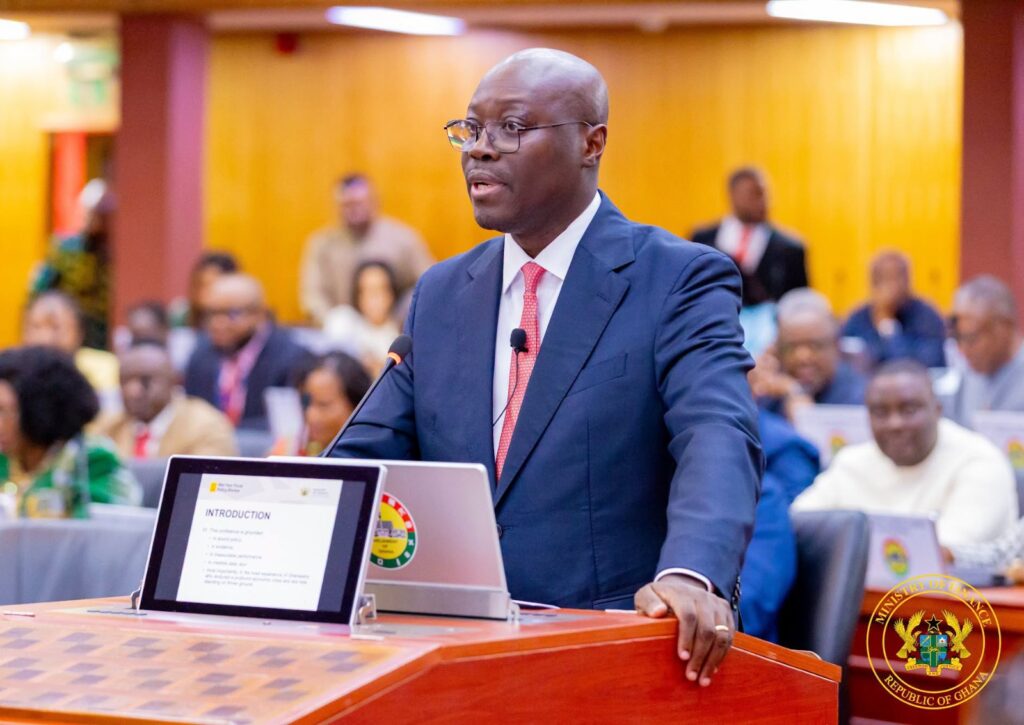
Ghana’s 2027 Budget: Investing in Ghana’s energy future

Investing in Ghana’s energy future. Pillar Three of the New Economy, New Ghana framework in the 2027 budget is dedicated to overhauling the national energy architecture.
The intersection of energy reliability and industrial capacity remains the most critical determinant of economic growth in developing economies.
Historically, Ghana's energy system has expanded, yet it has been burdened by high tariffs, distribution losses, weak revenue collections, and accumulated obligations to Independent Power Producers (IPPs). In 2025, the annual energy sector shortfall reached approximately US$1.4 billion, with arrears to IPPs and fuel suppliers standing at US$1.7 billion.
Ghana's 2027 Budget Statement and Economic Policy appears to introduce a paradigm shift. The budget outlines a decisive move toward energy sovereignty, anchoring national industrialisation on state-owned, affordable, and reliable power generation. This article details the specific energy infrastructure projects, funding allocations, and policy frameworks embedded in the 2027 budget.
Key Energy Initiatives (Pillar Three: US$2 Billion Energy Infrastructure)
Pillar Three of the New Economy, New Ghana framework in the 2027 budget is dedicated to overhauling the national energy architecture. The government has allocated US$2 billion to this pillar, aiming to end dependence on costly emergency power by 2030 and reduce generation costs from 16 US cents per kilowatt-hour (kWh) to 8 US cents/kWh or less.
State-Owned Thermal and Renewable Power Generation
To secure baseload and peak power demands, the government is investing heavily in state-owned generation assets:• 1,450 MW Thermal Power Plant: Construction will commence in December 2026 at Kafodzidzi Abrobeano in the Central Region. The plant will be fully state-funded and owned. The first 600 MW will be operational by December 2028, and the remaining 850 MW by December 2030. It will utilise approximately 150 million standard cubic feet of additional gas per day from the Sankofa and Jubilee fields.• 600 MW Solar Power Plant & Battery Storage: A fully state-owned 600 MW solar facility will be constructed, supported by a massive 2,000 megawatt-hours (MWh) of battery storage. This storage capacity is designed to shift daytime solar generation into peak evening periods, ensuring grid stability.
Grid Modernisation and Distribution Reforms
Recognising that generation capacity must be matched by efficient transmission and distribution, the budget outlines strict policy sequencing.• Transmission Modernisation: US$500 million is allocated from 2027 to 2030 to modernise the transmission system. GRIDCo will utilise these funds to strengthen the north-south network, connect new generation to demand centres, and provide dedicated connections to strategic industrial enclaves.
• Distribution Efficiency: To combat distribution losses, the government will deploy 2 million prepaid meters. Furthermore, a performance-based private-sector participation model in electricity distribution will be fully implemented by the end of 2027, protecting strategic public assets while leveraging private-sector expertise.Nuclear Energy Readiness ProgrammeThe 2027 budget officially initiates Ghana's transition to nuclear baseload power, treating the future plant as a strategic national asset rather than an IPP.• Funding & Timeline: US$200 million is dedicated to a 24-month nuclear-readiness programme running from January 2027 to December 2028.• By December 2028, the goal is to complete site studies, technology selection, environmental assessments, financing, and licensing preparations, culminating in the signing of the EPC (Engineering, Procurement, Construction) and financing contract.• The programme includes the training of over 2,000 scientists to build local expertise, ensuring technology transfer and domestic capability.Synergy with Industrialisation (Pillar Four: US$1.5 Billion Critical Minerals)Energy capacity is economic capacity. The energy infrastructure developed under Pillar Three is explicitly designed to power Pillar Four: a US$1.5 Billion investment in Critical Minerals Value Addition.The budget proposes creating a 24-hour critical-minerals processing enclave in the Western Region, powered directly by the new energy backbone. Key policy targets include:• Refining at least 70% of artisanal and small-scale (ASM) gold locally by December 2027, and 100% by December 2028 (prohibiting raw ASM gold exports).• Processing 50% of manganese and bauxite locally by 2028, and 100% by 2030.• Constructing a new railway line from Takoradi to Nyinahin (starting 2027) to transport minerals to the processing enclave.
Funding Allocation and Financial Breakdown
The following table and chart detail the specific financial commitments outlined in the 2027 Budget Statement regarding energy and related industrial infrastructure.
The 2027 Budget Statement and Economic Policy represents a definitive pivot towards energy sovereignty for Ghana. By allocating US$2 billion to energy infrastructure and US$1.5 billion to mineral value addition, the government aims to eliminate the US$1.4 billion annual fiscal drain caused by energy sector shortfalls.
Through strategic investments in state-owned generation, grid modernisation, and nuclear readiness, Ghana is laying the foundational infrastructure required to transition from an exporter of raw materials to a hub of green industrialisation and value-added manufacturing.
- energy
- budget
- ghana
- power
- generation
- distribution
- pillar
- capacity