Ezekwesili questions INEC’s credibility, demands independent investigation of voter register

Mrs Ezekwesili says the discovery of suspected AI-generated photographs and other irregularities in INEC's voters' register has undermined the commission's credibility, urging the National Assembly to intervene ahead of the 2027 general elections.
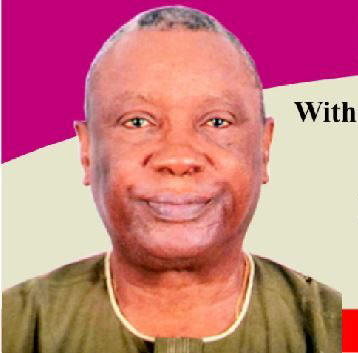
Former Minister of Education, Oby Ezekwesili
Former Minister of Education, Oby Ezekwesili, has said the Independent National Electoral Commission (INEC) has lost public confidence following the discovery of irregularities in its preliminary Register of Voters, warning that the controversy threatens the credibility of the 2027 general elections.
Ms Ezekwesili said suspected artificial intelligence (AI)-generated photographs and other questionable entries in the register had compromised the foundation of the electoral process, regardless of how many records were affected.
Speaking on Prime Time on Arise Television on Monday, the former minister argued that the integrity of the voters’ register was central to credible elections and that any compromise of the document raised concerns about the entire electoral process.
She said the issue should not be treated as a minor administrative error that could be resolved through routine data cleaning, especially since INEC acknowledged that some of its officials were involved in introducing irregular records.
“The moment that the foundational document on which an election is based is compromised, it wouldn’t really matter whether it is 10 people who should not be on that register who were put in that register,” she said.
Ms Ezekwesili said maintaining an accurate and credible register was more important than the number of questionable entries discovered.
“In our society, we have a tendency to sort of say, ‘Manage it, manage it. It’s nothing. It’s nothing. It’s not that serious.’ It is the principle, even more than the scale, that matters,” she said.
She described the development as evidence of a breakdown in institutional integrity, arguing that the commission’s constitutional responsibility to safeguard the electoral process made the discovery particularly troubling.
The controversy followed the publication of INEC’s preliminary Register of Voters online on 26 October, after the commission missed the statutory deadline for making the document available for public scrutiny.
Under Section 19(1) of the Electoral Act 2026, INEC is required to make the voters’ register available online and at registration areas for seven days of public scrutiny, not later than 90 days before a general election.
The commission had conducted the physical display of the preliminary register across the country between 9 and 15 October but failed to publish the document online within the stipulated period.
PREMIUM TIMES reported that the commission violated the Electoral Act by missing the deadline, as the 2027 presidential and National Assembly elections are scheduled to begin on 16 January.
When the register was eventually published, Nigerians raised concerns over suspicious photographs, alleged multiple registrations, unusual identities and records believed to belong to deceased persons.
Some of the photographs appeared to have been generated using AI, prompting questions about how fictitious identities could have entered the electoral database.
INEC initially said it had identified questionable records during the physical display exercise and had commenced investigations and corrective measures.
However, on 30 October, the commission’s Director of Information and Communication Technology, Lawrence Bayode, said some registration officers allegedly abused their access to the registration system to introduce questionable records, including AI-generated photographs.
Mr Bayode explained that some officials used their login credentials to manipulate registration procedures, including exploiting special provisions designed for persons with disabilities who could not provide all their fingerprints.
In a subsequent report, PREMIUM TIMES said the commission’s Automated Biometric Identification System (ABIS) flagged about 1.5 million records from more than 11 million registrations conducted during the 2025/2026 Continuous Voter Registration exercise.
On 9 November, INEC Chairman, Joash Amupitan, announced that the commission had identified 54 officials across 10 states as allegedly complicit in the irregularities.
The commission also said it removed 1,608,660 confirmed invalid registrations after screening and verification. It said those implicated could face disciplinary action, including prosecution.
However, the commission explained that not all the questionable photographs and multiple entries circulating online originated from the latest registration exercise, as some dated back to previous registration exercises between 2011 and 2023.
Ezekwesili rejects INEC’s handling of the investigation
Reacting to the commission’s response, Ms Ezekwesili questioned its decision to investigate and clean up a register that its own officials had allegedly compromised.
She argued that INEC could not be expected to independently investigate allegations involving its personnel and subsequently assure Nigerians that the register had been restored to credibility without independent scrutiny.
According to her, the principle of accountability requires that an institution accused of wrongdoing should not be the sole authority determining whether it has adequately addressed the allegations.
“I put it out there that it’s one of the principles of accountability that the one accused does not become a judge in their own affairs,” she said.
She acknowledged that INEC was constitutionally responsible for maintaining the register but argued that the commission had failed to discharge that responsibility.
Ms Ezekwesili also faulted the delayed response to concerns raised by citizens, noting that the controversy gained attention largely because Nigerians independently examined the register and drew public attention to suspicious entries.
She recalled that a social media user had raised concerns about suspected AI-generated photographs in a polling unit in Edo State but faced attacks from people who assumed he was acting against the commission or the government.
She said the commission’s eventual response followed growing public pressure rather than an immediate acknowledgement of the seriousness of the allegations.
The former minister also criticised the commission’s leadership, saying its chairman should consider resigning over the controversy.
“In a normal society, the INEC chairman would have himself thrown in the towel and said, ‘I owe this society better. I have failed,’ and he would resign. He wouldn’t need anybody calling for his resignation,” she said.
Beyond questioning INEC’s response, Ms Ezekwesili urged the National Assembly to intervene, proposing that lawmakers invoke the doctrine of necessity to address the situation.
She said the scale and implications of the controversy warranted an extraordinary response from the legislature, which has constitutional oversight responsibilities over the electoral commission.
She compared the situation to the political crisis that followed the illness of former President Umaru Yar’Adua, when the National Assembly invoked the doctrine of necessity in February 2010 to empower then Vice-President Goodluck Jonathan to act as President.
Ms Ezekwesili argued that the legislature should recognise the potential consequences of allowing a compromised voters’ register to form the basis of the 2027 elections.
She acknowledged, however, that lawmakers were political actors who would participate in the elections and seek re-election, making their willingness to intervene uncertain.
She said she had hoped the prospect of a damaged democratic system would encourage lawmakers to act in their collective interest, since they would also be affected by a breakdown of the electoral process.
“I am saying that you can’t have the voters’ register for an election that is coming up in a few weeks from now infiltrated. Therefore, the National Assembly triggers the doctrine of necessity,” she said.
The former minister warned that leaving the controversy unresolved could undermine the credibility of the forthcoming elections and discourage Nigerians from participating in the electoral process.
Ms Ezekwesili also said the controversy could deepen voter apathy and further weaken public confidence in democratic institutions.
She said some Nigerians had increasingly adopted a coping strategy of withdrawing from public affairs because of repeated governance failures and political controversies.
According to her, such disengagement would ultimately undermine democracy, which depends on citizens’ participation and confidence in the electoral process.
She argued that Nigerians, particularly the middle class, had a significant stake in demanding accountable governance rather than retreating into private arrangements for basic services such as education, healthcare, water and security.
She said the collapse of public institutions would eventually affect everyone, including those who could temporarily afford to provide essential services for themselves.
Ms Ezekwesili also linked the controversy to broader concerns about the legitimacy of elected governments, noting that low voter participation could further weaken public confidence in democratic leadership.
She maintained that the credibility of elections depended on genuine political competition, transparency and the assurance that every eligible voter had an equal opportunity to participate.
“It cannot be rigged at the beginning without the outcome already being rigged “ed “ed “ed “ed “ed “ed,” she said.
She warned that allowing irregularities in the voters’ register to go unaddressed could create the impression that election outcomes had been predetermined.
The former minister called on Nigerians to demand that the voters’ register be restored to a credible state, describing the inclusion of questionable identities alongside legitimate voters as a violation of citizens’ electoral rights.
INEC has scheduled 15 December for the certification of the final Register of Voters ahead of the 2027 general elections.
- inec
- credibility
- voter
- register
- investigation
- ezekwesili
- question
- mrs