A heretical outrage: why Italians disown spaghetti bolognese
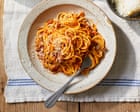
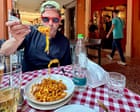
Spag bol carries my city’s name all over the world – to the embarrassment of restaurants in Bologna In Bologna, spaghetti bolognese does not exist. You’ll find it on menus in London and Sydney, in British school canteens and in jars on supermarket shelves across half the world, but not in the city that lent it its name.
Spag bol carries my city’s name all over the world – to the embarrassment of restaurants in Bologna
In Bologna, spaghetti bolognese does not exist. You’ll find it on menus in London and Sydney, in British school canteens and in jars on supermarket shelves across half the world, but not in the city that lent it its name. Order it in a trattoria beneath the Two Towers and at best you get a pitying smile. More often you’ll be brought a plate of tagliatelle, with a short lesson in local history on the side.
Few of the Italian dishes famous abroad carry the name of a city. Every so often the argument flares up again over where pizza, carbonara or tiramisu were born. With spaghetti bolognese the parentage is written into the name, and yet, absurdly, it is the Bolognese themselves who disown it. Many regard it as an outrage, a heretical and misshapen version cooked only by people who know nothing of real Bolognese food.
In February 2019 the then mayor, Virginio Merola, asked his fellow citizens on Twitter to send him photos of spaghetti bolognese spotted abroad, and opened the collection with the chalkboard of a London restaurant. He told journalists it was “embarrassing to be known around the world for something that doesn’t exist”.
It wasn’t the first attempt at a clean-up. A few months earlier the Accademia Italiana della Cucina had formally registered with Bologna’s chamber of commerce a recipe for spaghetti in a tinned tuna sauce, billed as “Bolognese style”, which the press promptly hailed as the real spaghetti bolognese. In its eagerness to deny that spaghetti with ragù existed, the Accademia had officially handed the city a dish now cooked all over Italy, which seems to have begun around Rome in the early 1900s and has little or nothing to do with Bologna.
To understand how spaghetti bolognese became so famous, we need to step back. The first reason lies in the name itself. The city’s reputation travelled long before the pasta, which only appears in the 1890s. Bologna had been a byword across Europe for centuries, thanks to the cured meat that made it famous from the Renaissance onwards: mortadella.
In 1596 the pamphleteer Thomas Nashe mocked the poet Barnabe Barnes for strutting about court in “a codpisse as big as a Bolognian sawcedge”. His readers evidently knew exactly what a Bologna sausage looked like and needed no explanation. By 1660 Robert May’s The Accomplisht Cook was already giving a recipe for “Bolonia Sausages”, which English cookbooks went on copying for generations. Mortadella had always been made for export, but from the late 19th century, once the city’s charcutiers had learned to tin it, mortadella and the name of Bologna knew no borders.
The second reason is that Bolognese ragù was a small revolution. Neapolitan ragù, a century older, was made by braising a large joint of veal, whose juices dressed the pasta while the meat itself came to the table as the main course. The Bolognese version puts minced meat straight into the pasta course, which becomes richer and no longer depends on a long and costly braise. The thinking is much the same as the hamburger’s, which swaps a steak for mince to make something cheaper and more practical, but every bit as good.
Ragù entered the cookbooks in 1891, when Pellegrino Artusi published his “Maccheroni alla bolognese” in Science in the Kitchen and the Art of Eating Well, made with lean veal, pancetta, butter, onion, carrot and stock, and still no tomato. In this recipe, the true ancestor of ragù alla bolognese, the stars are dried durum wheat maccheroni, not yet tagliatelle. Spaghetti soon followed. They first appear in 1898, in an advertisement for the Hôtel Ville et Bologne in Turin offering “Spaghetti di Napoli alla bolognese”. Before ragù was ever paired with tagliatelle, it had already struck up a partnership with spaghetti.
In Bologna it was fresh pasta that kept ragù company for the rest of its history, but abroad, and in the United States above all, spaghetti bolognese took hold, for an obvious reason. Egg pasta was hard to come by, so when Julia Lovejoy Cuniberti translated Artusi’s recipe in 1917 she was already suggesting the sauce for “macaroni or spaghetti”. In 1952, at a fair held at the Royal Festival Hall in London, even the Queen Mother recognised spaghetti bolognese with interest, just before being welcomed at the British stand with a cup of tea.
Tagliatelle and spaghetti went their separate ways while the recipe was still taking its first steps, but that doesn’t mean spag bol has no right to exist. Perhaps one day the Bolognese will decide that having their city’s name known all over the world matters more than who gets to use it. Even then, tourists can rest assured that every time they order spaghetti bolognese, they will be corrected, kindly but firmly.
- bolognese
- spaghetti
- outrage
- city
- italians
- world
- bologna
- spag