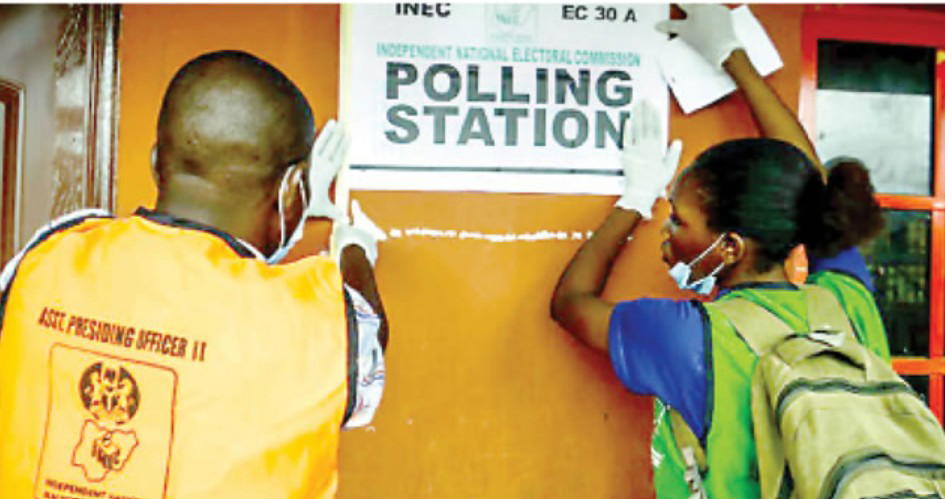
INEC pledges not to tamper with metadata of election results on IReV

The participant cited findings from a review of results uploaded to IReV during previous elections, which allegedly identified instances of results uploaded before voting began.
The Independent National Electoral Commission (INEC) has pledged to preserve the metadata attached to election results uploaded to its Result Viewing Portal (IReV) during the 2027 general elections.
The commission’s Director of Information and Communication Technology, Lawrence Bayode, gave the assurance on Tuesday in Abuja during a stakeholder roundtable on election results tabulation organised by Yiaga Africa.
During the event, one participant from MundX analytics, an election observatory technology platform, asked about INEC’s preservation of the metadata for election results uploaded on IReV.
The participants expressed concern that the electoral commission may delete the metadata of uploaded results, which can make it difficult to track the circumstances surrounding their submission.
The Metadata attached to results uploaded to IReV can provide information such as the time a result was uploaded, the device used to upload it and the location from which the upload was made.
The participant cited findings from a review of results uploaded to IReV during previous elections, which allegedly identified instances of results uploaded before voting began.
According to the participant, some results were uploaded as early as 5 a.m. on election day, while multiple results were uploaded using the same mobile device.
The participant said such patterns raised concerns about possible irregularities and underscored the importance of preserving metadata to enable independent scrutiny of election results.
But the INEC Director of ICT, Mr Bayode, assured that the commission will not tamper with the raw data of the uploaded results.
“I can assure you those metadata will remain intact,” he replied.
Mr Bayode said he could not speak for previous elections, but said the commission still has the metadata for the Federal Capital Territory (FCT), Ekiti and Osun elections.
According to him, the results uploaded during those elections showed greater consistency, with no discrepancies identified on the portal.
- election
- result
- inec
- metadata
- irev
- pledge
- participant
- finding