The Last Spy review – a riveting tale of CIA meddling, espionage gossip and Blue Nun wine
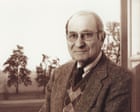
Refugee Peter Sichel was known as ‘the Jewish James Bond’ after fleeing Germany and becoming an integral cold war-era spy. After hiding out near the Pyrenees, Sichel and his family escaped to New York in 1941 – only to find themselves living beside a Nazi-supporting neighbourhood on the Upper East side.
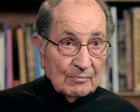
Refugee Peter Sichel was known as ‘the Jewish James Bond’ after fleeing Germany and becoming an integral cold war-era spy. He died last year but, at 100-years-old, he told his remarkable story for this film
Why, exactly, was Peter Sichel “the last spy”? It’s not something Katharina Otto-Bernstein’s documentary about the cold war-era CIA man clarifies. The “Jewish James Bond” – as a woman from his synagogue nicknames him – is a catchier moniker, although that’s not quite right either. If Sichel was once a swashbuckling secret agent, we don’t hear much about his escapades here. Instead, he seems closer to M: sitting behind a desk pulling strings while his agents risked life and limb sneaking around the German Democratic Republic.
The Last Spy begins as a straightforward but riveting biography built around a long, candid interview with Sichel, who was 100 at the time of filming (he died last year at 102). We hear about his childhood in Germany, which was initially privileged thanks to his great-grandfather’s lucrative wine business. Yet his mother was spooked early on by the rise of Hitler, and insisted the family relocate to France. When war did break out, all Germans were considered “enemy aliens” and sent to internment camps. Later, when the German army advanced, the Jews were allowed to make a run for it, pursued by warplanes. After hiding out near the Pyrenees, Sichel and his family escaped to New York in 1941 – only to find themselves living beside a Nazi-supporting neighbourhood on the Upper East side.
Sichel narrates his terrifying teenage years with world-weary amusement, a tone he brings to most of his tale. That tale remains fascinating, but despite Sichel technically becoming a far more central and powerful figure in human history, his story somehow becomes increasingly impersonal as we move through the decades. As such, The Last Spy ricochets between a portrait of a remarkable man and a rather staid war documentary, as a roster of talking heads are employed to explain the geopolitical context of Sichel’s work.
To be fair, there is a lot to explain. Once in the US, Sichel signed up to the army, and as a German speaker became useful to the Office of Strategic Services – a proto CIA. Once the war was won, he was asked to head up its Berlin outpost. Initially, the Americans were not receptive to the intelligence he gathered – namely, that the Russians were no longer “friendly” – but when he subsequently brought information to Washington, he was listened to. This, the film suggests, significantly contributed to the outbreak of the cold war. Yet after another mission, Sichel came to believe that the Russians were not planning to expand into the rest of Europe. In which case “why was there even a cold war?” asks Otto-Bernstein. “Good question,” he wryly replies.
Sichel’s feelings about attempts to stem the tide of communism are complicated. In archive footage, he says it was easy to segue from anti-fascist sentiment to an anti-communist one because both are versions of totalitarianism (he also implies he didn’t mind working with Nazis to advance the latter aim). Later, however, he felt US hegemony might have been a greater evil in other parts of the world: American meddling in places such as Iran and Guatemala were incredibly misguided at best.
At one point, Otto-Bernstein asks Sichel’s daughter Bettina why her father made such a good spy; she says he’s good at keeping secrets and getting people to talk. It’s a necessary question because it’s extremely hard to imagine Sichel in the job. While he does reveal some behind-the-scenes gossip (his posting in Hong Kong introduced him to a world of heavy drinking and wife-swapping) and explains how he recruited spies by placing adverts in local newspapers, Sichel keeps stumm about what he and his agents did. His daughter Sylvia says she has asked in the past if he has ever killed anyone. She remains none the wiser, as do we.
Those expecting a vicarious spy caper, then, will be disappointed. Instead, we get a history lesson peppered with a few drive-by character assassinations (General Patton was a “very stupid man,” says Sichel). As a psychological portrait, it’s not particularly knotty either: despite the horrifying facts of his early life, Sichel seems to have been an upbeat, well-adjusted and, above all, practical man. And while he doesn’t seem burdened by any guilt about his work, he does clearly possess a moral compass: he quit the CIA at 37 because he believed the organisation was repeatedly sending undercover agents to their deaths.
Afterwards, Sichel returned to the family business and helped make Blue Nun one of the world’s most ubiquitous wines (partly via an ad campaign claiming you could pair it with any food). Incredibly, Sichel just couldn’t stay out of the thick of history. Yet as the sedate and slightly disjointed The Last Spy proves, amazing lives don’t automatically translate into jaw-dropping documentaries.
- spy
- sichel
- cia
- wine
- war
- review
- tale
- meddling