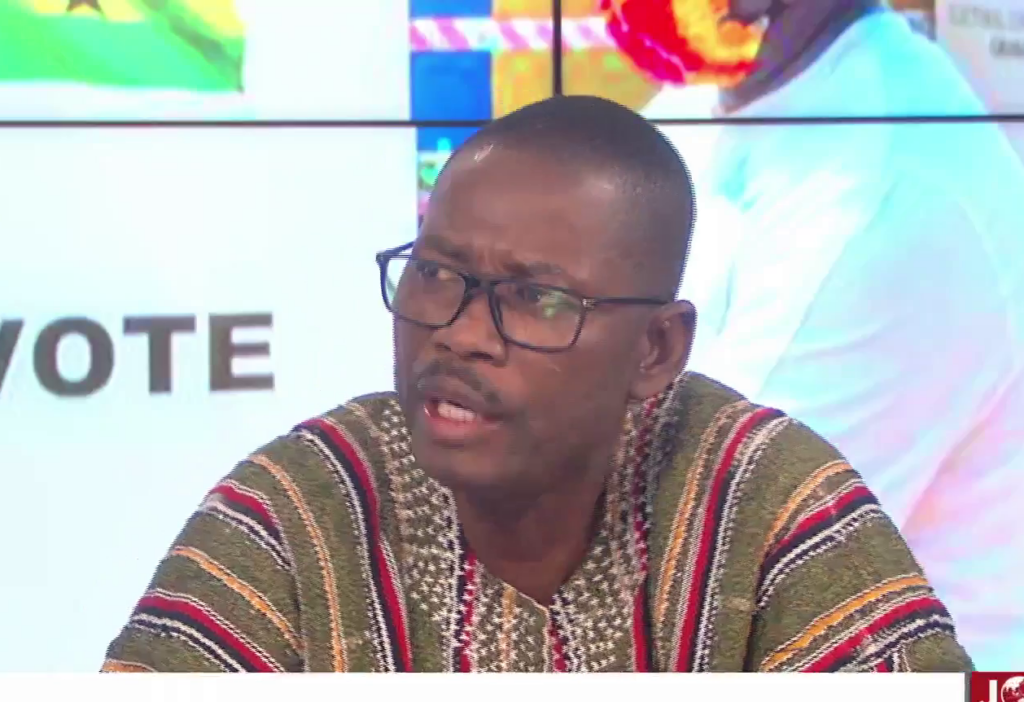
Don’t turn rice import quota into corruption scheme – Hosi
Local rice producer Senyo Hosi has cautioned the government against relying solely on a quota arrangement to drive local rice purchases, warning that without strict monitoring, the policy could create fresh opportunities for corruption and undermine efforts to end commercial rice imports by 2030. In addition, the 2027 Budget outlines plans for rice development hubs in the Afram Plains, Volta Basin, Western Ghana and Northern Ghana.
Local rice producer Senyo Hosi has cautioned the government against relying solely on a quota arrangement to drive local rice purchases, warning that without strict monitoring, the policy could create fresh opportunities for corruption and undermine efforts to end commercial rice imports by 2030. He said making rice import permits conditional on traders purchasing a specified volume of locally produced rice would achieve little if authorities could not establish that the produce was genuinely cultivated and processed in Ghana.
Mr Hosi argued that large importers could exploit the arrangement by working with local operators to generate fictitious purchase records, allowing them to secure import licences without creating meaningful demand for Ghanaian farmers. “It’s been done before. It ends up being a scam and some corrupt structure,” he said. He was speaking on Joy FM’s PM Express on Tuesday, November 17, during a discussion on the government’s new rice policy.
The Finance Minister, Dr Cassiel Ato Forson, has proposed that from 2027, rice importers should demonstrate that they have purchased locally produced rice equivalent to a specified proportion of their intended import volumes before receiving permits. The minister cited a possible 50 per cent requirement, meaning an importer seeking approval to bring in 100,000 metric tonnes of rice could be required to first show evidence of buying 50,000 tonnes from Ghanaian producers.
The government intends to increase the local purchase requirement as domestic production expands, progressively reduce import quotas and prohibit commercial rice imports by the end of 2030. Mr Hosi said the success of the arrangement would depend on the government’s ability to trace rice from individual farms through milling and eventual sale to importers.
He proposed a comprehensive database identifying rice farmers, the size of their farms and their production capacity, with each farmer linked to a particular miller. Under the system, millers would be required to buy from identified farmers, making it possible for regulators to verify whether the quantities declared by importers could be accounted for at the production end.
He recalled earlier engagements between the Ministry of Food and Agriculture and industry players to develop a system for mapping rice farmers and their acreage. Mr Hosi said that initiative should be revived and strengthened to provide the evidence needed to validate local purchases. “If you don’t put in a proper evaluation and accountability system like that, my brother, this becomes another corrupt scam,” he warned.
He said a traceable system would enable authorities to follow a transaction from the farmer to the miller and establish whether the rice supplied to an importer actually originated from the farms identified in the records. Imported rice could pass as local produce Mr Hosi also cited what he described as previous abuses of local-content arrangements, alleging that imported rice had, on some occasions, been repackaged in locally branded bags and presented to government institutions as Ghanaian produce.
He argued that a policy intended to create a market for local farmers could be rendered ineffective if imported rice were allowed to enter the supply chain under the guise of local production. He said such practices would deprive genuine farmers of the intended benefits while giving the government a misleading picture of progress in the domestic rice industry.
“If you want to do it, you must put in a strong accountability system all across the chain,” he said. The government’s new policy also proposes amendments to public procurement laws to require schools, hospitals and other public institutions to buy locally grown rice and other staple foods with public funds. In addition, the 2027 Budget outlines plans for rice development hubs in the Afram Plains, Volta Basin, Western Ghana and Northern Ghana.
The hubs are expected to bring an additional 100,000 hectares under cultivation, supported by irrigation, mechanisation, storage facilities, modern mills, packaging and logistics. The government projects that the interventions could support about 125,000 jobs, with targeted yields of between five and six metric tonnes per hectare. Mr Hosi’s warning puts the spotlight on the verification and enforcement arrangements that will determine whether the proposed import restrictions translate into stronger markets for local farmers
- rice
- import
- hosi
- farmer
- government
- quota
- importer
- system