ICJ to rule on Rohingya genocide case against Myanmar: What to know
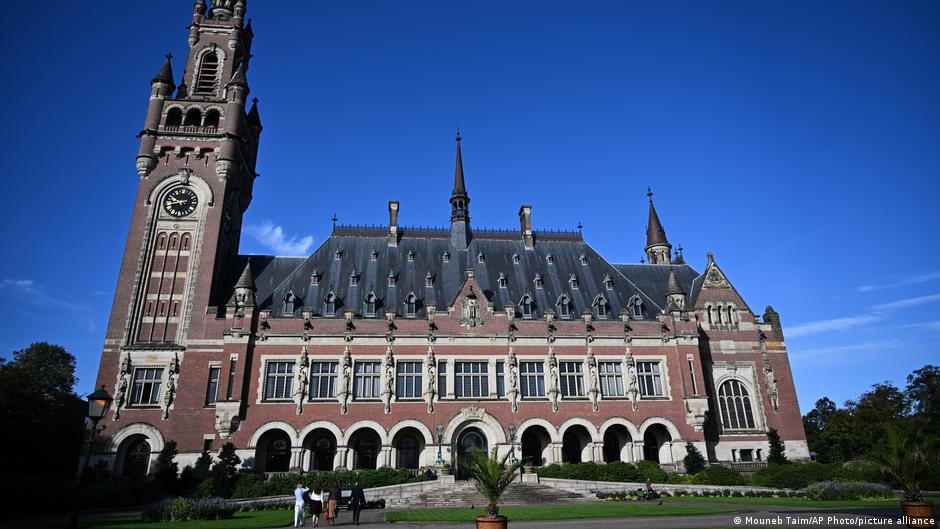
The ICJ is set to decide whether Myanmar's military operations in Rakhine State a decade ago were carried out with the intent to destroy the country's Rohingya minority, in whole or in part.
The International Court of Justice (ICJ) will deliver on Thursday its long-awaited judgment in The Gambia's landmark genocide case against Myanmar, seven years after the case was lodged in The Hague.
The Gambia filed the case with the United Nations' top court in November 2019, formally accusing the Southeast Asian nation of breaking its obligations under the 1948 UN Genocide Convention.
In documents and hearings, The Gambia has alleged that Myanmar waged a deliberate campaign of arson, rape and murder in Rakhine State from 2016 to 2017, intending to wipe out the area's ethnic Rohingya minority, in whole or in part.
A UN fact-finding mission later concluded that some 10,000 people likely died in the pogroms. Another 700,000 Rohingya fled the country to neighboring Bangladesh, where most of them still live today in the world's largest refugee settlement.
Even before 2016, the predominantly Muslim Rohingya had been subjected to decades of persecution by the Buddhist-majority country's government, with many forced into resettlement camps and most denied citizenship.
A number of cases over Myanmar's treatment of the Rohingya have been filed in courts around the world. The ICJ will be the first to issue a ruling.
"The Rohingya people have been waiting for justice for decades for the atrocities and crimes committed against [us]. There were no venues available in [Myanmar]…. International venues were the only hope," said Aung Kyaw Moe, a prominent Rohingya activist whose family was forced to flee the country during the pogroms.
"We've come over many years to a situation where a judgment will be delivered, and the expectation from the Rohingya community is very high," he said.
A month after The Gambia lodged its case with the ICJ in 2019, Nobel laureate Aung San Suu Kyi, Myanmar's de facto civilian leader at the time, traveled to The Hague to contest the allegations, calling them "incomplete and incorrect."
The move tarnished her international reputation as a human rights icon. Many human rights advocates criticized her for defending the very military that had persecuted her for most of her life.
In 2020, ahead of a final judgment, the ICJ issued emergency "provisional measures" ordering Myanmar to take all steps "within its power" to prevent acts of genocide against the Rohingya, an order rights groups say it has blatantly ignored.
Myanmar's military went on to oust the country's democratically elected government the following year, placing Aung San Suu Kyi under arrest and setting off a bloody civil war that continues to rage.
Myanmar also challenged both the court's jurisdiction over the alleged crimes and The Gambia's right to lodge the case, both of which the ICJ rejected in 2022.
The ICJ then held 14 days of hearings this January for Myanmar and The Gambia to make their arguments before the panel. While Myanmar called one witness, The Gambia called three, as well as an expert.
As The Gambia has accused Myanmar of breaking several articles of the Genocide Convention, Thursday's judgment could be "fairly complicated," said Melanie O'Brien, a professor of international law at the University of Western Australia and past president of the International Association of Genocide Scholars.
The convention outlines that states have a duty to prevent and punish genocide and to establish effective penalties for those found responsible. The ICJ could rule in Myanmar's favor on some of these provisions and against it on others.
"So, there's quite a lot of layers here. They'll be looking at all of those issues, along with, of course, delving into the facts of the case and the individual crimes of genocide and whether or not Myanmar committed those individual crimes with the intent to destroy the Rohingya," O'Brien said.
Proving Myanmar's intent behind the alleged atrocities is the key question the ICJ is grappling with.
Myanmar argues that its actions were strictly part of a legitimate counterinsurgency and counterterrorism operation, and that those actions could not at the same time be judged as acts of genocide.
Days before the Myanmar military launched its heaviest operations in Rakhine, in August 2017, the Arakan Rohingya Salvation Army, an armed group based in the state, staged a coordinated attack on more than 30 police posts, killing several officers.
The Gambia argues that Myanmar's actions can qualify as both counterinsurgency and genocide at the same time. It also argues that the sexual violence and killing of children that accompanied the operations are proof that genocide was part of the goal.
"It directly undermines Myanmar's argument that this was a legitimate counterterrorism operation," said Michael Becker, an associate professor of international human rights law at Trinity College Dublin and a former associate legal officer at the ICJ.
"Because evidence of those types of atrocities are very hard to square with the idea that this had some other purpose beyond terrorizing the Rohingya population and indeed taking actions to try to destroy them," he said.
O'Brien and Becker said The Gambia's case against Myanmar is a chance for the ICJ to clarify how it weighs such circumstantial or indirect evidence when judging whether genocide has taken place.
Because investigators were denied access to Rakhine State, they had to rely on interviews with victims and witnesses who had fled Myanmar and on reports by the UN and other groups.
"And how the court deals with that, whether the ICJ accepts or rejects The Gambia's view or Myanmar's view of genocidal intent and how you prove it, this will have major repercussions for other cases," said Becker.
The ICJ is grappling with some of the same questions in cases between the Democratic Republic of Congo and Rwanda, Ukraine and Russia, and South Africa and Israel.
"I'm sure that the parties in the other cases will pick up on what the court rules in this case and add it to their own cases," said O'Brien.
"And even though this case will only be binding on The Gambia and Myanmar, the court itself may also refer to its own law in their future cases," she added.
The ICJ's judgment may have some effect on not only other cases but other courts as well.
The International Criminal Court — which, unlike the ICJ, tries individuals and not states — is considering an arrest warrant request for Myanmar coup leader Min Aung Hlaing in a trial on alleged crimes against humanity committed against the Rohingya. Becker and O'Brien say a finding of genocide by the ICJ could bolster the case for granting the warrant.
What a finding of genocide would actually do for the Rohingya is another key question.
Enforcing any reparations or restitution the court may order would rest with the UN Security Council. But with China and Russia, both allies of Min Aung Hlaing's regime, holding veto power on the council, there are serious doubts about whether it would act on any court order on Myanmar.
Aung Kyaw Moe remains hopeful that the Rohingya will one day receive justice.
"Despite these challenges, there are a lot of hopes that we can [move] toward the betterment of the Rohingya people, including compensation, reparations, transitional justice in the domestic setting in the long term," he said.
- icj
- rohingya
- myanmar
- genocide
- case
- operation
- rakhine
- state


