UK government ‘breaking the law’ by not stopping decline of wild birds
Populations at lowest level on record with 45% of native breeding species in decline, environment regulator says Environment secretary Angela Eagle, her ministers and Natural England are breaking the law by failing to intervene to slow the catastrophic decline of Britain’s wild birds, the UK’s environment regulator has said. New data shows wild bird populations have dropped to their lowest level on record, with almost half – 45% – of 132 native breeding species in decline over a five-year period.
Populations at lowest level on record with 45% of native breeding species in decline, environment regulator says
Environment secretary Angela Eagle, her ministers and Natural England are breaking the law by failing to intervene to slow the catastrophic decline of Britain’s wild birds, the UK’s environment regulator has said.
New data shows wild bird populations have dropped to their lowest level on record, with almost half – 45% – of 132 native breeding species in decline over a five-year period.
In the last five decades, Britain has lost more than 73 million wild birds from its landscape, according to the British Trust for Ornithology (BTO).
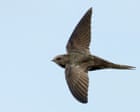
The loss of wild birds includes some of Britain’s best-loved garden birds, including swifts, turtledoves and tree sparrows, as well as wood warblers and bullfinches.
Ministers have legal responsibilities to take action to recover bird populations to healthy levels, as well as specific duties to designate Special Protection Areas (SPAs) where birds and their habitats are legally protected.
But the Office for Environmental Protection (OEP), the independent environmental regulator, said on Wednesday that the environment secretary, her department and Natural England were all breaking the law by failing to protect wild birds.
Eagle has breached environmental law by failing to classify new SPAs, extend existing sites or add new species to those that are protected, the regulator said.
Natural England is in breach of environmental law, according to the OEP, by failing to take the action needed to maintain or restore wild bird populations to appropriate levels and ensure they have sufficient habitats.
The government’s independent nature adviser is also accused of breaching the law by failing to carry out a review of whether there is sufficient habitat for wild birds.
The OEP said the review was important because it was supposed to provide an expert and independent assessment of whether there is sufficient diversity and area of habitat for wild birds, as well as to identify gaps and explain what action is needed to support their recovery.
The continued decline in bird populations comes despite evidence that the public’s interest and attention to wild birds is growing. In May, the RSPB reported a 47% increase in the number of people enjoying bird watching over the past eight years.
Helen Venn, chief regulatory officer for the OEP, said there have been continued delays by ministers to protect bird populations.
“As a nation of bird-lovers, and with birds acting as important indicators for the state of our nature more widely, the latest statistics showing declines in the populations of some of our most treasured species are deeply concerning,” said Venn.
“This is why it is important that Defra and Natural England do carry out their legal responsibilities in a reasonable timeframe to deliver nature recovery and in relation to the classification and adaptation of SPAs on land.
“Continued delay has left a significant number of sites for wild bird populations without the levels of protection they need and allowed the scale of the actions needed to deliver a sufficient SPA network to build up.”
There are 82 SPAs in England, as well as six cross-border and offshore sites.
The government is legally bound to expand and increase protected areas across the country as part of its 30 by 30 commitment to protect at least 30% of land and seas for nature’s recovery by 2030.
But despite repeated promises by Labour’s environment ministers, wild bird populations across the UK are showing no sign of widespread recovery, with both short and long-term trends indicating that nearly half of all species are in decline, according to Defra’s latest statistics.
Beccy Speight, the RSPB’s chief executive, said: “We now expect urgent action, including the designation of new and extended Special Protection Areas and other targeted measures for species such as curlew, bittern and hen harrier, which are in most need. Successive governments right across the UK have known about these problems for years. The time for navel gazing has long passed; the time for taking action is now, before it is too late.”
The Department for Environment was approached for comment.
- decline
- law
- bird
- environment
- government
- population
- level
- record


