Bacterial toxin produced by E coli leading suspect in rise in bowel cancer among under-50s
Scientists tell Commons committee that exposure to colibactin in early life is a potential driver of early onset colorectal cancer Exposure to a bacterial toxin in early life has emerged as a leading suspect in the rise of bowel cancer amongs those under 50, MPs have heard. Cases of early onset bowel cancer have doubled in many countries in the past two decades, and while rising obesity and a fall in physical activity are contributors, researchers believe other factors must also be involved.
Scientists tell Commons committee that exposure to colibactin in early life is a potential driver of early onset colorectal cancer
Exposure to a bacterial toxin in early life has emerged as a leading suspect in the rise of bowel cancer amongs those under 50, MPs have heard.
Cases of early onset bowel cancer have doubled in many countries in the past two decades, and while rising obesity and a fall in physical activity are contributors, researchers believe other factors must also be involved.
Dr Karl Smith-Byrne, a senior molecular epidemiologist at the University of Oxford, told the Commons science and technology committee that known risk factors for colorectal cancer, such as obesity, smoking and alcohol, can explain only about half of the cases doctors diagnose.
He said he did not find it “plausible” that the rise in early onset bowel cancer could be entirely explained by risk factors that researchers were already aware of.
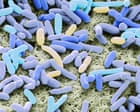
Last year scientists identified a toxin called colibactin, produced by some variants of E coli bacteria in the gut, as a potential driver of early onset colorectal cancer. Hallmark mutations caused by the toxin were three times more common in tumours from people under 40 than in those from people over 70.
More work is needed to understand whether colibactin actually drives bowel cancer, but it is a question scientists are now actively pursuing. “That’s probably the leading explanation at the moment,” Smith-Byrne told MPs.
Prof Mike Stratton at the Sanger Institute, who was not at the hearing, has said that colibactin causes mutations in some children but not others, with evidence of mutations appearing as early as infancy. By the age of 10, affected children can have a similar “mutational burden” to a 50-year-old, his work showed.
“If it is causing mutations, it’s causing mutations at a sensitive period earlier in life, and that can give that person’s colon or their rectum a head start on its journey towards being cancerous or developing these tumours,” said Smith-Byrne, who is himself a survivor of early onset rectal cancer.
Some suspect that particular variants of E coli that normally live harmlessly in the gut have evolved in recent decades to produce colibactin. Prof Elio Riboli, a cancer epidemiologist at Imperial College London, told the committee: “This colibactin is essentially found in people born after 1960. Something has happened in the E coli bacteria … There must have been a mutation, and there is a new bacteria.”
Bowel cancer is the third most common cancer in the world, accounting for about one in 10 of all cases. The disease is still far more common in the over-50s, but global figures suggest diagnoses are rising steeply in younger people.
Prof Helen Coleman, a cancer epidemiologist at Queen’s University Belfast, told MPs that colibactin was “the first new clue that we’ve had in quite some time”, but that its potential role in bowel cancer was still under investigation.
“Even though we’re talking about adults that are being diagnosed with cancer between 18 and 49, it’s quite likely to be very early life exposures,” she said. “It could be something you were exposed to in very early childhood, possibly even in the prenatal period, and that makes it very difficult to study.”
Riboli said that while scientists need to uncover the unknown drivers of different cancers, people should minimise risks that are already clear. In the UK and US, drinking and smoking are both falling, but obesity is rising and physical activity is in decline. “The quick win could come from applying what we know,” he said. “We could prevent about 60% of the cancers occurring now, but we are not applying in society what we know.”
- cancer
- bowel
- toxin
- suspect
- rise
- exposure
- life
- onset