My Acheampong book seeks to correct forgotten history, not glorify coups – Agyeman-Duah

A political historian, Prof. Baffour Agyeman-Duah, says his work on the life and times of former Head of State General Ignatius Kutu Acheampong is intended to bring neglected aspects of Ghana’s history back into public discussion, not to celebrate military rule. The book, titled General Acheampong: The Life and Times of Ghana’s Head of State, was launched in September 2021 to mark what would have been Acheampong’s 90th birthday.
A political historian, Prof. Baffour Agyeman-Duah, says his work on the life and times of former Head of State General Ignatius Kutu Acheampong is intended to bring neglected aspects of Ghana’s history back into public discussion, not to celebrate military rule.
He said the country needed an honest account of the Acheampong era, including information and events that had received little public attention over the years.
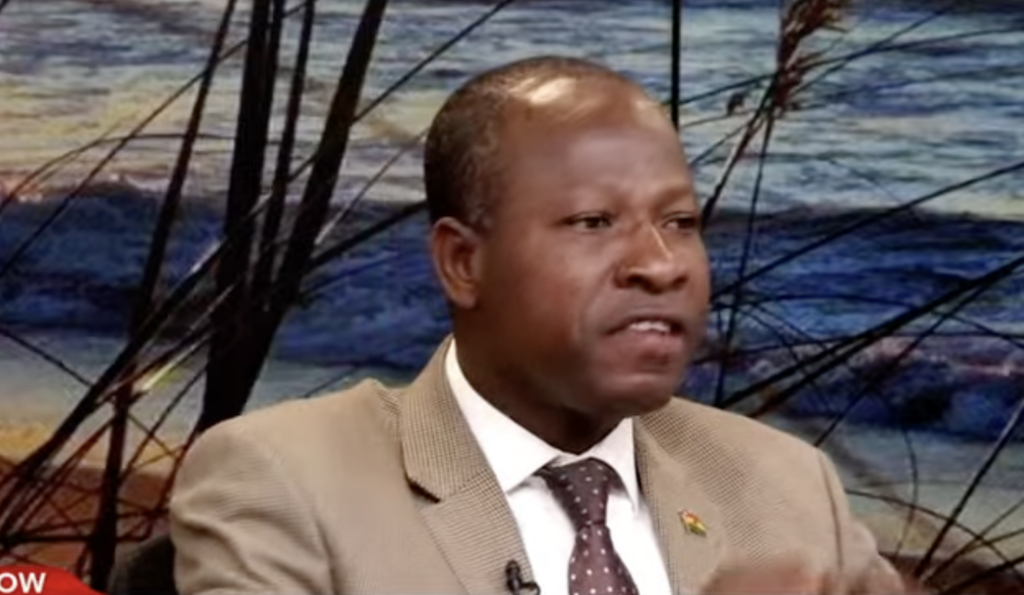
Speaking on Channel One TV on Wednesday, November 18, Prof. Agyeman-Duah said his research was driven by the need to document a significant period in Ghana’s political history rather than rehabilitate the former military ruler.
“I wasn't interested in glorifying coups. I wasn't interested in just simply revising history to uplift the General; these are hard facts about a part of our history that almost got lost,” he said.
He recalled that public discussion of Acheampong and other military officers executed in 1979 had, in his view, become difficult during the era of the Provisional National Defence Council (PNDC) under former President Jerry John Rawlings.
“Under the Rawlings regime nobody could even mention the name of Acheampong anywhere as if he never existed,” he said.
Prof. Agyeman-Duah said his book was an attempt to shed new light on that period and make information available to Ghanaians who might not have been familiar with the former Head of State’s life and administration.
The book, titled General Acheampong: The Life and Times of Ghana’s Head of State, was launched in September 2021 to mark what would have been Acheampong’s 90th birthday. The 240-page publication examines his life and leadership of the National Redemption Council (NRC) and the Supreme Military Council (SMC), which governed Ghana from 1972 to 1978.
The renewed interest in Acheampong’s record has followed a call by business leader Sir Sam Jonah for the restoration of the former ruler’s military rank.
Delivering the second General Ignatius Kutu Acheampong Memorial Lecture in Accra on November 13, Sir Sam argued that Acheampong was stripped of his rank by decree before he was executed on June 16, 1979, without being convicted by a court.
He maintained that restoring the rank would be a matter of justice and military tradition, rather than an endorsement of Acheampong’s administration.
But the debate has also reopened wider questions about Ghana’s experience with military governments and the public’s attitude towards constitutional rule.
Prof. Agyeman-Duah, who said he had recently discussed civil-military relations at the Ghana Armed Forces Command and Staff College, said Ghanaians had consistently expressed opposition to military intervention in politics since the return to constitutional government.
“I was very blunt about these matters that Ghanaians don't want it,” he said, referring to military rule.
He cited Afrobarometer surveys conducted from the late 1990s into the early 2000s as evidence of public attitudes towards military government.
The research provides a historical basis for examining those views. Afrobarometer’s first Ghana survey in 1999 found that only 10.5 per cent of respondents agreed that the military should return to govern the country. Its subsequent surveys also recorded strong support for democracy, although rejection of military rule declined somewhat between 1999 and 2008.
Ghana’s political history has been marked by several military takeovers, including the January 1972 coup led by Acheampong, which overthrew the elected government of Dr Kofi Busia. The country returned to constitutional multiparty government on January 7, 1993, under the Fourth Republic.
Prof. Agyeman-Duah’s position is that documenting the past should not be confused with endorsing the manner in which power was acquired or exercised. The challenge, he suggested, is to ensure that an important period in the country’s history is neither erased nor presented without scrutiny.
- acheampong
- history
- ghana
- book
- agyeman
- duah
- government
- life