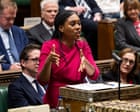
Albanese tells Putin to end Ukraine war 'now'
Prime Minister Anthony Albanese directly tells Vladimir Putin to end his war with Ukraine "now" ahead of a highly anticipated meeting between the Russian President, Donald Trump and Xi Jinping.
US President Donald Trump, China's Xi Jinping and Russia's Vladimir Putin have begun historic talks in Shenzhen.
Before the three leaders met, Prime Minister Anthony Albanese directly called on Mr Putin to end his illegal invasion of Ukraine.
The three countries are expected to provide updates on the trilateral talks later on Thursday.
US President Donald Trump has confirmed Ukraine is on the agenda for landmark talks with Xi Jinping and Vladimir Putin, hours after Prime Minister Anthony Albanese called on the Russian leader to end the war "now".
The meeting between Mr Putin and the presidents of China and the US on the sidelines of the Asia Pacific Economic Cooperation (APEC) summit in Shenzhen began on Thursday evening.
The leaders gathered in front of flags from all three nations at the sprawling Kylin Villa in China's tech hub of Shenzhen.
They stood for a photo, without shaking hands, before entering the meeting room.
"This is the first time the heads of nations from China, Russia, the US meet, it has groundbreaking significance," Xi said, according to Chinese news agency Xinhua.
Mr Trump was effusive in his praise of Mr Xi, congratulating him on hosting a successful APE, while he also described it as an "honour" to be meeting with Mr Putin.
The US president confirmed Ukraine was on the agenda for the meeting, and said the conflict had "already" been discussed with Mr Putin earlier in the day.
"I think he [Mr Putin], and I hope the other side, would like to see an end to that war," he said.
Mr Trump also used his opening remarks to attack the International Criminal Court, which he described as "out of control".
"I believe we all agree [it] has really strayed far from beyond its jurisdiction," he said.
Mr Trump also said as the three largest nuclear powers, the US, China and Russia were "uniquely positioned" to discuss how to reduce the number of nuclear weapons on Earth.
"It's quite frankly a very hard thing to do because once you have the nuclear weapons, it's very hard not to have them," he said.
"You have thousands of weapons and you're supposed to give them up."
Mr Putin said Russia, China and the United States "hold joint responsibility for maintaining international peace and security" during his opening remarks.
"Our countries have numerous shared interests in the settlement of regional conflicts, including obviously the conflict in Ukraine," Mr Putin said.
"I am convinced that Russia, the US and China, our people are capable of making a significant contribution to strengthening peace and stability over the world, if we cooperate constructively on the basis of mutual respect, equality, and a balance of interests."
Hours before the high-stakes trilateral meeting was due to begin, Mr Albanese used his allotted speaking time at APEC to single out Mr Putin over Russia's illegal invasion of Ukraine.
"I say very directly to President Putin: end your war, end it now," Mr Albanese said.
The prime minister was looking directly at Mr Putin as he delivered the words, but the Russian leader did not look up when addressed.
Mr Xi and Mr Trump were also in the room during the prime minister's APEC speech.
Mr Albanese warned global conflicts, including in Ukraine and the Middle East, were driving up inflation and putting pressure on household budgets.
"Military conflict, disrupted global supply chains, and increasing challenges to the international rules that have underpinned decades of growth are impacting our national economies," he said.
"I welcome the meeting being held this afternoon between President Xi, President Trump, and President Putin, and we hope for positive outcomes in the interests of the world."
The gathering has drawn comparisons with the 1945 Yalta Conference, when US president Franklin D Roosevelt, British prime minister Winston Churchill and Soviet leader Joseph Stalin met to discuss the future of Europe as World War II ended.
That summit helped shape the post-war international order and became synonymous with powerful countries making decisions about the future of smaller nations without their involvement.
In the lead-up to the Shenzhen meeting, Ukrainian President Volodymyr Zelenskyy has warned against Mr Trump, Mr Xi and Mr Putin using the meeting to carve up spheres of influence, amid concerns Russia could seek concessions over its ongoing invasion of Ukraine.
"We really don't want this to turn into 'Yalta 2, 3, 4,' with a redistribution of influence," Mr Zelenskyy said last month.
- albanese
- putin
- ukraine
- war
- prime
- minister
- anthony
- vladimir