crime

AG’s directive on suspects’ rights part of broader criminal justice reforms – Press Secretary

AG’s directive on suspects’ rights part of broader criminal justice reforms – Press Secretary

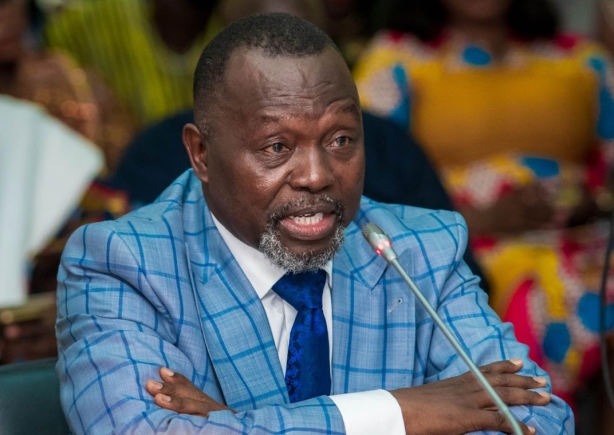
The Attorney-General’s directive requiring investigative agencies to respect the rights of suspects forms part of broader criminal justice reforms being pursued by the government, the Press Secretary to the Attorney-General and Minister for Justice, Benjamin Alpha Aidoo, has said. And so this directive forms part of broader criminal justice reforms being pursued by the government through the Attorney General,” he said.

The Attorney-General’s directive requiring investigative agencies to respect the rights of suspects forms part of broader criminal justice reforms being pursued by the government, the Press Secretary to the Attorney-General and Minister for Justice, Benjamin Alpha Aidoo, has said.

He said the directive, issued by Dr Dominic Ayine, was intended to address recurring practices in criminal investigations that fall short of constitutional and legal standards.

Speaking in an interview on Joy FM’s Middaynews on Thursday, November 19, Mr Aidoo said violations during investigations could undermine the quality of cases prepared for prosecution.

"The most important thing is that there seems to be a practice where certain suspect investigations are carried out, sometimes outside the remit of the law, and that actually has consequences for the quality of cases that are built for prosecution. And so the Attorney General deems it fit that we must take steps to rein in errant officers and to ensure that we reform our criminal justice system. And so this directive forms part of broader criminal justice reforms being pursued by the government through the Attorney General," he said.

The directive requires investigative agencies to comply with legal requirements governing arrests, detention, interrogations and bail, including the constitutional requirement to bring arrested persons before a court within 48 hours.

It also prohibits torture, coerced confessions, unlawful searches and the use of investigative powers to recover civil debts.

Mr Aidoo explained that although the protections were already enshrined in the 1992 Constitution and other relevant legislation, the Attorney-General considered it necessary to reinforce compliance among investigative agencies.

"The AG, as the one who wields prosecutorial authority of the state, deems it important to issue this directive in order to stem the recurring practice where the handling of criminal investigations and of suspects fall short of constitutional and legal standards," he said.

He noted that the directive restated existing legal protections under Articles 14, 15 and 19 of the Constitution, as well as the Criminal Offences Act and the Criminal and Other Offences (Procedure) Act.

  • directive
  • justice
  • attorney
  • general
  • press
  • secretary
  • investigation
  • criminal

Summaries and tags are generated automatically. Stay informed with VidiaNews.

Related news

Investigative agencies to face quarterly scrutiny over treatment of suspects – AG’s Office
crime

Investigative agencies to face quarterly scrutiny over treatment of suspects – AG’s Office

Press Secretary to the Attorney-General and Minister for Justice, Benjamin Alpha Aidoo, said the protections were already guaranteed under the 1992 Constitution and other legislation, but Attorney-General Dr Dominic Ayine considered it necessary to reinforce compliance among law enforcement agencies. On enforcement, Mr Aidoo said investigative agencies would be required to submit quarterly reports to the Attorney-General’s Office as an additional oversight measure.

Read →
AG directs investigative agencies to respect suspects’ rights or face sanctions
crime

AG directs investigative agencies to respect suspects’ rights or face sanctions

Attorney-General and Minister for Justice, Dr Dominic Ayine, has directed investigative agencies to strictly comply with constitutional and legal requirements governing arrests, detention, interrogations and bail, warning that officers who violate the rules could face disciplinary and criminal sanctions. Under the new requirements, officers must have lawful grounds to arrest a person and immediately explain the reasons for the arrest in a language the suspect understands.

Read →
Acheampong became General after coup, not before – Bomfeh
politics

Acheampong became General after coup, not before – Bomfeh

A senior lecturer at the University of Professional Studies, Accra (UPSA), Dr James Kwabena Bomfeh, has challenged calls for the restoration of the military rank of former Head of State Ignatius Kutu Acheampong, arguing that he was a colonel when he seized power in 1972 and became a general only after the coup. His comments add a fresh dimension to the debate sparked by Sir Sam Jonah, who has asked President John Mahama, the Armed Forces Council and Parliament, where necessary, to restore Acheampong’s rank, reinstate his name on the rolls of the Ghana Military Academy and return the honours…

Read →
Restoring Acheampong’s General rank would legitimise coup – Bomfeh
politics

Restoring Acheampong’s General rank would legitimise coup – Bomfeh

A senior lecturer at the University of Professional Studies, Accra (UPSA), Dr James Kwabena Bomfeh, has cautioned against efforts to reinstate the military rank of former Head of State General Ignatius Kutu Acheampong posthumously, arguing that it could give official recognition to a title he acquired after overthrowing an elected government. Speaking at the second General Ignatius Kutu Acheampong Public Lecture Series in Accra on November 13, Sir Sam argued that Acheampong had been stripped of his rank by decree and executed on June 16, 1979, without being convicted by a court of law.

Read →