What the ICJ genocide ruling means for the Rohingya people

This is the first time the court has ruled that a state committed genocide.
The International Court of Justice (ICJ) has ruled that Myanmar has committed genocide against the Rohingya minority ethnic group.
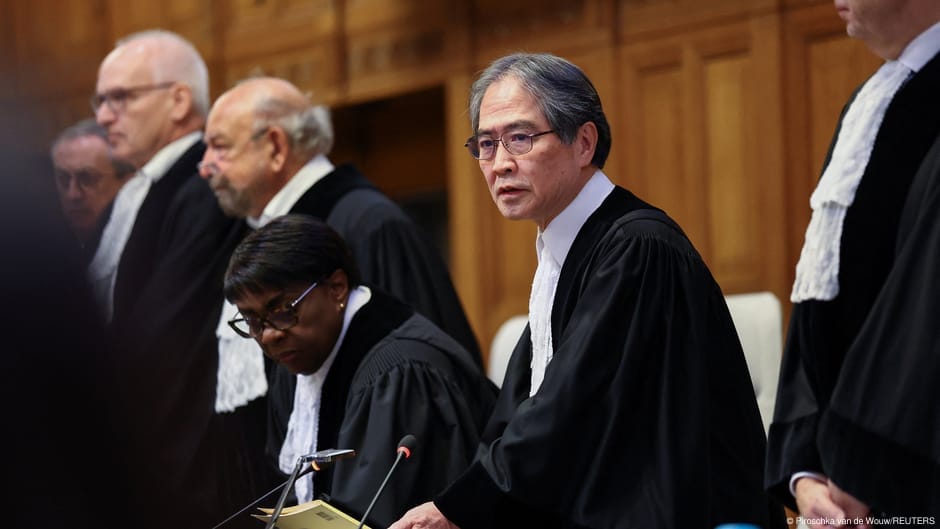
After seven years of deliberations, ICJ President Yuji Iwasawa delivered the long-awaited ruling on Thursday in a verdict which took three hours to read out.
Nine of the 15-judge panel found that Myanmar has committed genocide, the court said. Justices also voted in favour of a landmark reparations order against the country which it says has persecuted the mostly Muslim group for decades.
It is the first time in the history of the World Court, which was established in 1945, that it has ruled that a state has committed genocide. The decision is final and cannot be appealed.
The Gambia brought the landmark case against Myanmar in 2019.
After many years of persecution, Myanmar’s military launched an offensive in 2017 which forced about 750,000 Rohingya from their homes and lands, and pushed them into squalid refugee camps, largely in neighbouring Bangladesh.
About 10,000 Rohingya were killed in the early stages of the military operation. Thousands of others died in shipwrecks as they fled on perilous boat trips across the Bay of Bengal. The Rohingya reported cases of mass killings, torture and rape at the hands of the Myanmar military and allied militias.
“This is a huge day for the Rohingya people and all people of Myanmar,” said Matthew Smith, a campaigner with the advocacy group Fortify Rights, who nervously stood in The Hague’s Peace Palace along with Rohingya survivors and the Gambian delegation, as the ruling was read out.
“People have waited for such a long time for this moment,” he said.
The ruling “will provide much-needed momentum to efforts to hold the perpetrators and architects of the genocide individually criminally accountable”, he added.
The lengthy ruling, delivered by ICJ judge Yuji Iwasawa of Japan, said that Myanmar’s security forces “killed thousands of Rohingya” in Rakhine State, committed widespread sexual violence against them as well as acts of “extreme violence against children”.
Villages were “systematically destroyed”, replaced with permanent structures and then re-settled by non-Rohingya, the ruling said. The military also “intentionally” caused “serious bodily and mental harm” to the group’s members, and high-ranking officials disseminated anti-Rohingya hate speeches that portrayed them as “subhuman and a violent threat”.
Those who fled their homes have had little or no opportunity to return because of the destruction of their homes, the court found, and acts against children in particular established the military’s intent to “prevent birth” in the group.
Furthermore, the Myanmar military knew that there was a risk of genocide when armed civilians and allied militias participated in the military campaign against the Rohingya. “Myanmar thus violated its obligation to prevent genocide,” Iwasawa said.
The ICJ ruled that Myanmar must cease all acts of violence and investigate those culpable. Myanmar must also take immediate and effective steps to investigate all persons suspected of culpability, prosecute and punish the guilty, and provide guarantees that this will never happen again.
Importantly, the court ruled that Myanmar must institute restitution and reparations in the case – something campaigners have long pushed for.
Restitution measures, the court said, should see Myanmar: allow and facilitate the safe and voluntary return of Rohingya; return or replace all collective property damaged; facilitate the search for the disappeared and ensure proper burials; provide for the physical and psychological rehabilitation of those mentally injured and ensure their protection from persecution.
The court said it could not determine compensation but ordered Myanmar to submit a report within two years outlining a plan.
“This judgement is a landmark victory for the Rohingya people and for countless individuals in Myanmar who have endured violence at the hands of the military. It represents an important step toward accountability and honours the courage and perseverance of the victims and survivors who have spent years seeking justice,” Arsalan Suleman, partner at legal firm Foley Hoag and lead counsel for The Gambia, said after the verdict was delivered.
For the Rohingya people, this is the day they have long hoped for.
“The Rohingya hope to receive justice and enjoy safety both inside and outside Myanmar,” Kyaw Min Sabber, founder of Rohingya Human Rights Initiative, told Al Jazeera ahead of the ruling.
“They also hope that they will no longer face displacement and arbitrary killings in Rakhine State,” he said.
The ICJ cannot enforce its rulings, but they do carry weight: The Gambia could now table the case at the United Nations Security Council and request action.
This ruling is especially significant because the 1948 Genocide Convention requires proof of the specific intent to destroy – in whole or in part – a national, ethnic, racial or religious group. That requirement is notoriously difficult to prove, and has contributed to the ICJ never having held a state responsible for committing genocide.
In 2007, for example, the court ruled that Serbia violated the Convention by failing to prevent or punish genocide committed by Bosnian Serb troops in Srebrenica but that the state itself did not commit the act – even though UN tribunals found individuals culpable for genocide.
Thursday’s ruling could, therefore, have important implications for South Africa’s genocide case against Israel over its war on Gaza.
The Rohingya are a largely Muslim ethnic group based primarily in Myanmar’s western Rakhine State, which shares a border with Bangladesh.
Until their forced displacement in 2017, there were about 1.4 million Rohingya in Myanmar, making them a minority among Myanmar’s 137 ethnic groups. Other Rohingya populations live in India, Pakistan and Saudi Arabia.
While the Rohingya identify as Indigenous to Myanmar – and have been present there for many generations – the government does not recognise them and maintains they are “illegal migrants” from Bangladesh. In 1982, authorities passed a citizenship law that essentially rendered most of the group’s population stateless. Successive governments, including the civilian-led administration of Aung San Suu Kyi that governed between 2016 and 2021, have continued to exclude the Rohingya.
The group has experienced waves of violence and displacement over the years. In 2013, the rebel Arakan Rohingya Salvation Army (ARSA) was formed. In late 2017, when ARSA attacked police posts, Myanmar’s armed forces, known as the Tatmadaw, launched a massive response operation. The Rohingya were subjected to unprecedented levels of violence: The military shot men dead, raped women, threw babies into fires and razed Rohingya villages, survivors said.
A UN fact-finding mission in 2019 concluded that the Tatmadaw gang-raped men, women and children, and committed “genocidal acts”.
The violence saw at least 740,000 Rohingya flee to Bangladesh in a span of months. About 1.2 million Rohingya now live in crowded conditions in Bangladesh’s Cox’s Bazar, while about 520,000 remain in Myanmar under severe restrictions. Bangladesh wants them to return to Myanmar, and over the years, aid allocated for the Rohingya has shrunk, especially since United States President Donald Trump took office in January 2025 and slashed foreign aid spending.
In November 2019, the small West African nation of The Gambia took Myanmar to The Hague. The Gambia, itself a Muslim-majority country, was backed by the 57-member Organisation of Islamic Cooperation (OIC), and was itself just emerging from years of repression under the dictator Yahya Jammeh.
Its team of lawyers, led by then-Justice Minister Aboubacarr Tambadou, argued that Myanmar had committed genocide in violation of the 1948 Genocide Convention.
Former leader and Nobel Peace Prize winner Aung San Suu Kyi, who was later overthrown in a military coup in 2021, personally appeared at the court at the time and called The Gambia’s claims “incomplete and misleading”.
But in January 2020, the ICJ ordered Myanmar to take emergency measures to prevent a genocide of Rohingya, in what experts called a “stunning rebuke” to Suu Kyi.
Eleven countries – Canada, Denmark, the Netherlands, Germany, the Maldives, the Democratic Republic of the Congo, Slovenia, Ireland, Belgium, France and Britain – applied to support the case.
During hearing in January 2026, The Gambia, led by current Justice Minister Dawda A Jallow, reiterated that Myanmar’s ruling military “deliberately targeted” the Rohingya for “destruction” and that it acted with “genocidal intent”.
The Gambia asked the court to establish Myanmar’s obligation to provide reparations to Rohingya survivors, order its government to prosecute those responsible, and ensure the Rohingya can return safely.
Myanmar – now under military leader-turned-president Min Aung Hlaing, who commanded the crackdowns and later took power in the 2021 coup – denied the allegations, however, arguing that its military was forced to respond to armed attacks with its “clearance operations”.
Survivors and rights groups say the ruling is clear vindication after decades of suffering.
The verdict also provides legal backing for justice and accountability at the highest level that could see the Rohingya achieve their goal of returning safely and with dignity to their homes, and of being finally acknowledged by the state of Myanmar.
Smith said the statement on reparations is especially important and that the court’s ruling now gives the parties ground to negotiate the details.
“Reparations for the Rohingya must be comprehensive, meaningful, and shaped by Rohingya survivors themselves,” he said, adding that it must not be conflated with aid or humanitarian assistance and must come with official acknowledgement of wrongdoing.
The plan should include financial compensation for the immense losses suffered, restitution of confiscated land and property, restoration of citizenship and fundamental rights, and guarantees of safe return, medical care, trauma support, education, and livelihood opportunities, he said.
“No amount of money can undo a genocide, but meaningful reparations can help restore rights, dignity, and a measure of justice to people who have been denied all three for generations,” Smith added.
This is very uncertain. Myanmar is in turmoil, prompting serious concerns about their safety there.
The overthrow of Aung San Suu Kyi’s elected government in 2021 triggered a nationwide civil war that has killed an estimated 100,000 people and has displaced more than 3.5 million.
Fighting between the army and the Arakan Army, a largely Buddhist rebel group also operating in the Rakhine State which also targets the Rohingya, has worsened conditions further.
In August, Myanmar said it had verified more than 300,000 refugees in Bangladesh and registered them for repatriation, but stated that this could only begin after security is restored in Rakhine.
Furthermore, while a genocide finding formally recognises the harm the Rohingya have suffered, it may do little for them in the short term, Michael Becker, an international law professor at Trinity College Dublin and a former ICJ legal officer, told Al Jazeera ahead of the ruling.
“Even if the ICJ were to order far-reaching forms of relief, the political conditions on the ground in Myanmar are not amenable to realising that relief anytime soon,” he said.
All eyes are now on whether – or how – Myanmar will implement the ICJ’s rulings and submit the required report by its November 2028 deadline.
Survivors want states which support the Rohingya to keep up pressure on Myanmar’s military to ensure an end to ongoing rights violations by the army and the Arakan Army, Kyaw Min Sabber said.
The Gambia, the OIC, and all the countries which have supported the case “have an important responsibility to continue supporting the protection and pursuit of justice for the Rohingya people”, he said, including those refugees living in India, Malaysia, Thailand, Nepal and other countries where they face mistreatment, arbitrary detention, and the fear of deportation.
“Their commitment should extend beyond the court proceedings and continue until the Rohingya can safely return to Myanmar with full equal rights, security, and dignity,” he said.
- genocide
- icj
- ruling
- rohingya
- people
- time
- court
- state