business

Dollar to Naira exchange rate today, October 23, 2026
Dollar to Naira exchange rate today, October 23, 2026

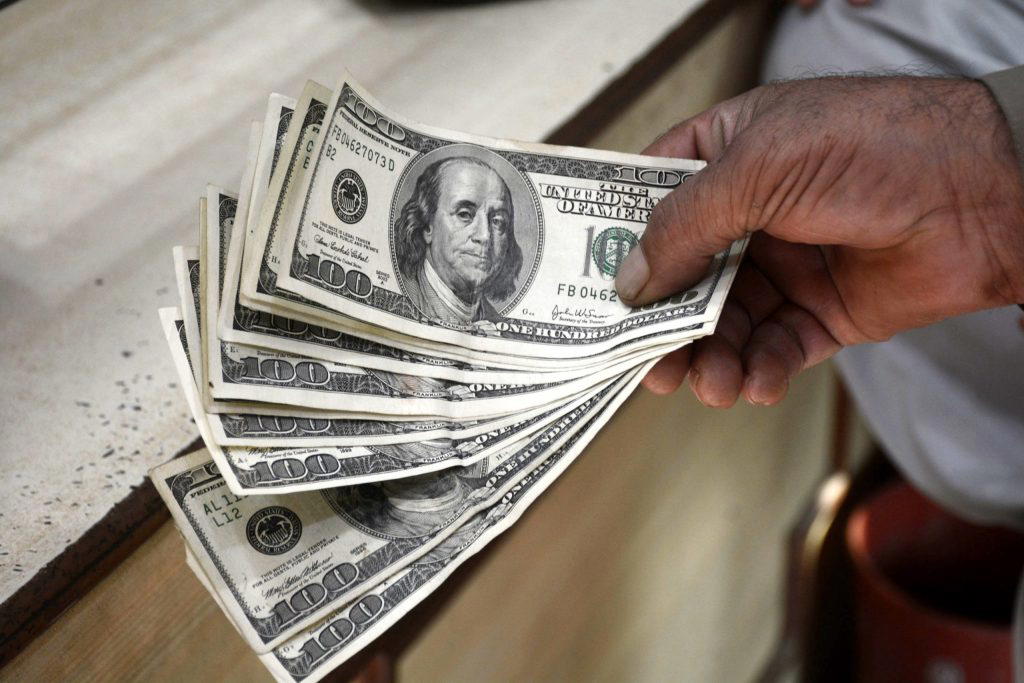
The Nigerian Naira exchanged at around N1,330.95 to the US Dollar at the Nigerian Foreign Exchange Market (NFEM). In the unofficial parallel market, street traders and Bureau De Change (BDC) operators across major commercial hubs, including Lagos and Abuja, quoted buying rates around N1,360 to N1,365 per dollar, while selling rates traded between N1,375 and N1,380 per dollar.

The Nigerian Naira exchanged at around N1,330.95 to the US Dollar at the Nigerian Foreign Exchange Market (NFEM). The official window opened with early spot transactions hovering around N1,330.95 to N1,332.00 per dollar, maintaining relative stability following recent daily fluctuations. In the unofficial parallel market, street traders and Bureau De Change (BDC) operators across major commercial hubs, including Lagos and Abuja, quoted buying rates around N1,360 to N1,365 per dollar, while selling rates traded between N1,375 and N1,380 per dollar.

The gap between the official NFEM rate and the parallel market continues to reflect ongoing demand from retail buyers, small business importers, and individuals seeking foreign currency for international travel and tuition payments. At current trading levels, exchanging $100 yields approximately N133,095 through official banking and NFEM channels, compared to up to N138,000 when purchased through parallel market operators.

Market participants attribute current rate stability to sustained diaspora remittance inflows alongside foreign portfolio interest in domestic yield instruments.

  • dollar
  • rate
  • market
  • naira
  • exchange
  • nfem
  • october
  • nigerian

Summaries and tags are generated automatically. Stay informed with VidiaNews.

Related news

Average lending rate fell marginally to 15.75% in October 2026
business

Average lending rate fell marginally to 15.75% in October 2026

Similarly, the Ghana Reference Rate stood at 10.01 in October 2026, a reduction from 10.61% in August 2026. According to the Bank of Ghana’s November 2026 Summary of Economic and Financial Data, the average lending rate stood at 20.58% in January 2026, but fell to 19.17% in February 2026 and subsequently to 17.74% in March 2026.

Read →
MPC cuts policy rate to 11% from 14 percent
business

MPC cuts policy rate to 11% from 14 percent

The Monetary Policy Committee (MPC) of the Bank of Ghana (BoG) has cut its Monetary Policy Rate by 300 basis points to 11 per cent, as improving economic conditions and declining market interest rates provide room for further easing of monetary policy. The reduction from 14 per cent was announced by Governor of the Bank of Ghana, Dr Johnson Asiama, following the 133rd Monetary Policy Committee meeting held from November 16 to 18, 2026.

Read →
Cedi loses ground as depreciation slips further to 10.6% – BoG data
business

Cedi loses ground as depreciation slips further to 10.6% – BoG data

The Ghana cedi is coming under renewed pressure, with its year-to-date depreciation against the US dollar reaching 10.6 per cent in November, up from 9.5 per cent in September. Mr Kruiniger pointed to changes in foreign exchange intermediation involving the Bank of Ghana and the Ghana Gold Board, warning that the shift, together with lower gold earnings and the accumulation of reserves under the Ghana Reserve Accumulation Programme, could tighten dollar supply.

Read →
Inflation rate moves in divergent positions
business

Inflation rate moves in divergent positions

“This can be attributed to the rate of change in the average prices of the following products: vegetable oil (75cl), Titus sardines (125g), green peas (Prepacked), mackerel frozen, croakers (apo), rice local, catfish fresh, beef tripes, palm oil (75cl), millet flour (sold loose), etc” In October 2026, food inflation on a year-on-year basis was highest in Ondo (31.74 percent), Lagos (31.43 percent), and Imo (29.75 percent), while Nasarawa (3.7 percent), Bayelsa (7.11 percent) and Kano (7.13 percent) recorded the slowest rise in food inflation on a Year-on-Year basis. “On a MoM basis, however,…

Read →
Inflation rate drops year-on-year, rises month-on-month
business

Inflation rate drops year-on-year, rises month-on-month

“This can be attributed to the rate of change in the average prices of the following products: vegetable oil (75cl), Titus sardines (125g), green peas (Prepacked), mackerel frozen, croakers (apo), rice local, catfish fresh, beef tripes, palm oil (75cl), millet flour (sold loose), etc” In October 2026, food inflation on a year-on-year basis was highest in Ondo (31.74 percent), Lagos (31.43 percent), and Imo (29.75 percent), while Nasarawa (3.7 percent), Bayelsa (7.11 percent) and Kano (7.13 percent) recorded the slowest rise in food inflation on a Year-on-Year basis. “On a MoM basis, however,…

Read →
Gold powers Ghana’s export earnings to record US$30.4bn by October
business

Gold powers Ghana’s export earnings to record US$30.4bn by October

Ghana’s export earnings reached a record US$30.4 billion in the first ten months of 2026, driven largely by gold, according to the Bank of Ghana’s latest Summary of Economic and Financial Data. Ghana’s gold holdings stood at 26 tonnes in October 2026, down from 38 tonnes in October 2025.

Read →