New page in history? Xi, Trump and Putin summit was more of a footnote
Xi, Trump and Putin summit was more of a footnote. Far from the grand ambitions declared in Yalta in 1945, Shenzhen felt like a meeting in search of an agenda It is arguably true, given it was the first such meeting of the leaders of China, Russia and the US, that Thursday’s gathering in Shenzhen deserved the description of “historic”.
Far from the grand ambitions declared in Yalta in 1945, Shenzhen felt like a meeting in search of an agenda
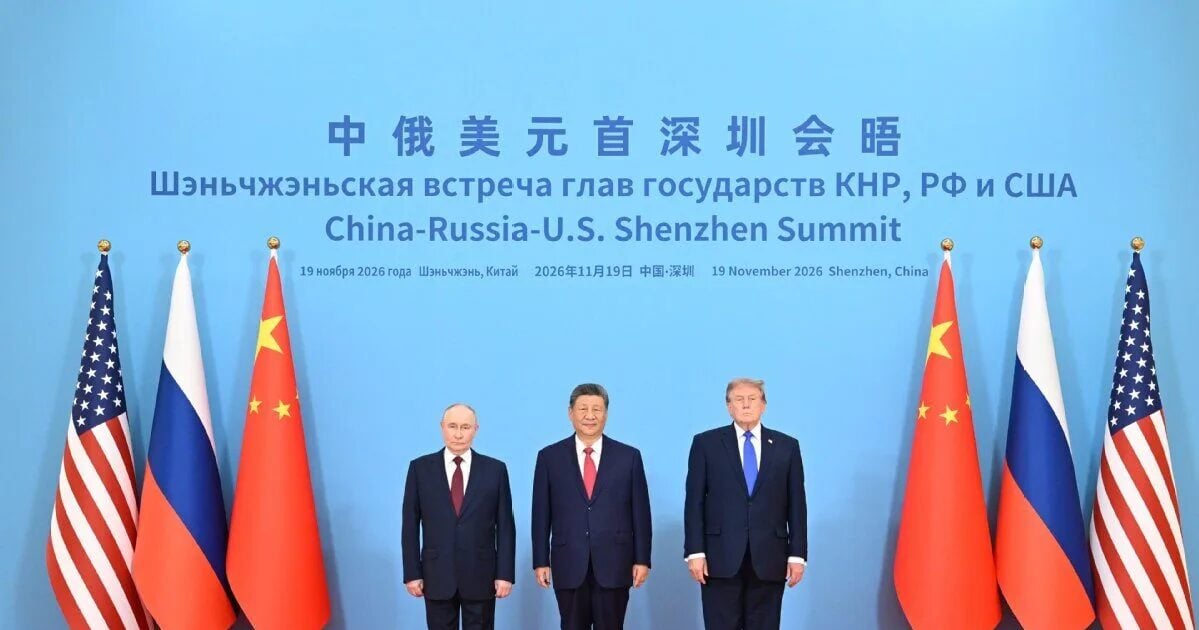
It is arguably true, given it was the first such meeting of the leaders of China, Russia and the US, that Thursday’s gathering in Shenzhen deserved the description of “historic”.
But in terms of tangible outcomes, it is unlikely to warrant the “new page in the history of diplomacy” that Vladimir Putin claimed had been written, and will instead be consigned to a smallish footnote in any future volume of the 21st century.
It’s true that the meeting could yet be an icebreaker and the start of a permanent new dialogue. It’s also true that each leader can return home with something from the 90 minutes they spent together.
Despite falling asleep during the main Apec summit, Donald Trump had a chance to show his proximity to two authoritarian leaders he admires. With Ukraine having destroyed Russia’s bridge into Crimea, the US president greeted Putin as not just a friend but almost a wartime ally.
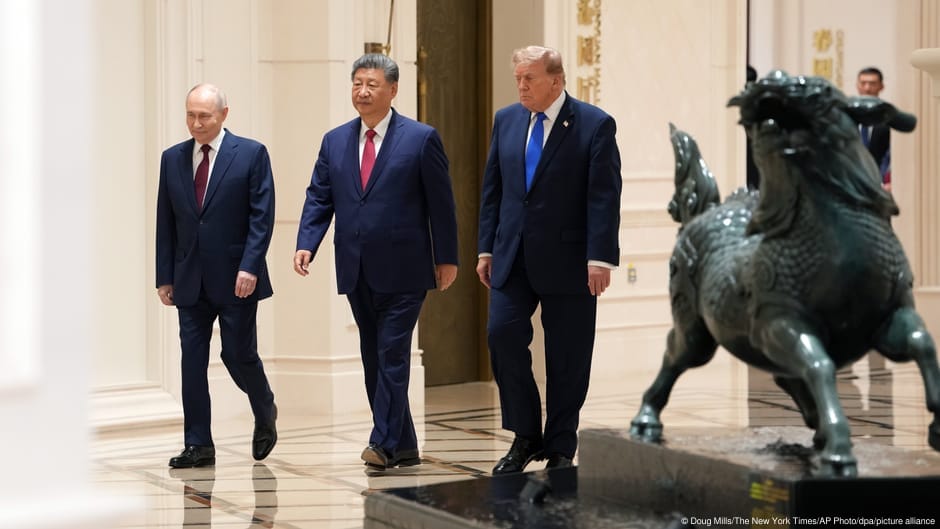
The Russian president, although occasionally pushed to one side by protocol during the early photo opportunities, will be able to show back home that it is Moscow, and not his adversary Europe, let alone Ukraine, that commands the respect and attention of Trump and Xi Jinping. As such, the summit was a free gift to Putin, and underlined that Trump was no longer the leader of the free world, as the former British foreign secretary Jeremy Hunt commented.
From Putin’s perspective, a meeting in Berlin of the coalition of the willing was a sideshow. Europe’s attempts to isolate Russia had failed and the Asia-Pacific region had become the centre of the global economy, Putin boasted. His relationship with Trump, he said, despite the difficulties, was founded on “similar civilisational values”.
For Xi, it was a prestigious chance to play host and implicitly demonstrate that the era of American hegemony is over. No longer the sole arbiter in world affairs, the US, the consumer economy, must share the stage with China, the manufacturing giant, and Russia, the energy bank.
The trio’s brief joint statement covered four pretty disparate topics: boosting energy supply, reforming the United Nations, limiting the powers of the international criminal court (ICC) and a tentative commitment to discuss nuclear disarmament and non-proliferation.
For grandeur at a time of various global crises, these ambitions hardly matched Yalta in 1945 or even the declaration after the Tehran summit in 1943, when the leaders of the UK, US and Russia sat on the veranda of the British embassy and pledged that their countries would work together after the war to build a “world family of democratic nations” free of tyranny and oppression. Winston Churchill declaimed in Tehran: “In our hands we have the future of mankind.” Joseph Stalin went further. “History has spoiled us,” he said. “She has given us very great power and very great opportunities.”
Shenzhen, by contrast, felt like a meeting in search of an agenda. The vacuum was filled with platitudinous commitments to “maintain strategic stability and international security”, a task that – looking around the world – none of those in attendance are currently pursuing with great effect.
Perhaps technology, multipolarity and their own divisions mean even they do not have “very great power”. Certainly there were no accompanying plans for how to reform the UN, let alone boost energy production or show respect for international law – a subject Trump’s current favoured successor, Marco Rubio, had just disparaged in a speech as a plaything of the global elite.
It was the summit’s chief instigator, Putin, who was the most eager of the three to set the meeting in a historic context, describing China, Russia and the US as the victors of the second world war, in a deliberate slight to Britain. A pledge to “preserve and strengthen the system of international law” seemingly referred to ensuring certain world leaders were freed from the prospect of the ICC serving them with arrest warrants.
By coincidence, the other world court, the international court of justice (ICJ), found a state – Myanmar – guilty of genocide for the first time on the same day. The Shenzen statement did not name the ICJ as a target, beyond an oblique reference to the ICC and “other similar institutions”. Doubtless that is only because ICJ rulings can be dismissed with near impunity.
Xi, nervous that China’s status as protector of the global south might be damaged by being involved in a global superpower carve-up, stuck to a familiar script: “History tells us that when major powers are at peace, the world is secure. When they clash, there is chaos.”
It may be that behind the scenes, or at other events, serious progress is being made on how China might act as a guarantor of a peace deal with Iran, or on who should lead the UN through its coming phase of reform, or even on how Putin might bring himself to seek peace in Ukraine in a way that protects Ukrainian sovereignty.
For the moment, though, it looks as if what little history was made in Shenzhen was made for exclusively the wrong reasons.
- page
- history
- putin
- footnote
- trump
- summit
- shenzhen
- meeting