We should be free to call ourselves Black English
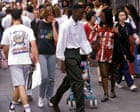
Readers respond to an article about categories on the census form It’s about time we fixed the Black English category in the census, whether popular or not (It’s absurd that ‘Black English’ is not on the census. A Black English category would also help me out enormously, living as I do in France, where people don’t believe me when I say I’m English, but simply think I’m deluded and can’t speak French properly – which I can.
Readers respond to an article about categories on the census form
It’s about time we fixed the Black English category in the census, whether popular or not (It’s absurd that ‘Black English’ is not on the census. We should be free to claim that identity if we choose, 14 November). Categories count. They make citizens, politically engineer belonging and allow people to be seen and to see themselves. The excuse that the Black English category is simply unpopular doesn’t wash. I remember in the 1990s when the Black British, or Black African categories were all the rage, they were never particularly comfortable to tick, but we all got over ourselves and stomached the flattening of our complex identities for what we believed was a good cause.
A Black English category would also help me out enormously, living as I do in France, where people don’t believe me when I say I’m English, but simply think I’m deluded and can’t speak French properly – which I can. Having left Scotland when I was three and grown up in London, I felt I couldn’t legitimately call myself Scottish – but English, I could. Years ago I stopped calling myself Britannique, because Black or otherwise, it just didn’t really translate well.
Les Anglais is what the French know well and love to hate. It’s also a source of pride for me to be able to say that I’m Black and English in a country that has refused to include racial or ethnic categories in its census, believing them to be anti-republican and divisive. But as the recent street protests and rioting in towns and cities have shown, official attempts to deny French citizens visibility in all their diversity merely creates a cauldron of discontentment among the “just French” that sadly, one day, boils over. Kathryn Nwajiaku-Dahou Paris, France
Debates about whether Black English can be a legitimate census category are certainly absurd, as Calum Jacobs argues. They are also riven with confusion and hypocrisy. There is no single academically agreed definition of ethnicity, so it is presumptuous, at best, to claim absolute certainties, let alone proprietary rights. Those who would deny Englishness to others who aren’t white are, in effect, insisting that “English” is a racial category despite claiming it is an ethnic one.
Whatever reservations some Black people may have about an English identity, they are not based on issues of entitlement. They are the product of complex historical struggles to resist being defined from without.
But whatever the motives or inclinations of those who would police them, ethnic identities are potentially available to all who inhabit and are shaped by the cultures that are often ethnicity’s most powerful determinants. Moreover, there are as many different types of English sensibility as there are accents to speak it, places to claim it and histories to shape it, so reducing ethnicity to some kind of genetic essentialism is as futile as trying to capture memory in a bottle. Paul McGilchrist Cromer, Norfolk
I am instinctively sympathetic to recent calls to represent categories such as Black English and Asian English on the census ethnicity form. As someone from London, but with a Palestinian father and an English mother, I can only select “Other” on these baffling forms. (For unexplained reasons, “Arab” already comes under a separate “Other” subheading – a fact media coverage on this question has conveniently ignored – making me some kind of Other to the Other.)
But I am also not sure any of this is what representation should look like. I feel I am British, English, and Palestinian, and all of these words mean very different things to me. I suspect they mean different things to you, too. I hope we can find ways of talking about ethnicity which do not reduce it to an item on a list. Michael Rizq Cambridge
Calum Jacobs’s article makes a good case for census forms to include a Black English category in England. But what about me? Born and bred in Scotland, I emigrated to England when I was 22 and am still here at 83. So how about a Scottish English category for me and my fellow missionaries? Jim Michie Chester
- english
- black
- category
- census
- identity
- people
- reader
- article