business

Unemployment is highest among people with secondary education; rate stands at 36.2% – GSS
Unemployment is highest among people with secondary education; rate stands at 36.2% – GSS

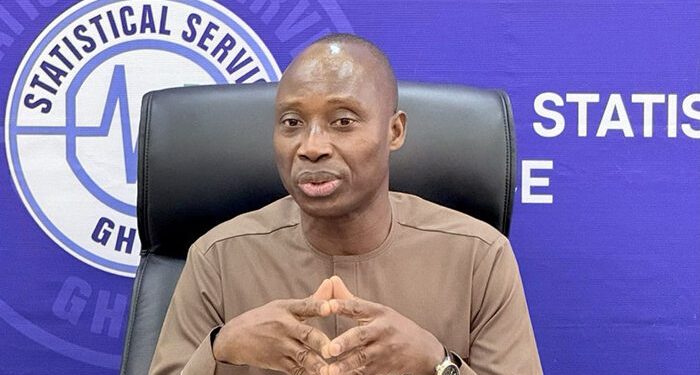
About one in three people aged 15 to 24 in the labour force is unemployed, the Ghana Statistical Service (GSS) has revealed in its 2026 Productivity, Employment and Grrowth Report. According to the GSS, unemployment is highest among people with secondary education, at 36.2%, compared with 14.3% among people with tertiary education (Quarter 3 2025 only).

About one in three people aged 15 to 24 in the labour force is unemployed, the Ghana Statistical Service (GSS) has revealed in its 2026 Productivity, Employment and Grrowth Report. According to the GSS, unemployment is highest among people with secondary education, at 36.2%, compared with 14.3% among people with tertiary education (Quarter 3 2025 only).

The NEET rate for people aged 15 to 35 was 17.9% in 2025, down from 18.8% in 2024 but above the 16.7% recorded in 2023 on the same quarter–on–quarter basis. “Unemployment itself has fallen steadily on that basis, from 14.7% in 2023 to 13.7% in 2024 and 12.8% in 2025. Fewer people work very long hours: the share working more than 48 hours a week fell from 17.2% in 2022Q1 [2022 quarter one] to 12.7% in Q3 2025 [2025 quarter 3] only”.

Most Work Informal Meanwhile, the GSS says employment has more than doubled, but most work is informal. According to the Service, the number of employed people grew from 6.0 million in 1992 to 13.3 million in 2025. In the third quarter 3 2025, only 61.8% of workers were self-employed. 20.5% were paid employees, and 85.9% worked in the informal sector.

The second edition of the Productivity, Employment and Growth Report answered both questions for Ghana over 35 years, from 1991 to 2025. It combined the national accounts with four censuses and surveys, and followed methods set by the International Labour Organization and the Organisation for Economic Co-operation and Development.

  • people
  • gss
  • unemployment
  • education
  • quarter
  • rate
  • employment
  • ghana

Summaries and tags are generated automatically. Stay informed with VidiaNews.

Related news

Output per worker stood at 178% in 2025 – GSS
business

Output per worker stood at 178% in 2025 – GSS

Output per worker in 2025 was 178% higher than in 1991, the Ghana Statistical Service has stated. Over the same period, the Service said in its 2026 Productivity, Employment and Growth Report that the output rose by 38% in lower-middle-income Sub-Saharan African countries and by 31% in upper-middle-income ones.

Read →
Ghanaian workers’ productivity triples in 34, but salaries not commensurate with increased output – GSS report
business

Ghanaian workers’ productivity triples in 34, but salaries not commensurate with increased output – GSS report

Data from the Ghana Statistical Service (GSS) show that the average worker generated GH¢15,197 in economic output in 2025, compared with approximately GH¢5,000 in 1991. The findings are contained in the GSS’s 2026 Productivity, Employment and Growth (PEG) Report, which assesses Ghana’s economic and labour market performance over the 35-year period from 1991 to 2025.

Read →
World Children’s Day: Turning economic gains into progress for every child
business

World Children’s Day: Turning economic gains into progress for every child

Every World Children’s Day, November 20th, gives us an opportunity to celebrate Ghana’s children and ask a simple but important question: Are we giving every child the best possible chance to succeed? In 1990, Ghana became the first country in the world to ratify the Convention on the Rights of the Child, which would become the most widely ratified human rights treaty in history.

Read →
Quality higher education comes at a cost: Who should pay?
education

Quality higher education comes at a cost: Who should pay?

Accra Dealing with symptoms The ongoing controversy over student hostel fees and the Minister of Education’s directive to the Ghana Tertiary Education Commission (GTEC) and the Rent Control Commission to explore their regulation should prompt a much broader national conversation about the financing of higher education in Ghana. Undergraduate fees at Ashesi average GH¢60,331, nearly seven times the average at the University of Ghana when accommodation is included.

Read →
Ghana’s Education Crossroads: Why Artificial Intelligence must become a tool for inclusive learning and national transformation
education

Ghana’s Education Crossroads: Why Artificial Intelligence must become a tool for inclusive learning and national transformation

As Ghana prepares to mark National Education Week 2026 on November 23 and 24, attention is increasingly turning to the role artificial intelligence (AI) can play in shaping the future of education. It is against this background that the Ministry of Education is organising National Education Week 2026 under the theme, “Harnessing Artificial Intelligence for Inclusive and Transformative Education in Ghana.”

Read →