EBOLA: The Bundibugyo Strain Does Not Show Symptoms Early In Patients, Virologist Warns

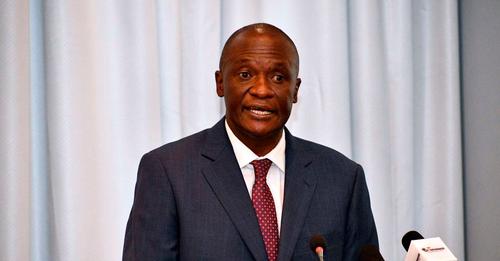
A United Kingdom (UK) Virologist at the University of Lancaster, Muhammed Munir, has warned of a major challenge of the Bundibugyo strain of Ebola, saying the incubation period is long, so an infected person might not show clinical signs until after two weeks or more. His comment comes amid the strain of Ebola detected in a 42-year-old woman in the Federal Capital Territory (FCT), Abuja, who was said to have returned from Uganda through Addis Ababa on October 3rd through an international flight to Abuja.
A United Kingdom (UK) Virologist at the University of Lancaster, Muhammed Munir, has warned of a major challenge of the Bundibugyo strain of Ebola, saying the incubation period is long, so an infected person might not show clinical signs until after two weeks or more.
Munir made this known during an interview on Channels Television’s The Morning Brief on Monday
“One of the complex things with the Ebola virus compared to many other infections that we currently are dealing with is that it has a very long incubation period, which means that if a person is infected today, the clinical signs could turn out to be in two weeks or at the end of the three weeks’ time”.
“So, because of this long incubation period, people think, oh, they have been in DRC like three months before or two weeks to three weeks before they might have not really contracted that infection from there, but because of this longer incubation period of up to two weeks, the person could still be carrying the infection but not showing the clinical signs; the clinical signs would only start coming in the second week or so”, he added.
His comment comes amid the strain of Ebola detected in a 42-year-old woman in the Federal Capital Territory (FCT), Abuja, who was said to have returned from Uganda through Addis Ababa on October 3rd through an international flight to Abuja.
The woman was said to be symptomatic four days later and was admitted to a private health facility on October 10, where she was receiving treatment and the contacts linked to her were placed under observation.
In an update on Sunday, the Nigeria Centre for Disease Control and Prevention (NCDC) said the number of contacts linked to the index case recorded had risen to 53.
Munir also spoke about the debate of the index case coming from the Democratic Republic of Congo (DRC), stating that it required questioning
“However, I must say that if the person who has been considered as the index case hasn’t been to DRC and has only been to Uganda, that really raises some of the serious questions: that Uganda can be reporting the cases, but if somebody caught the infection within the country, that means that the disease is not considered free from Uganda, so the disease is still prevalent over there”.
Speaking further on the breakfast show, Munir advised against infected patients feeling shy to report themselves at health centres, saying that early detection could help tackle the case.
“So, one should not feel shy about accepting those facts because until we really look at those cases, we are not going to have a good handle on the infection,” he said.
- ebola
- strain
- case
- infection
- bundibugyo
- virologist
- munir
- incubation