High-level delegation in Iran in push to avert flare-up of conflict with US

Senior officials from Saudi Arabia, Pakistan and Turkey travel to Tehran as bellicose rhetoric heightens High-level diplomatic delegations from Saudi Arabia, Turkey and Pakistan have travelled to Tehran in an attempt to prevent renewed fighting between Iran and the US and Israel as rhetoric sharpens on both sides. Security officials and diplomats at Monday’s meeting were expected to discuss how Iran could persuade the Houthis in Yemen to end their crippling missile and drone attacks on infrastructure in Saudi Arabia.
Senior officials from Saudi Arabia, Pakistan and Turkey travel to Tehran as bellicose rhetoric heightens
High-level diplomatic delegations from Saudi Arabia, Turkey and Pakistan have travelled to Tehran in an attempt to prevent renewed fighting between Iran and the US and Israel as rhetoric sharpens on both sides.
Security officials and diplomats at Monday’s meeting were expected to discuss how Iran could persuade the Houthis in Yemen to end their crippling missile and drone attacks on infrastructure in Saudi Arabia. With fighting raging across Yemen, the Houthis claimed to have closed Riyadh airport and inflicted heavy damage on the Saudi economy.
The officials were also understood to be discussing Iran’s possible inclusion in a new security pact involving Islamic countries.
The Saudi defence minister, Khalid bin Salman, Pakistan’s army chief, Field Marshal Asim Munir, and the head of Turkey’s intelligence service, Ibrahim Kalın, were to meet Iran’s top security officials and negotiators to push for a deal between Tehran and Washington.
The three countries signed a defence agreement in Mecca in August. Some in Iran feared the deal was constructed to challenge Tehran, but the signatory countries have insisted it is simply a mutual defence pact.
The balance between exploring a new long-term security architecture and demanding Iran start to compromise in the conflicts in which it is engaged will be critical. It is possible the two sides came to the meeting with different priorities.
The Iranian foreign ministry has often proposed a security pact for the region in which Iran, as opposed to the US, plays a role, and the US-Iran conflict has potentially reopened the debate among Gulf states about whether the heavy presence of US bases in their countries is a source of reassurance or insecurity. Oman is one Gulf state to have explored a regional security pact that includes Iran.
No Gulf state openly supported the US-Israeli attack on Iran either last year or this February, but some have covertly cooperated in the operations. Iran has sought to defend itself by attacking US bases and energy infrastructure in the Gulf states.
Iran’s foreign ministry spokesperson, Esmaeil Baghaei, said the meeting could pave the way for broader regional cooperation on security based on shared interest.
“The events of the last two years, especially the past eight months, have shown that sustainable and reliable security in our region will only be possible by building trust and cooperation among the countries of the region,” he said.
Javad Zarif, a former foreign minister and long-term advocate of a regional security alliance called for “a comprehensive regional network based on non-aggression, mutual trust building, and shared prosperity”.
“Regional security is not imported, it must be created by the people of this very region together,” he said.
He published his message alongside an image of verses 103 and 159 from Surah Ali ‘Imran, the third chapter of the Qur’an. The verses emphasise being saved from a fiery pit by avoiding division, fostering unity, seeking forgiveness and consulting others.
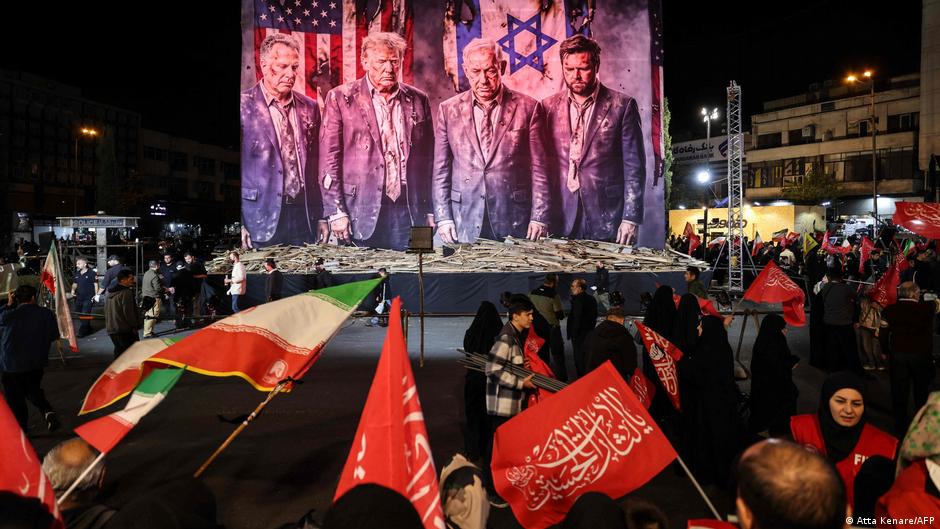
The meeting takes place against a backdrop of continued Pentagon briefings about a major US military buildup in preparation for a possible assault after the midterm elections. Qatari mediators, it was confirmed, spent much of Sunday in Tehran seeking terms for Iran to reopen the strait of Hormuz.
Israeli media reports claimed the country’s prime minister, Benjamin Netanyahu, has been trying to browbeat the military into provoking a war with Iran before the Israeli elections on Tuesday.
Donald Trump’s repeated call for Netanyahu to be re-elected only adds to the mood in the region that modern-day US and Israel have the potential to be a long-term source of insecurity in the region.
The idea of a security pact with Iran will be resisted in large parts of the Middle East after the damage Tehran has been prepared to inflict on the economies of the region, either directly or through the use of intermediaries such as the Houthis. Iranian hardliners also increasingly argue Iran’s security best lies in trying to assemble a nuclear bomb, ending the fatwa on the possession of a weapon of mass destruction.
A pact likely to take many months to negotiate may also not be a solution to Washington’s demand that Iran reopen the strait of Hormuz before US sanctions are lifted.
- iran
- delegation
- saudi
- arabia
- level
- push
- conflict
- official