Fact check: Deepfakes and 'US abandons Taiwan' claims spread ahead of vote
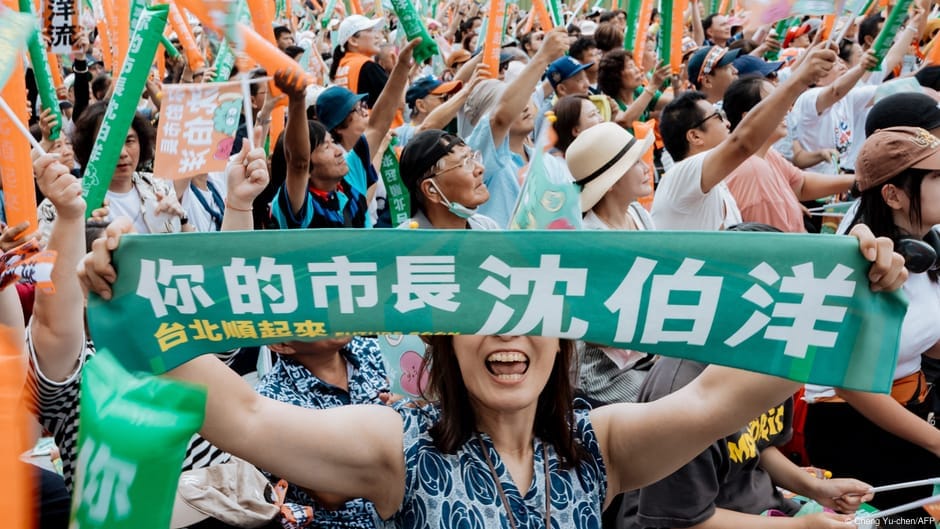
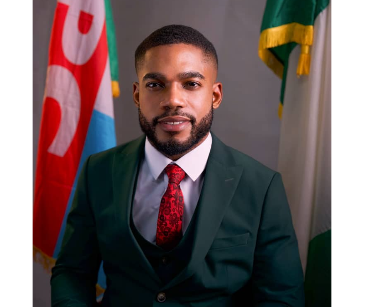
Ahead of local elections, AI-generated falsehoods targeting Democratic Progressive Party mayoral candidate Puma Shen have surged in Taiwan, alongside disinformation claiming the US is pulling back support for the island.
On November 28, Taiwan will hold local elections that could reshape power dynamics between the sovereignty-leaning Democratic Progressive Party (DPP) and the Beijing-friendly Kuomintang (KMT). The outcome could influence relations between Taiwan and China, as well as regional geopolitics and ties between Washington, Beijing and Taipei.
A month before the election, there was a spike in AI-generated content featuring DPP Taipei mayoral candidate Puma Shen. Claims that the US is abandoning Taiwan also increased during the same period. Experts say that fake quotes and misleading clips are being used as part of a campaign to weaken trust in US security commitments.
Research by DW Fact check found that identical disinformation headlines claiming US troops were withdrawing from Taiwan repeatedly appeared as both articles and videos on Chinese clickbait platforms NetEase and Sohu. The V-Dem Institute at the University of Gothenburg ranked Taiwan "the country most severely targeted" by foreign disinformation for eleven consecutive years – from 2014 to 2024.
The Taiwanese Ministry of the Interior has stated that foreign actors are increasingly using diverse methods to interfere in elections. That includes manipulating election betting, inviting Taiwanese citizens to China, using donations from Taiwanese business people to organize events, such as banquets, and leveraging temple and religious activities, to mobilize and win over supporters. Taiwan has functioned with de facto independence since 1949 despite Beijing's decadeslong claim to the island as a province and repeated vows to annex it.
DW Fact Check examined viral claims that have circulated online since September during the run-up to the election.
Claim: Puma Shen takes drug and receives kickbacks through arms purchases from the US.
An audio clipposted on Facebook on October 29, claims to show Puma Shen, the DPP candidate for Taipei mayor, admitting to receiving kickbacks from US arms deals.
The recording is heavy with background noise – a method used mask synthetic manipulation in AI-generated audio. Multiple deepfake detection platforms, including Is this AI and Undetectable, flagged the audio as likely AI-generated.
The Facebook account that posted the audio was created on October 29, 2026 – the date the audio was also published. The account's followers are mainly profiles using languages, such as English, Arabic and Thai. That points to possible bot activity.
Another Facebook accountposted an image of Puma Shen taking drugs. Apart from the "AI content" label on the post, multiple AI detector tools identified this photo as likely AI-generated.
The account was created in March 2026. Since then, a lot of AI-generated content mocking Taiwan's President Lai Ching-te and his pro-sovereignty party has been posted. It is occasionally interspersed with posts praising the development of Chinese cities.
This account's profile indicates that the primary country location for people who manage this page includes China and Taiwan.
Taiwanese independent media platform Watchoutinvestigated the account's advertising activity and found that it had previously run at least five Facebook ads. The advertisers were identified as Peng Zhiwei and Guo Yang, both based in China. The findings suggest that the account received financial support from individuals in China.
The Taipei mayoral race is a key battleground in Taiwan's upcoming local elections. As of mid-November, polls showed a neck-and-neck contest between Puma Shen and his opponent, Chiang Wan-an, who claims to be a great-grandson of Taiwanese leader Chiang Kai-shek.
Chiang Kai-shek was a leading figure of the Kuomintang and relocated with the party to Taiwan in 1949 after losing the Chinese Civil War to the Chinese Communist Party.
While the Kuomintang was historically staunchly anti-communist, critics argue that it now promotes closer ties with China. For example, they point to senior Kuomintang figure's proposed 10-year unification framework as evidence that its stance runs counter to mainstream public opinion in Taiwan. Although Kuomintang subsequently stated that this framework is entirely unrelated to the current party leadership, it has sparked controversy in Taiwan.
Claim: 500 US troops urgently withdrawn from Taiwan.
A post in Simplified Chinese on Sohu, a popular mobile news platform in China, claims that 500 US troops stationed in Taiwan were to be withdrawn rapidly.
According to a March 2026 report by the US government's Defense Manpower Data Center, 45 American military personnel are currently stationed in Taiwan.
Retired US Navy Rear Admiral Mark Montgomery stated during a hearing in May 2025 that 500 American military personnel were providing training in Taiwan.
DW Fact check reached out to Taiwan's Ministry of National Defense, which declined to comment. The US Department of Defense and the Pentagon did not respond to requests for comment by the time of publication.
Claim: A TikTok video claims to show US president Donald Trump saying the US is abandoning Taiwan.
The original video was from a Fox News interviewFox News interview with Trump on May 16. The interviewer did not ask whether the United States would defend Taiwan, and the US president did not comment on the issue.
Trump said he did not want Taiwan to become independent or for a war to break out, adding that the status quo should be maintained to allow tensions to de-escalate. He also clearly stated that his policy toward Taiwan "has not changed." Washington has long maintained a policy of strategic ambiguity toward Taiwan– neither explicitly guaranteeing the island's defense nor ruling out the possibility of doing so.
- fact
- check
- taiwan
- vote
- deepfake
- claim
- election
- falsehood