Keep your wig on! Hairy paintings and sex worker photographs are the free art shows to see this week
Hairy paintings and sex worker photographs are the free art shows to see this week. Louise Giovanelli’s hirsute works astonish, MJ Mac records an industry of outcasts and star French conceptualist Sophie Calle brings absence alive ★★★★☆ Continue reading...
Louise Giovanelli’s hirsute works astonish, MJ Mac records an industry of outcasts and star French conceptualist Sophie Calle brings absence alive
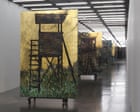
It’s usually the eyes that follow you around the room in paintings, but in Louise Giovanelli’s new work, it’s the hair. She’s one of the leading young painters in the country, with a knack for washed out, nostalgic theatrical imagery, but these new works have some hirsute twists.
There are three distinct bodies of work here. Tightly cropped photorealistic paintings of people snogging, super lavish images of faces seen through glittering stage curtains, and psychedelic, nearly abstract paintings of wigs.
The first two don’t do a huge amount for me, mainly because there’s a lot of cropped melancholy painting based on found imagery around these days, it’s one of the big aesthetic trends in post-2020s art. They’re all nice enough paintings, I’m just not totally wowed by them.
But the wig paintings will absolutely floor you. She paints swooping webs of fake hair hanging and swaying. They’re ultra-lush, textural, fetishistic images, blonds and browns fading into parma violet purples and toxic greens. Their surfaces look reflective and plasticky, like nylon and polyester stretched into impossible, undulating forms.
Wigs are tools of artifice and adornment, they hide and conceal, they decorate and exaggerate. They imply that the wearer has the power to construct their image, to shape their identity, but usually in a knowingly, obviously fake way.
I could take a whole show of just the wigs and their delicate, weird experiments in light and distortion, femininity and falseness. They feel like an artist genuinely finding their voice, and totally wigging out.
White Cube Mason’s Yard, London, until 16 January
Absence, loss, grief – French conceptualist Sophie Calle makes work about things that are unseen, unfinished and hidden away. It starts with Picasso’s paintings, photographed during lockdown when the Musée Picasso covered the works for protection, leaving behind nothing but ghostly rectangles and titles, making you paint the images in your head. You see a reclining figure reading, a minotaur attacking a woman, a bather reclining, all being triggered in your mind. Damn, Calle is good, conjuring the violence and brilliance of Picasso, of art itself, through its absence.
She takes humorous photos of graves and street signs, makes art out of lonely hearts ads filled with unrequited desire and the need to be seen and wanted. But the best work here is her collection of unfinished projects, a whole room of unrealised ideas, catalogued, preserved and analysed, each one given context and a reason for why it was abandoned: ‘No time’, ‘unnecessary’, ‘impossible to convey’, ‘what’s the point’, ‘Max died’. It’s dozens of moments of creative passion and intuition left to rot, abandoned and almost forgotten. It made me think of everything I’ve left unfinished, everything I’m too tired, too stressed, too sad to do. It feels desperate, final, and brutally affecting.
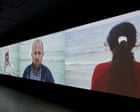
A lot of the work involves speaking to people about absence and loss. She asks museum security guards to describe Turner paintings that have been stolen. She meets people who have never seen the sea, and films them seeing it for the first time. In one work, she asks people who were born blind to explain what their image of beauty is. It veers wildly between funny (the “erotic breasts and a terrific ass” of a Rodin), poignant (“I saw my son in a dream … he was very beautiful”) and heartbreaking (“since I cannot appreciate beauty I have always run away from it”). And that’s Sophie Calle, digging through loss and absence to talk about the things that really matter in life.
Turner Contemporary, Margate, until 24 January
Things are pretty filthy down in Quench’s basement, literally and figuratively. There’s dust and debris on the floor, and porn on the wall in the two side-by-side exhibitions in this experimental Margate art space.
The nudity and erotica is all by MJ Mac, documenting 15 years in the sex industry. The people in these relaxed, funny, personal photos are Mac’s friends: sex workers strapping on high heels, relaxing and recuperating in hotel suites with a bottle of champagne or a banana. These are private moments you’re being allowed into. The display of slides is the best work here, the smaller images are more intimate, more erotic than the rest, drawing you in closer to their world of laughter and pleasure and entangled bodies.
These aren’t necessarily great photographs. Instead, the show works better as an archive of an industry that endures against the odds, regardless of what society thinks or how governments try to suppress and control it.
The dust and debris all over the gallery comes courtesy of Eve Stainton, a performance artist who built a breeze block wall through the middle of the space in a performance during the opening. But the mortar that holds it all together is fake, so this symbol of permanence and division is actually a lot less solid than it appears. There are a lot of bricks and walls in art history, so it’s not scaling any new heights, but I like the ideas here, this exploration of how things that are constructed – identity, gender – are all just a pretence.
More than anything it’s just good to see strange spaces for experimental art managing to survive and put on messed up, weird, uncommercial art in 2026. Even when they’re stuck between a cock and a hard place.
Quench Gallery, Margate, until 10 January
Artists are good at finding the beauty in ugly things. Young Glasgow-based painter Jennifer Aldred saw the abandoned shops that haunt the shopping streets of Margate, all the boarded up businesses with painted-over windows that symbolise a town left to rot, and saw something else, something aesthetic.
Vinyl sheets cut to the same size as the gallery’s windows have been pasted on the wall and covered in deep grey lead paint. Heart shapes are scratched into each one, like balloons in a derelict party shop window. The pieces look a bit flimsy and thin, too much like wallpaper, hastily pasted up, not enough like paintings.
Way better are the six folded works, where Aldred has turned those same vinyl sheets covered in lead paint into something with depth and texture. They’re 3D abstracts, the material of dereliction turned into something pretty, romantic, melancholy. A nice way of finding the beauty in disrepair.
- wig
- sex
- worker
- art
- painting
- photograph
- louise
- giovanelli